
It is the fourth quarter in the mouth, bacteria have the ball, and the dental restoration is trying not to get pancaked at the goal line. For decades, resin composites have looked pretty, patched cavities, and then quietly allowed microscopic gaps and bacterial squatters to cause trouble later. In this new PubMed-indexed study, a fluorinated methacrylate-thiol-ene resin composite steps onto the field wearing fresh cleats, promising less shrinkage stress, less bacterial adhesion, and fewer chances for secondary caries to run back the interception.
That is a lot of dental chemistry in one sentence, so let’s clean it up before someone calls radiology for a jargon extraction.
The Usual Problem: Fillings Are Not Fire-and-Forget
Modern tooth-colored fillings are usually made from resin composites. They are strong, cosmetic, and far less “pirate with a mouth full of metal” than older materials. But they have a persistent problem: when resin cures, it shrinks.
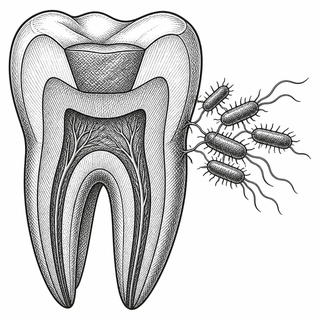
That shrinkage can tug at the edges of the restoration. Tiny gaps may form between the filling and the tooth. Bacteria, being nature’s least charming tenants, move in. Once they settle along the margin, they can help cause secondary caries, which is decay that develops around an existing restoration.
Secondary caries is one of the main reasons fillings fail. It is not dramatic. No ambulance. No swelling Hollywood soundtrack. Just a slow little dental crime scene forming at the border.
This new material, called DST in the study, tries to attack the problem from two angles:
- Reduce the stress created during polymerization.
- Make the surface less inviting for bacteria.
That combination is what makes the study interesting. The researchers are not simply asking, “Can we make a tougher filling?” They are asking, “Can we make a filling that behaves better mechanically and also makes bacteria less enthusiastic about camping there?”
What Is a Fluorinated Methacrylate-Thiol-Ene Resin Composite?
The name sounds like something shouted during a chemistry department fire drill, but the concept is manageable.
Traditional dental resins often rely on chain-growth polymerization. The molecules link together during curing, and shrinkage stress can build as the material hardens. Thiol-ene chemistry uses a step-growth polymerization system, which can reduce shrinkage stress and produce a more uniform network.
The fluorinated part matters too. Fluorinated materials tend to be hydrophobic, meaning they dislike water. In dentistry, surface chemistry is a big deal because saliva, proteins, and bacteria are constantly trying to coat everything like a biofilm lasagna.
A more hydrophobic, lower-energy surface can make it harder for bacteria to stick. Not impossible, mind you. Bacteria survived this long by being disgusting little optimists. But harder is good.
How the Researchers Tested It
The team evaluated DST using several lab and animal tests.
For bacterial adhesion, they used saliva-derived human dental plaque biofilms. That is more realistic than testing one polite bacterial species floating around in a dish like it came from finishing school. Dental plaque is a community project, and not the kind that wins civic awards.
They measured bacterial attachment using:
- Colony-forming unit counting
- Confocal laser scanning microscopy
- Scanning electron microscopy
- Crystal violet staining
- MTT assay
In plain language, they counted bacteria, looked at biofilms under advanced microscopes, stained the biofilm, and checked metabolic activity.
They also tested how well the material sealed restoration margins using modified Class II restorations and rhodamine B dye. Dye leakage is a classic way to find microscopic gaps. If the dye sneaks through, bacteria may be able to do the same. The mouth is basically a wet obstacle course with snacks.
The researchers also measured:
- Wear resistance
- Surface roughness
- Contact angle
- Surface free energy
- Diametral tensile strength
- Polishing performance
- Hydrophobicity
- Biocompatibility in Wistar rats
That last part included blood tests, biochemical analysis, and tissue histology to look for systemic or local harm.
What They Found
DST significantly reduced total bacterial adhesion and streptococcal adhesion compared with conventional composites. Streptococci matter because several species are involved in early dental plaque formation and caries development.
A key detail: the material reduced adhesion without reducing biofilm metabolic activity. Translation: it did not appear to kill the biofilm cells outright. Instead, it made the surface less attractive for attachment.
That is useful because anti-adhesion is different from antibacterial killing. Killing bacteria can create selective pressure and biocompatibility concerns. Making bacteria slide off like a drunk intern on a freshly waxed ER floor is a different strategy.
DST-1, one version of the resin tested, performed especially well. It showed:
- Lower microleakage scores
- Better wear resistance
- Lower surface roughness
- Reduced surface free energy
- Improved hydrophobicity
- Better polishing behavior
- No adverse systemic or tissue responses in the animal model
There was one tradeoff: tensile strength was modestly reduced. That matters because dental materials must survive biting forces, grinding, temperature swings, saliva, coffee, popcorn kernels, and whatever mystery object someone “just wanted to see if they could chew.”
Still, the study suggests the material retained favorable mechanical performance overall.
Why Lower Microleakage Matters
Microleakage is one of those dental terms that sounds small because it starts with “micro.” Do not be fooled. In medicine, small things routinely ruin large plans. Blood clots, bacteria, kidney stones, insurance paperwork. Tiny does not mean harmless.
When a filling does not seal well, fluids and bacteria can pass between the restoration and tooth. Over time, this can lead to sensitivity, staining, recurrent decay, and restoration failure.
A low-shrinkage-stress composite could help the restoration stay better adapted to the tooth margins. Add bacterial anti-adhesion properties, and you have a material that may be less likely to develop the classic failure pattern: gap forms, plaque accumulates, decay returns, dentist sighs, patient says “but I brush,” everyone has a bad morning.
The Real-World Potential
If follow-up studies confirm these findings in humans, this type of resin composite could make dental restorations last longer. That would mean fewer replacement fillings, less drilling, lower long-term cost, and less tooth structure sacrificed over a lifetime.
That last point matters. Every time a restoration is replaced, more tooth may be removed. Dentistry is often a game of preserving what is left. A restoration that lasts longer is not just convenient. It can help keep the tooth stronger over the long haul.
This research also fits a broader shift in biomaterials: stop thinking of implants, fillings, and devices as passive objects. Surfaces interact with biology. The best materials are not just strong. They are socially skilled at the microscopic level. They know when to keep bacteria from getting too comfortable.
What Still Needs Answering
This study is promising, but it is not the final whistle.
The big missing piece is long-term clinical performance in real human mouths. Lab biofilms are useful, and animal biocompatibility studies are valuable, but the mouth is a chaotic workplace. Temperature changes, chewing forces, saliva chemistry, diet, hygiene habits, and operator technique all matter.
Researchers will need to test:
- Long-term durability in patients
- Performance under repeated chewing stress
- Resistance to staining and degradation
- Bond strength in real clinical restorations
- Whether reduced bacterial adhesion translates into fewer secondary caries
- How the modest tensile strength reduction plays out clinically
A material can look terrific in controlled testing and still stumble when released into the wild. The mouth has humbled many confident materials. So has the emergency department, but that is a different support group.
The Bottom Line
This fluorinated methacrylate-thiol-ene resin composite is interesting because it tackles two stubborn causes of restoration failure at once: polymerization shrinkage stress and bacterial adhesion.
DST-1, in particular, showed lower microleakage, smoother surfaces, better wear resistance, improved hydrophobicity, and reduced bacterial attachment, while appearing biocompatible in the animal testing performed. The modest drop in tensile strength deserves attention, but the overall profile looks encouraging.
For patients, the dream is simple: fillings that last longer and invite fewer bacterial houseguests. For dentists, it could mean a material that seals better, polishes well, and holds up under daily use. For bacteria, frankly, it sounds like a housing crisis.
This blog post discusses research findings and should not be taken as medical advice. If you have concerns about dental decay, restorations, or oral health, please consult a qualified dental professional. Research discussed here represents ongoing scientific investigation and clinical validation is still in progress.
All images used in this post are decorative illustrations only and do not represent or reflect the accuracy, reality, or correctness of the referenced research.
Primary Source: Low-shrinkage-stress fluorinated methacrylate-thiol-ene resin composite: Bacterial anti-adhesion activity, physical properties, and biocompatibility. PubMed. Record ID: 41786237. PubMed Link