
Future A: You're a breast cancer survivor. Treatment is over. The confetti has settled. And yet, somehow, you feel like you've aged a decade in two years. Your body aches in new and creative ways. Stress has become your unwanted roommate. You're technically "cancer-free," but nobody bothered to tell your nervous system.
Future B: Same scenario, but this time, you join a weekly video call with other survivors. You learn breathing techniques, cognitive reframing, and coping strategies. Six months later, not only do you feel better mentally, but biological markers suggest your cells might actually be aging more slowly.
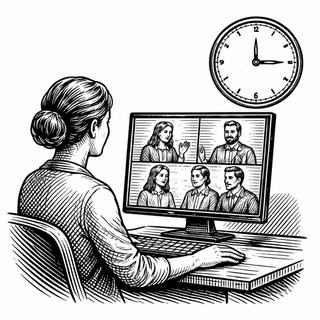
Welcome to the premise of a fascinating clinical trial that's essentially asking: what if the antidote to cancer-accelerated aging is... a really good support group with homework?
The Survivorship Paradox Nobody Talks About
Here's the cruel irony of surviving breast cancer: you beat the disease, only to discover that both the cancer and its treatment may have fast-forwarded your biological clock. It's like winning a marathon and then realizing someone stole your car from the parking lot while you were running.
We call this phenomenon "cancer-accelerated aging," and it's not just patients being dramatic. Research has documented that cancer survivors often show markers of biological aging - things like shortened telomeres, increased inflammation, and cellular senescence - that exceed what their chronological age would predict. Essentially, a 55-year-old survivor might have cells that behave like they belong to someone considerably older.
The stress doesn't help. And I mean that quite literally at the cellular level. Chronic psychological distress isn't just unpleasant; it triggers cascades of cortisol, inflammatory cytokines, and oxidative stress that can accelerate the very aging processes we're worried about. It's a vicious cycle with the thermodynamic inevitability of a dropped ice cream cone on a hot sidewalk.
Enter the Zoom Room of Rejuvenation
The trial in question - bearing the romantically catchy identifier NCT07502352 - is testing something called Remotely-delivered Cognitive Behavioral Stress Management, or R-CBSM for those of us who enjoy acronyms that sound like radio stations.
The concept isn't new. Cognitive Behavioral Stress Management has been studied for decades, showing benefits for everything from anxiety to immune function. What IS new is the delivery method (hello, pandemic-era innovation) and the specific question being asked: can teaching stress management actually slow down the biological aging that cancer accelerates?
The intervention itself involves group video sessions where participants learn relaxation techniques, cognitive behavioral therapy principles, and coping skills. Think of it as a book club, except instead of discussing whether the protagonist's choices were justified, you're learning to reframe catastrophic thinking patterns and practicing progressive muscle relaxation.
Participants must be women aged 50 or older who have completed their primary breast cancer treatments - surgery, radiation, chemotherapy - and are currently on hormone therapy. This is a specific population for good reason: these are survivors in a particularly precarious window. Active treatment is over, but the psychological and physiological aftermath lingers like houseguests who don't understand social cues.
Why This Actually Matters
Let me put on my serious face for a moment, because the implications here are genuinely significant.
First, there's the accessibility angle. Traditional in-person stress management programs require transportation, time off work, childcare arrangements, and the physical energy to show up somewhere. For survivors already dealing with fatigue and the logistical chaos of ongoing medical appointments, these barriers are real. A program delivered via video call from one's own couch removes most of these obstacles. Your participation outfit can be "business casual from the waist up," and nobody needs to know you're wearing fuzzy slippers.
Second, there's the mind-body connection that we in medicine sometimes acknowledge with a knowing nod but rarely address systematically. We're very good at treating tumors. We're considerably less good at treating the human being attached to the tumor. If psychological interventions can actually influence biological aging markers - and there's growing evidence they might - we're looking at a whole new dimension of survivorship care.
Third, consider the scale. There are millions of breast cancer survivors in the United States alone. An intervention that's effective, deliverable remotely, and can be administered in groups would be remarkably scalable. We're not talking about a treatment that requires specialized equipment or one-on-one sessions with specialists who are already in short supply.
The Science Behind the Stress-Aging Highway
For the curious among you, here's the abbreviated version of why stress might age us faster.
When you're stressed, your body activates the hypothalamic-pituitary-adrenal axis (a phrase I use at parties to absolutely zero effect). This releases cortisol, which in acute situations is helpful - it's the "something is trying to eat me" hormone that prepares you to fight or flee. But when stress becomes chronic, cortisol becomes less of a helpful friend and more of that acquaintance who crashes on your couch indefinitely and eats all your food.
Chronic cortisol elevation promotes inflammation, impairs immune function, and may accelerate cellular aging through mechanisms involving telomere shortening and increased oxidative stress. Cancer and its treatment already stress these systems. Adding psychological distress is like throwing gasoline on a fire that was already uncomfortably warm.
Cognitive behavioral interventions work by interrupting this cycle. They teach people to recognize stress responses, challenge unhelpful thought patterns, and employ techniques that activate the parasympathetic nervous system - the "rest and digest" counterpart to "fight or flight." Regular practice of relaxation techniques has been shown to reduce cortisol levels and inflammatory markers. The question this trial asks is whether these changes translate into measurable effects on biological aging.
What Success Would Look Like
If this trial demonstrates that R-CBSM can slow cancer-accelerated aging, the implications ripple outward considerably.
For individual survivors, it would mean a concrete, actionable intervention that addresses both quality of life and potentially longevity. Not "try to stress less" - that advice is about as useful as telling someone with insomnia to "just sleep" - but an actual structured program with demonstrated benefits.
For the healthcare system, it would represent a relatively low-cost intervention that could be integrated into survivorship care protocols. Insurance companies tend to perk up when you can demonstrate that something inexpensive prevents something expensive down the road.
For the research community, positive results would add to the growing body of evidence that psychosocial interventions have biological effects that extend beyond simply "feeling better." This could accelerate interest in and funding for similar studies across other conditions.
The Bigger Picture
We're living in an era where medicine is finally starting to acknowledge what common sense has suggested all along: that the mind and body are not separate entities operating in adjacent but unconnected buildings. They're more like roommates sharing a studio apartment, where everything one does affects the other.
Cancer survivorship is an increasingly populated country. Better treatments mean more people living longer after diagnosis, which is wonderful. But it also means more people navigating the complex terrain of post-treatment life, with its physical, psychological, and existential challenges. We need interventions that address this reality.
A study testing whether video-delivered stress management can slow biological aging in breast cancer survivors might sound niche. But zoom out (pun mildly intended), and it's really asking a profound question: can we teach people techniques that help their bodies heal from the inside out?
I, for one, am genuinely curious to see the results.
For more information about this clinical trial, visit ClinicalTrials.gov - NCT07502352.
Disclaimer: This blog post is for educational and informational purposes only and does not constitute medical advice. Clinical trials are research studies, and participation involves both potential benefits and risks. Anyone interested in participating in a clinical trial should discuss this thoroughly with their healthcare provider. The trial described is ongoing, and outcomes are not yet available.
Citation: ClinicalTrials.gov Identifier: NCT07502352. "Remotely-Delivered Cognitive Behavioral Stress Management Effects on Cancer Accelerated Aging in Older, Distressed Breast Cancer Survivors." U.S. National Library of Medicine. Available at: https://clinicaltrials.gov/study/NCT07502352