
Have you ever wondered what happens to the rubber band you left on your desk for a year? It becomes a sad, brittle relic of its former stretchiness, destined for the trash can. Now, imagine if instead of tossing it out, you could simply restore its original elasticity with a splash of water. Sounds like something out of a sci-fi movie, doesn't it? Well, thanks to a group of innovative researchers, this scenario is closer to reality than you might think!
In a groundbreaking study, a team led by Li et al. recently unveiled a water-recyclable, robust, and self-healing sugar-based supramolecular network. Their research could redefine materials science by merging the worlds of sugar and high-performance polymers. Let’s break down this sweet scientific breakthrough and explore what it means for you and me.
Sweet Beginnings: The Maillard Reaction
You might be familiar with the Maillard reaction if you've ever enjoyed a perfectly toasted marshmallow or a nice, seared steak. This deliciously complex process is responsible for creating the rich brown crusts and mouthwatering flavors we love in cooked foods. But the researchers took a different approach and used the Maillard reaction as inspiration for developing a new polymerization strategy - in simpler terms, they started making materials in a way that’s reminiscent of how our food transforms when it’s cooked.
utilizing maltose (the sugar we all know and love) as both an initiator and a functional component in a simple water-based reaction with acrylamide, they developed a method that’s not only effective but also environmentally friendly. Instead of needing harsh chemicals or high temperatures, this reaction occurs at below 100 °C, creating highly functional supramolecular networks through handy hydrogen bonds. Talk about a sweet deal!
Elastic Elastomers: The Heroes We Need
Now, let’s talk about what these sugar-based marvels can do. The resulting elastomers from this research boast impressive mechanical strength (up to 5 MPa tensile strength), high elongation (up to 1000%), and remarkable fracture energy (36 kJ m-2). If these numbers sound like superhero stats, it's because they are!
Think of these materials as the gymnasts of the polymer world - they can stretch, twist, and even bounce back after a tough fall. Not only are they strong, but they also have robust adhesive performance (up to 4.8 MPa). Imagine having super glue that could heal itself after being pulled apart - now that's a handy tool for any DIY enthusiast!
Water: The Ultimate Recycling Agent
One of the most exciting aspects of this research is its sustainability. Traditionally, many high-performance polymers are tough to recycle, often leading to environmental waste and pollution. But the sugar-based elastomers developed in this study can fully dissolve and be reprocessed using just water. That’s right - water!
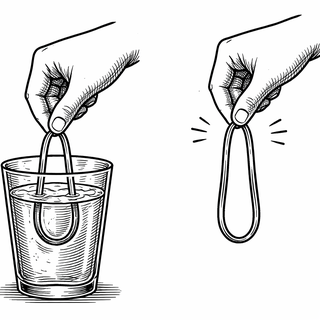
Imagine being able to toss that sad rubber band into a glass of water and, poof, it’s good as new. This revolutionary approach to recycling not only helps preserve material integrity but also eliminates harmful chemicals from the equation. It’s like a spa day for your old materials, revitalizing them without any of the mess.
Real-World Impact: Beyond the Laboratory
So, why should you care about this sugar-based superhero? The implications of this research extend far beyond the laboratory and into our everyday lives.
- Biomedical Engineering: Think about medical adhesives that can seal wounds and then safely dissolve when they’re no longer needed.
- Sustainable Packaging: Imagine eco-friendly packaging that could be reused multiple times or easily recycled without harming the planet.
- Consumer Goods: From wearables to kitchen tools, products made from these self-healing materials could enhance durability and reduce waste.
With the increasing demand for sustainable practices in all industries, this breakthrough could pave the way for greener materials that not only perform well but also respect our planet.
Wrapping It Up (With a Sweet Bow)
In a world where sustainability and performance often seem at odds, this research provides a hopeful glimpse into the future of materials science. By harnessing the power of sugar and clever polymerization techniques, the team has created a new class of materials that could revolutionize a wide array of applications.
So next time you find yourself struggling with a broken rubber band or tossing out a plastic item, remember that scientists are working tirelessly to develop new materials that can heal themselves and be recycled with ease. It might sound like magic, but it’s just good science - and a sprinkle of sugar!
Disclaimer: This blog post is intended for informational purposes only and does not constitute professional medical or scientific advice. Images and graphics are for illustrative purposes only and do not depict actual medical devices, procedures, mechanisms, or research findings from the referenced studies.
Citation: Li S, Lok TJ, Ngo SH, et al. A water-recyclable, robust, and self-healing sugar-based supramolecular network enabled by Maillard-analogous initialization of polymerization. Mater Horiz. 2025 Dec 22. doi: 10.1039/d5mh01828e.