
Quick: when was the last time you thought about breathing? Probably not until I just mentioned it. Now you're suddenly aware of every inhale and exhale, aren't you? You're welcome.
Most of us cruise through life taking roughly 20,000 breaths per day without giving our respiratory muscles a second thought. They just work. But for people with COPD, stroke survivors, those recovering from mechanical ventilation, or anyone with compromised breathing mechanics, every breath becomes conscious effort. And that's where inspiratory muscle training comes in - essentially, weight lifting for your diaphragm.
Clinical trial NCT06958744 is investigating functional inspiratory muscle training and its effects on diaphragm function. It's the kind of research that asks: if we can strengthen our biceps, why not the muscle that keeps us breathing?
The Diaphragm: Your Most Underrated Muscle
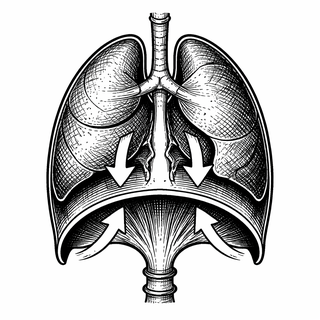
Let me introduce you to your diaphragm - that dome-shaped sheet of muscle sitting just below your lungs, separating your chest cavity from your abdomen. When it contracts, it flattens downward, creating negative pressure in your chest that pulls air into your lungs. When it relaxes, air flows out. Repeat 20,000 times daily for your entire life.
The diaphragm does 60-80% of the work of breathing at rest. Your intercostal muscles (between your ribs) and accessory muscles in your neck and shoulders chip in, but the diaphragm is the star player. When it's strong, breathing is effortless. When it's weak, everything gets harder.
And here's something most people don't know: the diaphragm isn't just a breathing muscle. It works in concert with your abdominal muscles and spinal muscles to stabilize your trunk during movement. Try lifting something heavy while exhaling completely - you'll feel how breathing and core stability are interconnected. The diaphragm is playing both teams simultaneously.
When Breathing Gets Hard
Multiple conditions can weaken the diaphragm. COPD causes hyperinflation of the lungs, flattening the diaphragm and reducing its mechanical efficiency - imagine trying to use a trampoline that's already stretched flat. Stroke can damage the neurological signals controlling the diaphragm, leading to asymmetric function and reduced strength. Extended mechanical ventilation causes diaphragm atrophy - the muscle literally shrinks from disuse.
The consequences ripple outward. Weak inspiratory muscles mean you can't take deep breaths, which limits exercise capacity. You might feel short of breath climbing stairs. Your trunk stability suffers because the diaphragm isn't doing its dual job properly. In severe cases, respiratory muscle weakness contributes to hypercapnia (too much CO2 in the blood), nocturnal oxygen desaturation, and reduced walking distance.
Research has shown that COPD patients use a larger proportion of their maximum inspiratory pressure during exercise compared to healthy subjects. When your strongest effort is barely enough for normal activity, you've got a problem.
Enter Inspiratory Muscle Training
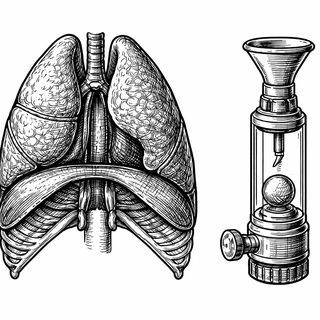
Inspiratory muscle training (IMT) is exactly what it sounds like: exercises designed to strengthen the muscles you use to breathe in. The most common approach uses a handheld device with an adjustable valve that creates resistance when you inhale. You breathe in through it, fighting the resistance, and your inspiratory muscles work harder than they would during normal breathing.
It's the same principle as weight training. Want stronger biceps? Curl heavier weights. Want a stronger diaphragm? Breathe against resistance.
The standard protocol starts at about 30% of your maximum inspiratory pressure (PImax) and progresses to 50-60% as you get stronger. Most programs call for 15-30 breaths twice daily, which takes maybe 10 minutes total. Do this consistently for 6-8 weeks, and research shows significant improvements in inspiratory muscle strength and endurance.
What the Research Shows
Studies on IMT have been remarkably positive across multiple conditions. In COPD patients, an 8-week home-based program improved respiratory muscle strength and endurance, reduced dyspnea (that unpleasant sensation of difficult breathing), and increased exercise endurance.
The mechanism is interesting: IMT reduced activation of the diaphragm relative to maximum during exercise. In other words, the same breathing effort required less of the muscle's capacity. It's like upgrading from barely managing to lift a weight to lifting it with room to spare.
Stroke patients show particularly intriguing results. Hemiplegia - paralysis on one side of the body - affects the diaphragm too, creating asymmetric weakness. Studies found that IMT not only improved respiratory function but induced actual structural muscle changes, especially in the affected diaphragm. The muscle got thicker. The weakness became less asymmetric.
This structural change matters because it suggests the benefits aren't just about learning to use what you have more efficiently - the muscle itself is adapting and growing. Progressive high-intensity IMT has been shown to affect the asymmetry between the paretic (affected) and non-paretic (unaffected) sides of the diaphragm in stroke patients.
The Dual Role Connection
Here's where things get really interesting. Because the diaphragm contributes to both breathing and core stability, training it affects both systems. Research in stroke patients has shown that IMT improves not just respiratory function but also trunk stability and balance.
Think about it: if your diaphragm is weak, it can't do its job stabilizing your trunk while you move. You might feel unsteady, have poor posture, or struggle with activities that require coordinated core activation. By strengthening the diaphragm, IMT addresses respiratory weakness and postural control simultaneously.
The same principle applies to athletes, by the way. Respiratory muscle strength training has been shown to improve exercise performance even in healthy individuals - which is why you'll find IMT devices in the training rooms of professional sports teams.
The Functional Training Approach
Clinical trial NCT06958744 specifically examines "functional" inspiratory muscle training. While standard IMT involves sitting quietly and breathing against resistance, functional training integrates respiratory challenges with movement - potentially walking on a treadmill while using an IMT device, or combining breathing exercises with trunk stability work.
The rationale is sound: if the diaphragm functions in both breathing and postural control, training it in isolation might not fully translate to real-world function. Training during activity might produce better outcomes for activities that require both systems working together.
Recent research has explored approaches like Walking-Specific Inspiratory Muscle Training (W-SIMT), measuring effects on diaphragm thickness, stiffness, pulmonary function, respiratory muscle function, and fatigue index. The combination of aerobic training and inspiratory muscle training shows promise for improving multiple parameters simultaneously.
Who Benefits From IMT?
The list of conditions where IMT has shown clinically significant benefits is long and diverse:
- Chronic obstructive pulmonary disease (COPD)
- Stroke
- Chronic heart failure
- Asthma
- Bronchiectasis
- Cystic fibrosis
- Spinal cord injury
- Multiple sclerosis
- Parkinson's disease
- Muscular dystrophies
- Diaphragm paralysis (unilateral)
- Recovery from mechanical ventilation
The common thread: any condition that weakens the respiratory muscles or increases the work of breathing stands to benefit from making those muscles stronger.
ICU survivors are a particularly important population. Mechanical ventilation saves lives, but the diaphragm atrophies rapidly when a machine does the breathing. One study found that IMT combined with positive expiratory pressure improved lung function and extubation success in ICU patients. Getting people off ventilators faster and more successfully has enormous implications for outcomes and healthcare costs.
Practical Considerations
IMT isn't complicated. The devices are relatively inexpensive (basic threshold trainers cost under $50), the time commitment is minimal (10-15 minutes twice daily), and the exercises can be done almost anywhere. For most people, the main challenge is simply doing it consistently.
The research suggests that session duration matters. When intervention duration is 20 minutes or less per session, improvements in inspiratory muscle strength appear optimal. Longer isn't necessarily better - the muscles need time to recover between sessions.
Assessment typically uses maximal static inspiratory mouth pressure (PImax), which measures how hard you can suck against a closed mouthpiece. It's not glamorous testing, but it gives a reliable number to track progress. Watching that number climb over weeks of training is genuinely motivating.
The Bigger Picture
Respiratory health tends to get overlooked until something goes wrong. We don't think about breathing until we can't breathe easily. But the respiratory muscles are just muscles - they respond to training like any others.
The implications extend beyond clinical populations. As we age, inspiratory muscle strength naturally declines. Falls become more common partly because trunk stability decreases. What if routine respiratory muscle training could preserve function and prevent some of this decline? It's an intriguing question that more research may answer.
For now, trials like NCT06958744 are building the evidence base for how best to train these overlooked muscles. Which specific protocols work best? How does functional training compare to static training? What conditions show the greatest benefit?
The Bottom Line
Your diaphragm works 20,000 times a day, every day, from your first breath to your last. It's probably the hardest-working muscle you'll never think about - unless something goes wrong.
For people with compromised respiratory function, inspiratory muscle training offers a surprisingly simple intervention with solid research support. Breathe against resistance. Get stronger. Breathe easier.
And for the rest of us? Maybe thinking about our breathing once in a while isn't such a bad idea. That muscle under your lungs has been carrying you your whole life. The least you can do is acknowledge it exists.
Clinical Trial Registration: NCT06958744 - ClinicalTrials.gov
Related Research:
- Inspiratory Muscle Training Reduces Diaphragm Activation and Dyspnea During Exercise in COPD - PubMed
- Effects of IMT on Respiratory Function and Diaphragm in Stroke Patients - PMC
- Respiratory Muscle Training - Physiopedia
- Respiratory Muscle Strength Training - NCBI Bookshelf
Disclaimer: This blog post is for informational purposes only and does not constitute medical advice. Respiratory conditions require professional evaluation and treatment. Always consult with qualified healthcare providers before beginning any respiratory training program. Clinical trial results may vary based on individual circumstances. Images and graphics are for illustrative purposes only and do not depict actual medical devices, procedures, mechanisms, or research findings from the referenced studies.