
Ever watched a surgeon operate and wondered what’s going on inside their head? Is it calm focus or the mental equivalent of a caffeinated squirrel on a sugar high? A fascinating new study from Japan sheds light on this mystery, showing just how much mental stress affects surgeons during robotic prostatectomy - a surgery that’s rapidly becoming the go-to method for treating prostate cancer. Spoiler alert: those little fitness trackers might just hold the key to understanding the high-stakes world of surgery!
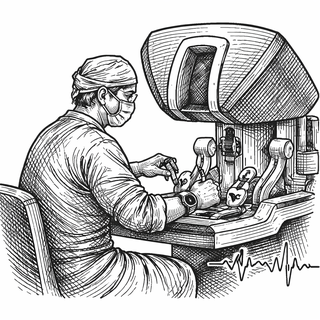
The Robotic Surgery Revolution
Robotic-assisted radical prostatectomy (RARP) has taken the medical world by storm, offering patients precision and minimally invasive options. But for surgeons, the learning curve can be as steep as trying to balance on a unicycle while juggling flaming torches. As new technologies emerge, the pressure to perform is immense - not just for the patients but for the surgeons themselves.
So, how do we assess whether a surgeon is handling this stress effectively? That’s where this study comes in, focusing on heart rate and heart rate variability (HRV) - two metrics that can reveal a lot about a surgeon's mental state during these high-pressure procedures.
Measuring Mental Stress: The Fitbit Revolution
Imagine trying to perform surgery while your heart races like it's chasing after an ice cream truck. This study employed the trusty Fitbit Charge 2, a wearable device that tracks heart rate and variations in heart rate - essentially telling us how stressed a surgeon is in real-time.
The researchers monitored two surgeons: one relatively inexperienced (let’s call him "Surgeon A") and another seasoned veteran ("Surgeon B") with over 200 operations under his belt. The data collection was quite innovative, as they documented not just surgical outcomes like estimated blood loss and console time, but also the physiological stress responses of the surgeons themselves.
What they found was pretty eye-opening: as Surgeon A gained experience, his console time decreased, and his heart rate settled down. This suggests that with practice, even the most jittery of surgeons can find their groove. Surgeon B, on the other hand, showed a stable level of stress throughout. His heart rate variability (or SDNN, for you medical buffs) was significantly better than that of the less experienced surgeon.
The Learning Curve: Stress vs. Skill
Now, let’s talk about the learning curve. It’s not just about getting better at surgery; it’s also about managing stress. With the help of cumulative sum (CUSUM) control charts, the researchers could visualize these learning curves. Think of it like watching a video game character level up: the more you play, the better you get, and the easier the game becomes.
correlating heart rate metrics with surgical outcomes, the study showed that Surgeon A improved with experience, while Surgeon B maintained a steady rhythm (and likely a steady heart rate). This suggests that mental stress can be both a challenge and a guide as surgeons hone their skills.
Why This Matters for You
So, why should you care about the heart rates of surgeons performing robotic prostatectomies? Well, for starters, it’s not just about the doctors. It's about patients like you and me. Understanding how stress impacts surgical performance can lead to better training programs and a more supportive environment for surgeons.
Imagine a world where surgical teams are equipped with real-time data about their stress levels. This could allow for immediate interventions - like a quick breather or a pep talk - ensuring that when they’re at the helm of the robotic console, they’re calm, collected, and ready to save the day.
Moreover, as technology continues to advance, integrating wearable devices in medical settings can help establish a culture where mental health is just as important as physical skill. After all, no one wants a surgeon whose heart is racing like it’s just downed five espressos!
The Future: Wearables in Medicine
The implications of this study extend beyond the operating room. As wearables become more common, we could see their use spread across various medical fields - monitoring not just surgeons, but nurses, anesthesiologists, and other healthcare workers. This could potentially lead to improved patient outcomes and a healthier workplace culture.
Wearable technology isn’t just a fitness fad; it’s reshaping how we think about stress and performance in medicine. By marrying physiology with technology in innovative ways, we can support healthcare professionals in delivering the highest quality of care.
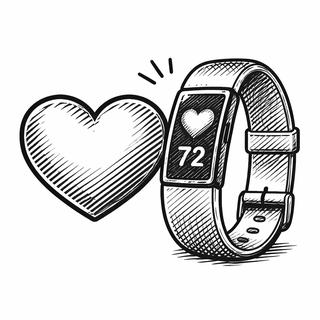
Next time you see a doctor sporting a Fitbit, just remember: it’s not just about counting steps - it’s about keeping the heart steady and focused on what really matters.
Disclaimer: This blog post is for informational purposes only and should not be considered medical advice. Images and graphics are for illustrative purposes only and do not depict actual medical devices, procedures, mechanisms, or research findings from the referenced studies.