
And we are LIVE at the molecular sensing arena, folks. It's the bottom of the ninth, the crowd is on their feet, and the challenger - a cleverly engineered iron-doped nanozyme riding a bipolar electrode platform - is stepping up to the plate against one of oncology's most elusive biomarkers. The pitcher? microRNA-141. A molecule so small it makes a virus look like a semi-truck. The stakes? Early cancer detection. Let's play ball.
What Exactly is miRNA-141, and Why Should You Care?
MicroRNAs are tiny non-coding RNA molecules - typically just 18 to 25 nucleotides long - that act as master regulators of gene expression. Think of them as the passive-aggressive middle managers of your cells: they don't do the work themselves, but they sure tell other molecules what not to do.
miRNA-141, in particular, has earned a reputation as a biomarker of interest in several cancers, including prostate, colorectal, and ovarian cancer. It shows up in blood and other biofluids at altered concentrations when something has gone sideways in the cellular machinery. Catch it early, and you've potentially caught the disease early. The problem? These molecules exist in vanishingly small quantities, which makes detecting them accurately feel roughly like identifying a specific grain of sand on a beach, in the dark, with one hand tied behind your back.
That's where the new research comes in.
Enter the Bipolar Sensing Platform
Researchers recently reported a closed-bipolar, dual-mode biosensing platform designed specifically to detect and even image miRNA-141 with ultrasensitive precision. Bipolar electrodes are a clever trick of electrochemistry - a single floating electrode that simultaneously acts as both anode and cathode, essentially doing two jobs at once without the overhead. Close the system, and you've got an elegant, contained circuit that amplifies signals without the usual noise.
But the real stars of this experimental lineup are the components loaded onto that platform.
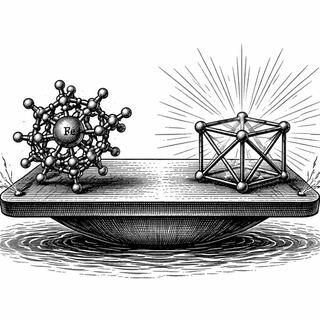
At the cathode, the team deployed an Fe-PNC nanozyme probe. Nanozymes are nanomaterials that mimic the behavior of natural enzymes - in this case, iron-doped porous nitrogen-doped carbon that acts like both peroxidase and catalase. These enzyme mimics accelerate hydrogen peroxide reactions, generating measurable electrochemical and optical signals when triggered. They're the molecular equivalent of a very efficient intern who somehow does the work of two experienced biochemists simultaneously.
At the anode, UiO-67/Ru emitters serve as the luminescent reporters - a metal-organic framework (MOF) loaded with ruthenium complexes that produce electrochemiluminescence (ECL), a light-generating electrochemical reaction that forms the basis of one of the two detection modes.
The T7 Exo Amplification Play
Here's where the engineering gets genuinely clever. The system incorporates a T7 Exonuclease-driven cascade amplification circuit. This enzyme chews through double-stranded DNA in a specific direction, releasing signal molecules in a recycling loop. When miRNA-141 enters the game, it triggers a cascade that gets amplified again and again before it ever reaches the electrode. By the time the signal is measured, what started as a whisper has become a stadium roar.
This combination - the amplification cascade feeding into a dual-mode readout using both ECL at the anode and fluorescence at the cathode - gives researchers two independent channels of confirmation. It's less likely to produce false positives when two separate physical phenomena are telling the same story. It also offers the ability to image the biosensing process itself, adding a spatial dimension that conventional detection methods simply don't have.
Why Dual-Mode Detection Matters
Single-mode biosensors have an Achilles heel: interference. Background noise from the biological matrix - the soup of proteins, salts, and other molecules in a blood sample - can masquerade as a signal. Using ECL and fluorescence simultaneously is like running two independent fact-checks on the same story. If both confirm it, you can trust the headline.
The researchers demonstrated that the synergistic effects between the Fe-PNC nanozyme and the UiO-67/Ru system produced significantly enhanced detection performance compared to either component alone. The limit of detection reportedly reached the femtomolar range - that's 10^-15 moles per liter. To put that in perspective, you're detecting fewer molecules than there are seconds in 32 million years. Impressive doesn't quite cover it.
The Bigger Picture: Liquid Biopsies and Early Detection
The broader context for all of this is the race toward liquid biopsy - the idea that cancer and other diseases might one day be diagnosed from a simple blood draw rather than invasive tissue sampling. MicroRNAs, circulating in blood and other body fluids, are attractive candidates for this kind of non-invasive screening.
The challenge has always been sensitivity. miRNAs circulate at incredibly low concentrations in healthy individuals, and even in disease states, the difference between "normal" and "pathological" levels can be subtle. A biosensing platform that achieves femtomolar sensitivity with dual-mode confirmation moves the needle substantially toward clinical viability.
This isn't a cancer test you can order at your doctor's office tomorrow - the platform is still at the research stage, requiring further validation in complex biological matrices and eventually clinical cohort studies. But as a proof-of-concept, it demonstrates the kind of signal amplification architecture that will be necessary to make liquid biopsy practical.
A New Toolkit for an Old Problem
What's particularly satisfying about this approach is how it raids multiple toolboxes at once - nanozyme catalysis, metal-organic framework chemistry, DNA strand displacement, electrochemiluminescence, and bipolar electrode design - and makes them work together cooperatively rather than competitively. Science at its most elegant tends to look like this: separate clever ideas combining into something more powerful than the sum of their parts.
The closed bipolar configuration keeps the system contained and reproducible. The dual-mode readout provides redundancy. The cascade amplification ensures the signal is loud enough to hear over the molecular background noise. And the nanozyme does the biochemical heavy lifting without requiring a fragile natural enzyme that might throw a fit if the temperature is wrong by half a degree.
miRNA-141, for its part, never stood a chance.
This blog post discusses research findings and should not be taken as medical advice. If you have concerns about cancer screening or biomarker testing, please consult a healthcare provider. Research discussed here represents ongoing scientific investigation and clinical validation is still in progress.
All images used in this post are decorative illustrations only and do not represent or reflect the accuracy, reality, or correctness of the referenced research.
Primary Source: Fe-PNC Nanoenzyme-Enhanced Closed Bipolar Sensing Platform for Sensitive ECL/Fluorescence Detection and Imaging of miRNA-141. PubMed. 2026. https://pubmed.ncbi.nlm.nih.gov/41873847/