
Okay, fair warning: what I'm about to tell you is going to sound like I made it up after three energy drinks and a Wikipedia rabbit hole at 2 AM. But I promise you, this is real science happening right now. Researchers are literally zapping people's ears with tiny electrical currents to try to heal traumatic brain injuries. And honestly? The biology behind it is so elegant it makes me want to cry into my coffee.
Your Ear Has a Superpower (And You Had No Idea)
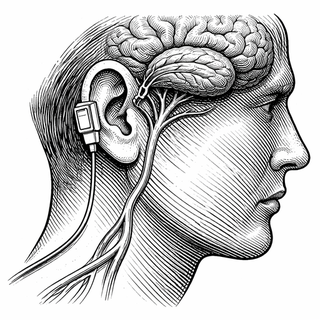
Here's the thing about the vagus nerve that absolutely blew my mind when I first learned about it: this wandering wonder of the nervous system - "vagus" literally means "wanderer" in Latin - connects your brain to basically everything important in your body. Heart, lungs, gut, you name it. It's like the body's information superhighway, and crucially, it has a little outpost right there in your ear.
Specifically, there's a branch of the vagus nerve that hangs out in the outer ear, just chilling, waiting for someone clever enough to figure out how to use it. And use it they have.
The MINT trial - that's "Modulating Inflammation in Neuro-Trauma" for those who love a good acronym - is testing whether stimulating this ear branch of the vagus nerve can help patients with moderate to severe traumatic brain injury. We're talking about people with Glasgow Coma Scale scores between 3 and 12, which is medical speak for "this is serious."
Wait, It Gets Better: The Inflammation Connection
So why would zapping someone's ear help their injured brain? This is where it gets really cool.
When your brain gets injured, your immune system goes absolutely bananas. Inflammation floods the area, and while some of that response is helpful - your body is trying to clean up the damage and protect you - it often overshoots dramatically. Think of it like calling 911 for a kitchen fire and having the entire fire department, police force, AND national guard show up and accidentally destroy your house in the process.
This inflammatory cascade can cause secondary damage that's sometimes worse than the initial injury. It's one of the reasons TBI is so devastating and why we've struggled for decades to find effective treatments. The brain is essentially attacking itself while trying to heal.
Enter the vagus nerve, which happens to be a major player in something called the "cholinergic anti-inflammatory pathway." When you stimulate it, you can essentially tell the immune system to chill out a bit. Turn down the volume on that inflammatory response. Stop destroying the house.
The MINT Trial: What's Actually Happening
The researchers behind this trial are conducting what's called a prospective, randomized, double-blind, sham-controlled pilot study. Let me translate that word salad: they're doing this properly and scientifically.
Patients will be randomly assigned to either receive real transcutaneous auricular vagus nerve stimulation (taVNS - and yes, that's a mouthful) or a sham treatment using the same device. Neither the patients nor the researchers evaluating them will know who got what until the study ends. This is the gold standard for clinical research because it eliminates all sorts of biases that can sneak in and mess with your results.
The primary goal here is pretty humble, actually - they want to know if this is safe and feasible in the chaotic environment of acute TBI care. Can you actually implement ear stimulation when someone has just suffered a serious brain injury? Does it cause any problems? These might seem like basic questions, but they're essential groundwork.
Secondary objectives include looking at inflammatory markers in the blood (to see if the stimulation is actually calming that immune freakout) and measuring functional outcomes when patients leave the hospital using the Extended Glasgow Outcome Scale.
Why This Matters More Than You Might Think
Traumatic brain injury is genuinely one of the most challenging problems in medicine. Every year, millions of people worldwide suffer TBIs, and our treatment options are... well, let's just say "limited" is being generous. We can manage symptoms, prevent secondary complications, and provide rehabilitation, but we don't have anything that directly protects or heals the injured brain.
The beauty of taVNS is its simplicity and non-invasiveness. Unlike surgical interventions or drugs that have to cross the blood-brain barrier (notoriously difficult), you're just applying gentle electrical stimulation to the skin of the ear. It's relatively cheap, has minimal side effects in other applications, and could theoretically be deployed in emergency rooms, ambulances, or anywhere a TBI patient might be.
If this pilot trial shows that taVNS is safe and feasible - and especially if those biomarker results look promising - it could open the door to larger trials that might actually prove this thing works. We're potentially looking at a new tool in the TBI toolkit, something we desperately need.
The Bigger Picture: A New Frontier in Neuromodulation
This trial is part of a broader movement in medicine toward what's called bioelectronic medicine or neuromodulation. The idea is that instead of pumping the body full of chemicals, we can use electrical signals to adjust how the nervous system functions. It's like the difference between using a sledgehammer and using a tuning fork.
Vagus nerve stimulation has already been FDA-approved for epilepsy and depression, and researchers are exploring it for everything from rheumatoid arthritis to heart failure to COVID-19 inflammatory complications. The ear-based approach (transcutaneous, meaning through the skin) is particularly exciting because it doesn't require surgery.
We're living in a genuinely wild time for neuroscience. The tools and techniques that seemed like science fiction a decade ago are now being tested in actual clinical trials. And sometimes, those tools are as simple as a small device that stimulates your ear.
Looking Forward
The MINT trial is a pilot study, so we need to keep our expectations appropriately calibrated. This isn't going to cure TBI tomorrow. But pilot studies are how bigger breakthroughs begin - they're the "let's see if this crazy idea is even worth pursuing" phase of science.
What excites me most is the elegance of the approach. Using the body's own anti-inflammatory pathways, accessed through a non-invasive route, to potentially protect an injured brain? That's the kind of creative thinking that moves medicine forward.
I'll definitely be watching for results from this one. In the meantime, maybe give your ears a little more respect. Turns out they might be capable of a lot more than just holding up your glasses.
Disclaimer: This blog post is for educational and informational purposes only and does not constitute medical advice. Clinical trials are experimental by nature, and the intervention discussed has not been proven effective for the described condition. Always consult qualified healthcare providers for medical decisions.
Clinical Trial Information:
- Trial: MINT: Modulating Inflammation in Neuro-Trauma
- ClinicalTrials.gov Identifier: NCT07510074
- Source: ClinicalTrials.gov
- Table View: ClinicalTrials.gov Table