
When Joseph Lister pushed antiseptic surgery into mainstream medicine, he helped turn the operating room from a Victorian horror sequel into something closer to modern care. This new clinical trial is working on a much smaller stage, deep in the tissues around dental implants, but the idea has a similar flavor: can changing the local environment reduce inflammation and improve healing? In this case, the star of the show is implantoplasty, a procedure that smooths the exposed surface of a dental implant in hopes of making it less hospitable to bacterial buildup. Think of it as less “magic wand” and more “engineering cleanup crew.”
What problem is this trial trying to solve?
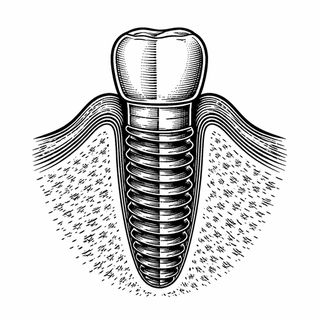
The study, NCT07550127, is focused on peri-implantitis, an inflammatory disease that affects the tissues around a dental implant. In plain English, the gum and supporting bone around an implant get irritated, infected, and damaged over time. That is bad news for an implant that is supposed to behave like a stable structural component. As a biomedical engineer, I cannot help seeing this as a classic interface problem: the implant may be solid, but the biology around it is not always willing to play nice.
Peri-implantitis is especially frustrating because implants are meant to be long-term solutions. When inflammation shows up around them, clinicians are left trying to stop tissue destruction without compromising the implant itself. That is where this trial gets interesting. It is not testing a sci-fi gadget or an experimental molecule with a 17-syllable name. It is comparing two standard surgical approaches and asking a very practical question: does one do a better job of calming inflammation both locally and systemically?
Primary study page: https://clinicaltrials.gov/study/NCT07550127
Table view: https://clinicaltrials.gov/study/NCT07550127?tab=table
The treatment matchup
Participants in this randomized controlled trial are assigned to one of two groups:
- Resective surgery with implantoplasty
- Resective surgery with mechanical debridement only
Mechanical debridement is the familiar clean-up step. Clinicians remove contaminated material and try to reduce the bacterial load around the implant. Implantoplasty goes a step further by reshaping and smoothing the exposed implant surface.
Why might that matter? Dental implant surfaces are often intentionally rough because roughness can help initial integration with bone. But once part of that surface becomes exposed to the mouth, those same microscopic nooks and crannies can become a neighborhood bacteria absolutely love. It is a bit like giving plaque a tiny Death Star trench to hide in. Smoothing the surface may make it harder for biofilm to stick around and easier for patients and clinicians to keep the area clean after surgery.
Why the biology here is more interesting than it sounds
What I like about this trial is that it is not just asking, “Does the gum look better?” It is looking at inflammation in several compartments and across multiple time points.
Participants provide:
- Blood samples before surgery, around 48 hours after surgery, and again about 2 weeks later
- Gum tissue samples at baseline and about 3 months after surgery
- Fluid from around the implant at baseline and about 3 months after surgery
That design suggests the researchers want a layered view of healing. Local tissue and peri-implant fluid can show what is happening right at the problem site. Blood samples can reveal whether the intervention changes broader inflammatory signals in the body.
That matters because inflammation is not just a local tantrum. The body treats it like a network event. Cytokines, immune cells, vascular responses, tissue remodeling, all of it can ripple beyond the immediate site. Watching those changes over 48 hours, 2 weeks, and 3 months gives the trial a more dynamic feel. This is less “before and after” makeover montage and more “let’s track the plot arc over several episodes.”
Why implantoplasty gets people talking
Implantoplasty has supporters because it is mechanically intuitive. If rough exposed implant surfaces help trap biofilm, smoothing them could reduce persistent irritation. That is a satisfying engineering hypothesis. Fewer retention sites, easier hygiene, calmer tissue.
But it is not a universally settled issue, and that is exactly why a randomized trial is worth paying attention to. Any time you alter the implant surface, you are making a permanent physical change. Clinicians want to know whether that tradeoff reliably improves outcomes, how much inflammation actually shifts, and whether any benefit lasts beyond the immediate recovery period.
This study also follows participants in a maintenance program for up to 5 years, which is a strong sign that the team cares about durability, not just a quick cosmetic win. In medicine, a result that looks good at 3 months but unravels later is the sequel nobody asked for.
What could success look like?
If the implantoplasty group shows lower inflammatory markers, better local healing, or more durable control of peri-implantitis, that could influence how clinicians approach exposed rough implant surfaces during surgery.
Potential real-world effects include:
- Better control of inflammation around compromised implants
- Improved odds of keeping an existing implant rather than replacing it
- More evidence-based guidance on when smoothing the implant surface is worth doing
- Better long-term maintenance strategies for patients at risk of recurrence
For patients, that could translate into fewer complications, more predictable recovery, and potentially a better chance of preserving an implant that would otherwise stay on the clinical watchlist.
The challenge this trial is really addressing
The hard part about peri-implantitis is that it lives at the awkward intersection of materials science, microbiology, surgery, and patient maintenance. You can do a technically excellent procedure, but if the surface remains a plaque magnet, or if the inflammatory response stays fired up, the problem can come back.
That is why this study feels useful. It is not pretending there is a single villain. It is testing whether changing the implant’s exposed surface changes the biology enough to matter. That is the kind of question I want clinical research to ask. Not just “Can we do this?” but “Does this small mechanical decision change the whole system in a meaningful way?”
And honestly, that is the real charm of biomedical engineering. Sometimes progress is not a glowing futuristic device. Sometimes it is a better understanding of how a few microns of surface texture can influence a years-long battle between tissue, bacteria, and healing.
Final take
NCT07550127 may not have the flashiest title in clinical research, but it is tackling a problem that matters to both clinicians and patients. By comparing resective surgery with and without implantoplasty, and by measuring both local and systemic inflammation, the trial is built to answer a practical question with real clinical consequences.
That is good trial design. It is focused, mechanistic, and directly tied to decisions people make in the operatory. For a field that often has to balance biology with hardware, that is exactly the sort of grounded research worth watching.
Disclaimer: This post is for educational purposes only and is not medical advice. Clinical trial details can change over time, and treatment decisions should be made with a qualified dental or medical professional.
Citation: ClinicalTrials.gov. Impact of Implantoplasty on Local and Systemic Inflammation in Peri-implantitis: A Randomized Controlled Trial (NCT07550127). https://clinicaltrials.gov/study/NCT07550127