
Have you ever noticed how your morning coffee can turn your day from “I can conquer the world” to “I need a nap on my couch”? Imagine if we could catch those mood swings before they morphed into full-blown episodes. Well, hold onto your caffeine because researchers in Japan are doing just that! A new study suggests that wearable technology may help predict mood episodes in individuals with bipolar disorder, using heart rate variability (HRV) and sleep data. It’s like having a mood ring that actually works – except it’s strapped to your wrist and doesn’t require a mystical crystal.
What’s the Buzz About Bipolar Disorder?
Bipolar disorder is a rollercoaster of emotions, with individuals experiencing extreme highs (mania) and crushing lows (depression). This unpredictable ride can be challenging not just for those with the disorder but also for family and friends. Traditional methods for tracking mood have leaned heavily on self-reports and clinical interviews - think of it as trying to navigate a maze with only a paper map (which, let's face it, isn’t the most reliable tool in the digital age).
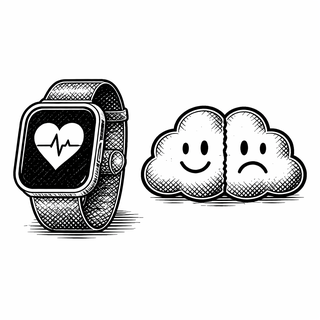
The real catch is that mood episodes often hit when least expected, and there’s a pressing need for more reliable, objective methods to predict and manage them. This is where our friends, the wearables, come into play.
Wearables: The Unsung Heroes of Mood Monitoring
Imagine your trusty smartwatch not only counting your steps but also playing detective on your emotional state. That’s the premise of this study, which monitored a man in his 40s with bipolar disorder using a wearable device over eight months. The researchers tracked his HRV and sleep data, correlating those with his self-reported mood scores. Talk about a high-tech mood diary!
The findings were pretty intriguing. When our subject’s nocturnal RMSSD (a fancy term for a type of HRV) dropped, it often foreshadowed depressive symptoms. Think of RMSSD as the heart's way of saying, “Hey, I’m not feeling too great!” On the flip side, when he spent less time in bed, his manic symptoms tended to ramp up. Who knew that sleep could be such a mood-maker - or breaker, in this case?
The Power of Predictive Data
This case study shines a light on how continuous monitoring could revolutionize treatment for bipolar disorder. Instead of relying solely on subjective reports (which can sometimes be as reliable as a broken clock), healthcare providers could use these objective measures to intervene earlier. Imagine if we could catch that caffeine-fueled spirit before it turns into a manic episode!
This data-driven approach could empower individuals to recognize patterns in their own moods, leading to smarter, proactive management of their mental health. It’s like having a personal coach who nudges you to take a deep breath before diving into the metaphorical shark tank of depression or mania.
What This Means for the Average Joe (or Jane)
Now, you might be thinking, “That’s all great, but what does this mean for me?” Whether you’re dealing with bipolar disorder or just want to understand mood shifts better, the implications of this research are exciting. The idea that wearables can provide insights into our emotional states could extend beyond just bipolar disorder.
For instance, if you’ve ever wanted to understand why you’re suddenly feeling more “meh” during winter months, these insights could offer clues. Maybe it’s a decrease in sleep quality or changes in your heart rate when you’re stressed about work deadlines. It’s like unearthing the mystery behind your mood swings, and who wouldn’t want that?
The Road Ahead
While this study presents promising findings, it’s crucial to remember that it’s just one case. Future research is needed to explore these correlations further and develop predictive models that could be used on a larger scale. The goal is to create a world where anyone dealing with mood disorders could have access to tools that provide real-time feedback on their emotional health.
Imagine a future where your smartwatch doesn’t just remind you to breathe but also alerts you when it senses your mood is dipping. It’s not just about technology; it’s about enhancing lives and giving people the tools they need to navigate their mental health journeys.
In a world where wearables are becoming more common, who knows? Soon, we might be able to expect a notification that reads, “Feeling blue? Maybe it’s time for a little more sleep!”
So, let’s keep an eye on this exciting field of research. Who knows? The next time you check your smartwatch, it might just help you dodge a mood episode - and that’s something we can all raise a coffee mug to!
Disclaimer: This blog post is for informational purposes only and should not be considered medical advice. Always consult a healthcare professional for concerns about mental health or any other medical issues. Images and graphics are for illustrative purposes only and do not depict actual medical devices, procedures, mechanisms, or research findings from the referenced studies.
Citation: Eto A, Mochizuki K, Fukami T, Sakakibara W, Izumi K. Wearable-derived heart rate variability and sleep monitoring as predictors of mood episodes in bipolar disorder: a case report. Front Psychiatry. 2025 Dec 3;16:1695158. doi: 10.3389/fpsyt.2025.1695158.