
Tuesday morning, 6:47 AM. A construction worker named Marcus clips his harness wrong, takes a twelve-foot fall off scaffolding, and lands head-first on compacted gravel. By the time our ambulance arrived - and I can tell you from years of running those calls - the primary injury was already done. But here's the thing nobody warned me about in paramedic school: the real damage was just getting started. Inside Marcus's skull, his own immune system was about to spend the next several days making everything dramatically worse, like a clean-up crew that shows up to a house fire and starts smashing the furniture.
That secondary damage - neuroinflammation, if you want the ten-dollar word - is one of the biggest unsolved problems in traumatic brain injury (TBI) and intracerebral hemorrhage (ICH). And a team of researchers just published work on a nanoparticle system that might finally give us a way to shut it down.
Your Brain's Overzealous Security Team
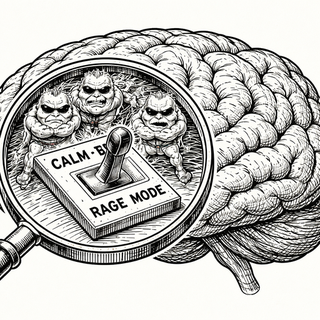
To understand what these researchers built, you need to meet microglia. Think of them as your brain's bouncers. When everything's calm, they patrol quietly, cleaning up cellular debris and keeping things orderly. But when the brain gets injured, a subset of these microglia flip into what scientists call the "M1 polarization" state - basically, full rage mode. They start pumping out inflammatory molecules called cytokines, generating reactive oxygen species (ROS), and generally turning the neighborhood into a war zone.
It's like calling security because someone spilled a drink, and they respond by tear-gassing the entire building.
The problem is that this inflammatory cascade doesn't just attack damaged tissue. It torches healthy neurons, breaks down the blood-brain barrier (your brain's VIP velvet rope), activates astrocytes into a harmful state, and keeps snowballing for days after the initial injury. For patients like Marcus, the brain injury they walked in with is often less severe than what their own immune response creates afterward.
The Lactate Connection (Yes, That Lactate)
Here's where it gets interesting. Recent research has shown that lactate - yeah, the same stuff that makes your legs burn during a sprint - plays a surprising role in keeping microglia angry. M1-polarized microglia export lactate through a transporter called MCT1 (monocarboxylate transporter 1), and this efflux helps sustain their inflammatory programming. Block that transporter, and you can essentially cut the power to the rage machine.
There's already a drug that does this: AR-C155858, an MCT1 inhibitor. The catch? Getting it to the right cells in the right place at the right time is like trying to deliver a pizza to one specific apartment in a city where every building is on fire and the roads are flooded. The blood-brain barrier blocks most drugs. Enzymes chew up AR-C155858 before it arrives. And even if it gets through, you'd want it hitting only the angry M1 microglia, not every cell in the neighborhood.
Enter the MiRCM Nanoparticle: A Very Clever Delivery Truck
The researchers behind this study (Li et al., 2025) built something genuinely elegant. Their MiRCM nanoparticle is a liposomal delivery system - essentially a tiny fat bubble - that solves multiple problems simultaneously.
Targeting: The nanoparticle surface is decorated with two peptides. CAQK homes in on injured brain tissue specifically (it binds to proteins exposed at injury sites). MG1 targets activated microglia. It's like putting both a GPS and a facial recognition system on your delivery drone.
Smart release: The nanoparticle core is made of PPS (poly propylene sulfide), a material that degrades when it encounters ROS. Since injured, inflamed brain tissue is swimming in ROS, the nanoparticle only opens up and releases its payload where inflammation is worst. Healthy tissue? The package stays sealed.
Double duty: While releasing the MCT1 inhibitor to block lactate transport and calm microglia down, the PPS core itself scavenges those damaging ROS. So the delivery vehicle is also medicine. That's like if the pizza box also put out fires.
What Actually Happened in Testing
In both cell culture and animal models of ICH and TBI, MiRCM nanoparticles:
- Selectively accumulated at brain injury sites and inside M1 microglia (the targeting actually worked)
- Scavenged ROS while releasing AR-C155858 in a controlled fashion
- Suppressed M1 microglia polarization and reduced inflammatory cytokine production
- Protected neurons from secondary damage
- Preserved blood-brain barrier integrity
- Boosted the brain's own antioxidant defenses
- Improved neurological function in injured animals
RNA sequencing confirmed that inflammatory gene pathways were broadly downregulated - not just one or two markers, but whole cascades of inflammation getting dialed back. And importantly, biosafety evaluations showed no significant toxicity or organ damage, suggesting the nanoparticles play nicely with the rest of the body.
Why This Matters (And Why We Shouldn't Order Champagne Yet)
If you've spent any time on an ambulance or in a neuro ICU, you know the frustration. We can stabilize TBI patients, manage intracranial pressure, and optimize everything else - but we have almost nothing that directly addresses the inflammatory avalanche happening inside the injured brain. It's the medical equivalent of watching a slow-motion car wreck through a window you can't open.
This MiRCM approach is exciting because it tackles neuroinflammation from two angles simultaneously (lactate transport AND oxidative stress), delivers therapy precisely where it's needed, and does so with a platform that appears safe. The dual-targeting strategy is particularly clever - most drug delivery systems aim for the general area and hope for the best, like throwing darts in the dark. This one uses two independent homing systems.
That said, let's pump the brakes a little. This is preclinical research. Animal models of brain injury, while useful, don't perfectly replicate the messiness of human TBI or ICH. The jump from mice to Marcus is enormous, and many promising nanoparticle therapies have stumbled during that transition. Manufacturing consistency, long-term safety, dosing optimization, and the sheer complexity of human brain injury all present real hurdles.
The Bigger Picture
What's genuinely encouraging is the broader trend this study represents. Researchers are getting smarter about neuroinflammation - not just trying to blanket-suppress the immune response (which causes its own problems), but finding specific molecular levers to pull. The lactate-MCT1 axis as a target for microglial reprogramming is a relatively new idea, and seeing it work in combination with ROS scavenging in a targeted delivery system is a meaningful proof of concept.
For the millions of people worldwide who suffer TBI and ICH each year, better treatments for secondary brain injury can't come soon enough. This nanoparticle won't be in ambulances or ERs tomorrow, but it's a well-designed step in a direction that desperately needs more footsteps.
This blog post discusses research findings and should not be taken as medical advice. If you have concerns about brain injury or neurological conditions, please consult a healthcare provider. Research discussed here represents ongoing scientific investigation and clinical validation is still in progress.
All images used in this post are decorative illustrations only and do not represent or reflect the accuracy, reality, or correctness of the referenced research.
Primary Source: Li et al. Responsive nanoparticles modulating microglia lactate transport alleviate M1-type polarization and neuroinflammation for brain injury therapy. PubMed. 2025. DOI: 41935284