
Fun fact: mitochondria, the tiny power plants inside our cells, are also surprisingly picky about light. Not “houseplant on a windowsill” picky, but picky enough that certain wavelengths of near-infrared light may be able to tap the brakes on cellular energy production. That matters because after cardiac arrest, the brain’s return to oxygen is not always a clean victory lap. Sometimes it is more like restarting an old lawn mower after winter: sparks, smoke, and everyone standing nearby looking nervous.
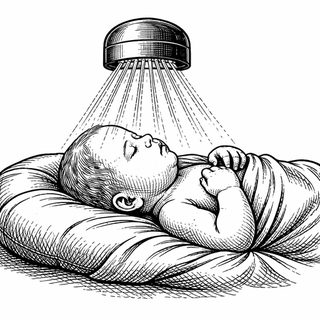
That is the biological idea behind the LUTICA Study, officially titled Light Utilization COX-Inhibitory Device Therapy for Infant Cardiac Arrest, registered as NCT07556939. The table view is available at ClinicalTrials.gov.
The trial is testing whether a device called LUCID can safely deliver therapeutic near-infrared light to the brains of infants after in-hospital cardiac arrest. The goal is not to “revive” the brain with light like a sci-fi charging dock. The goal is subtler: reduce mitochondrial overactivity during reperfusion, when oxygen returns and cells can generate a burst of damaging reactive oxygen species.
Why Infant Cardiac Arrest Is So Hard
Every year in the United States, about 15,200 children receive CPR for in-hospital cardiac arrest, and roughly 60% are younger than one year old. Most of these arrests happen in ICUs or monitored settings, which is both sobering and clinically useful. These are not usually invisible events in the hallway. They are often happening in the very places best equipped to respond.
Infants with congenital or acquired heart disease are especially vulnerable. Registry data cited in the trial summary suggest that around 3.1% of children hospitalized in pediatric cardiac ICUs experience cardiac arrest, with site-to-site rates ranging from 1% to 5.5%. Survival to hospital discharge in one pediatric cardiac critical care registry was about 53%, but survival was lower for medical cardiac patients than for surgical cardiac patients.
Survival is only part of the story. Among children who live through cardiac arrest, neurologic problems are common, including cognitive, motor, and adaptive function deficits. That is the heavy part. Modern ICU care can sometimes get the heart back online, but the brain may still pay the bill.
And right now, post-arrest care is largely supportive: prevent fever, avoid low blood pressure, maintain normal oxygen levels, treat seizures, and try not to make the injured brain’s day any worse. That is good medicine, but it is also a little like trying to clean up a kitchen flood with a towel while the pipe is still thinking about leaking.
The Light-Based Idea
The LUCID device is designed to deliver specific wavelengths of near-infrared light, particularly around 750 nm and 950 nm, to the infant brain. These wavelengths are being studied because they may partially inhibit cytochrome c oxidase, often abbreviated COX, an enzyme in the mitochondrial respiratory chain.
COX is part of the machinery cells use to turn oxygen into usable energy. After cardiac arrest, when blood flow and oxygen return, mitochondria can generate excess reactive oxygen species. These molecules are not automatically villains - biology rarely writes characters that simply - but too much of them can damage cells, membranes, and DNA.
The theory is that briefly and reversibly slowing mitochondrial respiration could reduce that oxidative burst. Think of it as dimming the lights in a room where someone just spilled glitter. You are not fixing everything, but you may be preventing the mess from becoming cosmological.
That is intriguing. It is also exactly where we should pump the brakes.
What LUTICA Is Actually Testing
The LUTICA trial is not trying to prove, in one glorious swoop, that near-infrared light prevents brain injury after infant cardiac arrest. Based on the trial description, this is a study of safety, feasibility, acceptability, and probable benefit.
That matters. Early device trials often need to answer practical questions before they can answer heroic ones:
Can the device be used safely in critically ill infants?
Can clinicians apply it during the messy reality of post-arrest ICU care?
Will families and care teams accept this kind of intervention?
Are there early signals that it might help neurologic outcomes?
The eligible population is specific: infants with acquired or congenital cardiac disease who experience unplanned in-hospital cardiac arrest. The intervention is the LUCID near-infrared light therapy device. The sponsor and official recruitment details should be checked directly in the ClinicalTrials.gov record, because trial status and site information can change faster than anyone’s inbox can emotionally process.
The outcome focus is appropriately cautious. That is a strength, not a weakness. A flashy trial that skips safety and feasibility would be much less impressive. In fragile infants after cardiac arrest, “can we do this without causing trouble?” is not a boring question. It is the first grown-up question in the room.
What The Broader Literature Suggests
The science around pediatric cardiac arrest and post-arrest brain injury has been moving steadily, but not magically. Recent reviews and consensus work continue to emphasize that neurologic injury after pediatric cardiac arrest remains a major challenge, and that targeted post-arrest care is still limited by incomplete evidence.
Relevant recent literature includes work on pediatric post-cardiac arrest care, ischemia-reperfusion injury, mitochondrial dysfunction, and photobiomodulation mechanisms:
- Topjian et al., “Pediatric Post-Cardiac Arrest Care,” Circulation, DOI: 10.1161/CIR.0000000000000697
- Sandroni et al., “Brain injury after cardiac arrest: pathophysiology, treatment, and prognosis,” Intensive Care Medicine, DOI: 10.1007/s00134-021-06548-2
- Hamblin, “Photobiomodulation or low-level laser therapy,” Journal of Biophotonics, DOI: 10.1002/jbio.201600234
- Dompe et al., “Photobiomodulation - Underlying Mechanism and Clinical Applications,” Journal of Clinical Medicine, DOI: 10.3390/jcm9051724
A fair reading is this: the mechanistic rationale is plausible, the clinical need is real, and the leap from “interesting mitochondrial biology” to “better outcomes for infants” is still a leap. Not a cartoon canyon leap, but definitely not a sidewalk crack either.
Why This Trial Is Worth Watching
The best thing about LUTICA is that it aims at a genuine gap. After infant cardiac arrest, clinicians already work hard to stabilize oxygen, blood pressure, temperature, and seizures. But there is no widely established therapy that directly targets reperfusion injury in the infant brain.
If LUCID proves safe and feasible, it could open the door to larger trials testing whether near-infrared COX inhibition improves neurologic outcomes. That would be a meaningful step. Even a modest reduction in brain injury could matter deeply for infants and families, because developmental outcomes unfold over years, not hospital discharge summaries.
Still, skepticism is healthy here. Infant brains are not miniature adult brains. Cardiac ICU patients are medically complex. Light delivery through scalp and skull may vary by anatomy, timing, device placement, and clinical condition. And “near-infrared” is not a magic wand with a charging cable. Dose, wavelength, timing, and tissue penetration all matter.
So the correct emotional posture is cautious interest. Maybe even cautious interest with one eyebrow raised.
The Bottom Line
LUTICA is the kind of early clinical trial that deserves attention precisely because it is not overclaiming. It is testing whether a biologically clever idea can survive contact with real ICU care. That is where many elegant theories go to learn humility.
If the LUCID device is safe, usable, and shows encouraging signals, this could become an important new direction in post-cardiac arrest neuroprotection for infants with heart disease. If it does not, that will also teach us something useful. Science is allowed to be ambitious, but it still has to show its work.
For now, near-infrared light after infant cardiac arrest is not a proven treatment. It is a promising question. And in a field where the current toolbox is still too small, a well-designed question is worth taking seriously.
Disclaimer: This post is for educational purposes only and is not medical advice. Clinical trial details can change, so families and clinicians should consult the official ClinicalTrials.gov listing for NCT07556939 and qualified medical professionals for current information.