
The latest wearable gadgets count our steps, nag us about sleep, and occasionally make us feel judged by a wristwatch. This new research takes that same spirit of tidy, clever technology and sends it somewhere far more interesting: deep into the neck of a mouse, where a tiny biodegradable device nudges the vagus nerve in hopes of calming cardiovascular disease. It is rather like replacing a clunky extension cord with a disappearing valet who knows exactly which switch to flip.
Why the vagus nerve keeps showing up in serious conversations
If you have spent any time around physiology, you eventually meet the vagus nerve. It wanders from the brain down into the chest and abdomen, chatting with the heart, lungs, and digestive tract along the way. For generations, researchers have suspected that this nerve is one of the body's great negotiators. It helps regulate heart rate, inflammation, metabolism, and a fair amount of the body's internal housekeeping.
That makes it an appealing target for bioelectronic medicine. Instead of using a drug to flood the whole body and hope the right tissues get the message, one can imagine stimulating a nerve with exquisite timing and location. A good nerve signal, in principle, might shift whole biological systems at once. The dream is elegant. The engineering, alas, tends to be stubborn.
The mouse problem, which is really a size problem
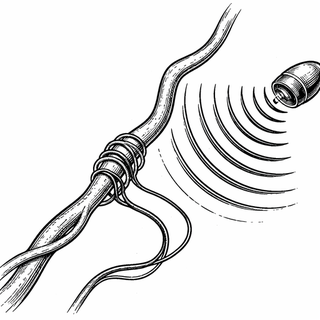
This study focuses on mice, and that matters more than it may seem. Mice are indispensable in early biomedical research, especially when scientists want to study atherosclerosis, inflammation, and long-term disease processes. But the mouse vagus nerve is tiny and delicate. Trying to build a chronic implant for it is a bit like tailoring a winter coat for a spaghetti strand.
Many older devices are simply too bulky, too rigid, or too awkward for such a fragile nerve. Some require sutures. Some do not maintain stable contact over time. Some are not ideal for long-term studies where you want to observe biology, not merely survive the surgery. So the challenge here was not just to stimulate a nerve. It was to do so in a way that is miniaturized, wireless, stable, gentle, and suitable for chronic use.
That is quite a shopping list.
What the researchers built
The device described in this paper is called a wireless biodegradable vagus nerve stimulator, or UBVS. The notable features are worth savoring.
First, it is miniaturized for murine anatomy. Second, it is fully biodegradable, meaning it is designed to break down over time rather than sit in the body indefinitely like a houseguest who has learned where the good tea is kept. Third, it is wireless, powered not by a battery pack dangling about but by focused ultrasound delivered from outside the body.
That last point is particularly clever. Focused ultrasound can deliver energy through the skin and into deep tissue with spatial and temporal control. In plain English, the researchers can turn stimulation on when they want, target where they want, and avoid permanently tethering the animal to external hardware.
The implant also includes a triboelectric energy harvester and a self-adherent neural interface. The paper reports that this allows the device to couple stably to the nerve without sutures and without causing local nerve injury. That is no small achievement. In neuromodulation, contact is everything. Too loose and your signal wanders off. Too aggressive and the tissue lets you know, usually in ways no one likes.
Why this matters beyond gadget admiration
A clever device is pleasant, but biology is the real exam. The researchers tested chronic vagus nerve stimulation with this system in a mouse model of atherosclerosis. Atherosclerosis is the slow, inflammatory buildup of plaque in arteries, and it is one of the great plodders of modern disease: patient, persistent, and expensive.
The study found that chronic stimulation through the UBVS appeared to reprogram the neuroimmune-metabolic axis. That phrase sounds as though it was minted at a very determined conference, but the idea behind it is straightforward. The nervous system, immune system, and metabolism are not separate kingdoms. They are nosy neighbors. Change one, and the others often rearrange the furniture.
In this model, vagus nerve stimulation was associated with reduced inflammatory activation, improved autophagy-efferocytosis, and remodeling of lipid metabolism. Those are not decorative biochemical flourishes. They speak directly to how plaques form, persist, and potentially recede.
Autophagy is the cell's cleanup service, while efferocytosis is the removal of dead or dying cells. When those processes work well, tissue damage and inflammatory clutter can be better managed. Lipid metabolism, meanwhile, shapes how fats are handled and deposited. The reported outcome was a reduction in plaque burden, which is exactly the sort of result that makes cardiovascular researchers sit up a little straighter in their chairs.
A broader shift in medicine
What I find especially intriguing is that this work belongs to a larger historical turn. For decades, medicine has leaned heavily on chemistry. We make molecules, package them, swallow them, inject them, and hope they behave. That approach has done extraordinary good. But another tradition has been growing alongside it: the idea that targeted electrical signals can act almost like medicines.
Not magical signals, to be clear. Biology is never that polite. Still, the notion of using a nerve interface to tamp down inflammation and reshape metabolic behavior would have sounded fanciful to many researchers not all that long ago. Today it sounds ambitious, difficult, and increasingly plausible.
The biodegradable angle also deserves attention. Permanent implants are useful, but they come with obvious burdens. If a device is only needed for a defined period of research or therapy, having it safely degrade could reduce long-term complications and the need for removal procedures. It is a simple idea with large practical consequences.
The cautionary part, because mice are not small people
Now, before anyone imagines a future in which cardiology clinics hand out dissolving nerve stimulators next to the blood pressure cuffs, a few sober notes are in order.
This is preclinical work in a mouse model. Promising mouse studies are the seedlings of medicine, not the finished orchard. Human nerves are larger, human disease is messier, and clinical translation involves a long march through safety testing, device optimization, dosing parameters, reproducibility, and regulatory review. More than one splendid idea has tripped over that path.
There are also practical questions that future studies will need to answer. How durable is the stimulation effect across different disease stages? What are the best ultrasound settings and stimulation schedules? How predictable is biodegradation in varied tissues? And, perhaps most pressing, will the benefits seen in murine atherosclerosis translate into meaningful outcomes in people with cardiovascular disease?
Those are not objections. They are the entrance fee for taking bold science seriously.
Why this paper lingers in the mind
The most appealing research often joins two kinds of ingenuity: biological insight and device craftsmanship. This paper does just that. It respects the fragility of the nerve, the complexity of chronic disease, and the practical limits of working in mice. Instead of forcing old hardware onto a difficult problem, it builds a new tool around the anatomy and the biology.
That is how progress often happens. Not with a trumpet blast, but with some patient engineer or physiologist deciding that the existing apparatus is ridiculous for the question at hand and quietly making a better one.
For readers outside the lab, the takeaway is simple enough. This is a study about using a tiny, wireless, biodegradable stimulator to influence the vagus nerve and, through it, the inflammatory and metabolic processes that help drive cardiovascular disease. If later work bears this out, such devices could become part of a future in which treating chronic illness involves not only drugs and surgery, but also carefully delivered signals.
The heart, after all, has always been a little dramatic. It now appears the nerves around it may be just as persuasive.
This blog post discusses research findings and should not be taken as medical advice. If you have concerns about cardiovascular disease, atherosclerosis, or related conditions, please consult a healthcare provider. Research discussed here represents ongoing scientific investigation and clinical validation is still in progress.
All images used in this post are decorative illustrations only and do not represent or reflect the accuracy, reality, or correctness of the referenced research.
Primary Source: Neuroimmune-Metabolic Regulation by a Wireless Biodegradable Neuromodulator for Cardiovascular Therapy in a Mouse Model. PubMed Record 41983421. https://pubmed.ncbi.nlm.nih.gov/41983421/