
When COPD worsens, it can roll in like a thunderstorm over a flat field. One minute the air feels manageable, the next it is all pressure, panic, and the grim sense that breathing has become an unpaid full-time job. That is why a study like NCT07554352 caught my attention. It is testing whether a home-monitoring software platform called RespirAI can spot the early signs of a COPD exacerbation before the situation turns into a medical sprint.
For anyone working in public health, that idea lands hard. Not because technology is magic. It is not. Most gadgets are less wizard and more needy roommate. But when a tool has a real chance to help people catch a dangerous downturn earlier, especially people who face barriers to regular care, it deserves a closer look.
What this study is trying to do
This clinical study, listed on ClinicalTrials.gov as “A Multi-center, Observational Prospective Clinical Study to Evaluate the Safety and Effectiveness of a Home-Monitoring COPD Management Software for Early Detection of Exacerbations,” focuses on adults over age 21 with physician-diagnosed COPD who are at high risk for exacerbations.
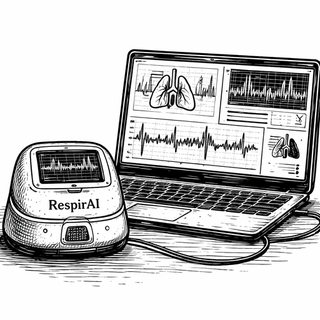
The setup is fairly straightforward. Participants use a home-monitoring device and software platform called RespirAI. The system collects data and runs it through an AI-based algorithm designed to predict when a COPD exacerbation may be developing. Researchers then compare those predictions with clinically documented exacerbations to see how accurate the system really is.
This matters because COPD exacerbations are not just “bad breathing days.” They can lead to emergency visits, hospitalizations, steep drops in quality of life, and sometimes long-term decline. A flare-up that gets treated early may be easier to manage. A flare-up caught late can hit like a falling piano, and the lungs are not built for slapstick.
Why COPD needs better early warning systems
COPD, or chronic obstructive pulmonary disease, makes it harder to move air in and out of the lungs. People may deal with chronic cough, mucus, shortness of breath, wheezing, fatigue, and a frustrating mismatch between what they want to do and what their lungs will tolerate. Even simple tasks can become strategic operations.
What makes COPD especially difficult is that symptoms can shift gradually. A person may not realize they are heading into an exacerbation until they are already deep in it. Clinicians know that timing matters. The earlier symptoms are recognized, the better the odds of starting treatment before the flare becomes severe.
That is where home monitoring gets interesting. Instead of waiting for a crisis to announce itself with all the subtlety of a fire alarm, a system like RespirAI aims to notice smaller warning signs and flag them sooner. Done well, that could help patients, caregivers, and clinicians act faster.
Why this could matter for health equity
This is the part that keeps me leaning forward.
COPD does not land evenly across the population. People in low-income communities, rural areas, and places with high exposure to air pollution, tobacco smoke, occupational hazards, or limited access to specialty care often carry a heavier burden. So do many older adults who may already be juggling transportation issues, medication costs, and a health system that can feel like a maze designed by committee.
A home-based system has obvious appeal here. If it works, it could reduce some of the dependence on frequent in-person check-ins. It could offer earlier warnings to people who live far from pulmonary clinics or who cannot easily take time off work, find a ride, or navigate a dozen insurance hurdles before lunch.
That does not mean technology automatically equals equity. Far from it. A tool can widen gaps if it assumes stable internet, high health literacy, easy device setup, or perfect English. Public health has seen this movie before, and the sequel is never better. But if tools like this are designed with real-world users in mind, including older adults and underserved communities, they can become part of a more responsive and fair system.
What makes this study intriguing
Several things.
First, it is observational and prospective, which means researchers are following participants forward in time and comparing the software’s predictions against what actually happens clinically. That is a sensible way to test whether the tool can perform in the messiness of real life, where people miss steps, symptoms blur together, and lungs stubbornly refuse to read product manuals.
Second, the study is looking at both safety and effectiveness. That is important. A system that cries wolf too often could create stress, extra calls, and unnecessary care. A system that misses real exacerbations could be worse. For AI in health care, accuracy is not a luxury feature. It is the whole ballgame.
Third, this trial sits at the intersection of three big needs: chronic disease management, home-based care, and earlier intervention. That combination is exactly where health systems are trying to move, especially as they cope with aging populations and limited clinical capacity.
The real-world payoff if it succeeds
If RespirAI can reliably detect COPD exacerbations early, the downstream benefits could be significant.
Patients could get treatment sooner. Care teams could intervene before symptoms spiral. Families might avoid some of the chaos that comes with sudden deterioration. Hospitals and emergency departments could see fewer urgent cases that might have been managed earlier in the community.
That kind of shift matters for everyone, but it matters even more for people who are already medically and socially stretched thin. Earlier detection can mean fewer crises, fewer missed workdays, fewer frightening nights, and more control. In chronic disease care, “more control” is not a small thing. It is often the difference between life feeling livable and life feeling like a series of ambushes.
There is also a broader systems angle. If home monitoring can help identify trouble earlier, it may support more efficient use of clinical resources. That is not as flashy as saying AI will transform medicine by Tuesday, but frankly it is more believable.
The hard part no one should skip
Now for the realism.
An AI tool is only as good as the data it receives and the context in which it operates. COPD symptoms can overlap with infections, heart problems, anxiety, and the general unpredictability of being human in a complicated body. Researchers will need to know not just whether the system detects exacerbations, but how often it gives false alarms, how usable it is at home, and whether people can stick with it over time.
The public summary provided for this study makes the core objective clear, but the bigger questions are practical ones. Who benefits most? Who gets left out? Does the tool work equally well across different populations? Can it support care without becoming one more dashboard for overwhelmed clinicians to babysit?
Those are not side questions. They are the questions.
Why I am watching this one
I am interested in this study because it takes a common public health problem and aims at a very concrete pressure point: catching decline early enough to do something useful about it. That is the kind of innovation worth paying attention to. Not shiny for the sake of shiny, but potentially helpful where the stakes are real.
For people living with COPD, especially those navigating limited access to care, an effective home-monitoring system could feel less like a gadget and more like backup. Not a replacement for clinicians, not a miracle, but a better heads-up when the weather starts turning.
And sometimes, in health care, a better heads-up is exactly what changes the forecast.
Clinical trial links:
Primary listing: https://clinicaltrials.gov/study/NCT07554352
Table view: https://clinicaltrials.gov/study/NCT07554352?tab=table
Disclaimer: This post is for educational purposes only and is not medical advice. Clinical trial details can change over time, and people with COPD should talk with a qualified health professional about diagnosis, monitoring, and treatment decisions.
Citation: ClinicalTrials.gov. NCT07554352. A Multi-center, Observational Prospective Clinical Study to Evaluate the Safety and Effectiveness of a Home-Monitoring COPD Management Software for Early Detection of Exacerbations. Available at: https://clinicaltrials.gov/study/NCT07554352