
Picture this: a blood clot the size of a small pea parks itself in one of your brain's major arteries. Within minutes, roughly 1.9 million neurons start dying every 60 seconds. That's not a typo. Almost two million brain cells per minute, just... gone. Time, as stroke neurologists love to remind everyone, is brain.
So what if I told you there's a clinical trial testing what is essentially a next-generation vacuum cleaner for your cerebral arteries? Welcome to ADAPT 2.0 - and yes, the name is just as satisfyingly techy as it sounds.
Wait, What Was ADAPT 1.0?
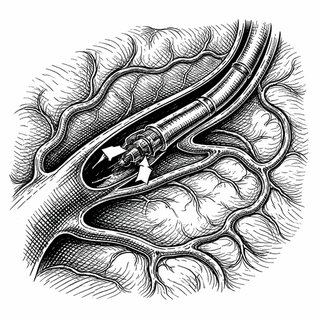
ADAPT stands for "A Direct Aspiration first Pass Technique," which is the medical world's way of saying "we're going to thread a catheter up to the clot and suck it out." If that sounds straightforward, that's because the core concept genuinely is. Instead of deploying a tiny wire-mesh cage (called a stent retriever) to grab the clot and drag it out - which was the dominant technique for years - aspiration thrombectomy takes the more intuitive approach. Get close. Apply suction. Remove the offending clot.
The original ADAPT technique, pioneered in the early 2010s, proved that aspiration-first approaches could go toe-to-toe with stent retrievers. The landmark ASTER trial in 2017 showed that direct aspiration was non-inferior to stent retrievers for achieving successful revascularization in large vessel occlusion strokes (Lapergue et al., JAMA, 2017; DOI: 10.1001/jama.2017.15644). Then the COMPASS trial in 2019 reinforced this, demonstrating that aspiration thrombectomy could match stent retriever outcomes with potentially fewer passes and faster procedures (Turk et al., Lancet, 2019; DOI: 10.1016/S0140-6736(19)30297-1).
So if ADAPT already works, why do we need version 2.0?
Because "Works" and "Works Brilliantly" Are Different Things
Here's the thing about aspiration thrombectomy - it doesn't always get the clot on the first pass. Sometimes the clot is stubborn. Sometimes it fragments. Sometimes the suction loses its seal against the vessel wall and the clot just sits there like a defiant house guest who won't take the hint. First-pass effect rates (getting the clot out in one shot) hover around 50-70% depending on the study and clot characteristics, which is good but leaves room for improvement.
ADAPT 2.0 introduces the Zoom System with Continuous Dual Aspiration Technique (CDAT), which is where things get genuinely clever.
Traditional aspiration uses a single vacuum source through the catheter. CDAT, as the name implies, employs two simultaneous aspiration sources. Think of it like upgrading from a handheld dustbuster to a dual-motor shop vac. By maintaining continuous suction through two channels, the technique aims to create a more powerful, more consistent vacuum seal against the clot. This should theoretically reduce the chances of clot fragmentation, improve first-pass success rates, and speed up the overall procedure.
And in stroke treatment, speed isn't just a nice-to-have. It's the whole ballgame.
The "Time Is Brain" Math That Keeps Neurologists Up at Night
A major meta-analysis of five randomized trials confirmed that endovascular thrombectomy dramatically improves outcomes for patients with large vessel occlusion strokes, but the benefit shrinks with every passing minute (Goyal et al., Lancet, 2016; DOI: 10.1016/S0140-6736(16)00163-X). Every 15-minute delay in reperfusion correlates with measurably worse functional outcomes. So a technique that could reliably get clots out faster, in fewer passes, with less clot fragmentation? That's not an incremental improvement. That's potentially the difference between a patient walking out of the hospital and one who doesn't.
Recent research has increasingly focused on optimizing thrombectomy techniques rather than just proving they work. We know thrombectomy saves lives and reduces disability - that question was answered decisively by the "big five" trials back in 2015. The current frontier is making every procedure faster, more complete, and more predictable (Primiani et al., J NeuroInterv Surg, 2023; DOI: 10.1136/jnis-2022-019625).
What the Trial Is Actually Testing
The ADAPT 2.0 trial is designed to evaluate the effectiveness, safety, and clinical performance of this first-line aspiration approach using the Zoom System with CDAT. The study will be looking at metrics that matter most in stroke intervention: successful revascularization rates, procedural time, number of passes needed, and clinical outcomes.
What makes this particularly interesting is the "first-line" framing. This isn't testing CDAT as a bailout when other methods fail. It's positioning dual aspiration as the opening move - the technique you reach for first when a patient rolls through the door with a large vessel occlusion.
Why I Find This Genuinely Exciting
I'll be honest - stroke research doesn't always get the glamorous headlines. It's not CRISPR. It's not weight-loss drugs. But the sheer mechanical elegance of what interventional neuroradiologists do during a thrombectomy is, frankly, stunning. They navigate a catheter from your groin (or sometimes your wrist) up through your aorta, into your neck, through increasingly tiny cerebral arteries, right up to a clot that's actively killing brain tissue - all while watching on a fluoroscopy screen. And they do this on a clock that's measured in minutes.
Any technology that makes this process more reliable is worth paying attention to. The progression from stent retrievers alone, to aspiration-first techniques, to now dual aspiration with optimized catheter systems represents exactly the kind of iterative engineering improvement that saves lives without making headlines. It's not flashy. But the patient who gets complete revascularization on the first pass instead of the third? They don't care about flashy. They care about keeping the ability to speak, walk, and recognize their family.
The Bigger Picture
Stroke remains the leading cause of long-term disability worldwide and the second leading cause of death globally, according to the World Health Organization. About 87% of strokes are ischemic (caused by clots), and a significant proportion of those involve large vessel occlusions that are candidates for thrombectomy. Even small improvements in technique efficacy or procedure time could translate to better outcomes for hundreds of thousands of patients annually.
ADAPT 2.0 might sound like a software update, but it's really a hardware and technique upgrade for one of modern medicine's most time-critical procedures. And honestly? I can't wait to see the data.
Disclaimer: This blog post is for educational and informational purposes only and does not constitute medical advice. Clinical trial outcomes are not guaranteed. Always consult a qualified healthcare professional for medical decisions. The trial discussed is registered at ClinicalTrials.gov under identifier NCT07491952.
References:
-
Lapergue B, et al. Effect of Endovascular Contact Aspiration vs Stent Retriever on Revascularization in Patients With Acute Ischemic Stroke and Large Vessel Occlusion: The ASTER Randomized Clinical Trial. JAMA. 2017;318(5):443-452. DOI: 10.1001/jama.2017.15644
-
Turk AS, et al. Aspiration thrombectomy versus stent retriever thrombectomy as first-line approach for large vessel occlusion (COMPASS): a multicentre, randomised, open label, blinded outcome, non-inferiority trial. Lancet. 2019;393(10175):998-1008. DOI: 10.1016/S0140-6736(19)30297-1
-
Goyal M, et al. Endovascular thrombectomy after large-vessel ischaemic stroke: a meta-analysis of individual patient data from five randomised trials. Lancet. 2016;387(10029):1723-1731. DOI: 10.1016/S0140-6736(16)00163-X
-
Primiani CT, et al. Direct aspiration versus stent retriever thrombectomy: a systematic review and meta-analysis. J NeuroInterv Surg. 2023;15(7):665-671. DOI: 10.1136/jnis-2022-019625
-
ClinicalTrials.gov. Clinical Evaluation of Continuous Dual Aspiration Technique With Zoom System for Stroke (ADAPT 2.0). Identifier: NCT07491952.