
If you've ever wondered what happens to a medical device after the FDA gives it the thumbs up, you're about to find out. The GORE VIABAHN VBX Balloon Expandable Endoprosthesis - a name so long it probably needs its own business card - is the subject of an ongoing post-market study (NCT07279649) that's collecting real-world data on how this stent performs outside the controlled conditions of initial clinical trials.
Think of it as the difference between a car's performance on a test track versus how it handles your actual commute through potholes, traffic, and that mysterious squeaking sound that only happens when you're running late.
What Exactly Is a Balloon Expandable Endoprosthesis?
Let me translate from medical device jargon to human language.
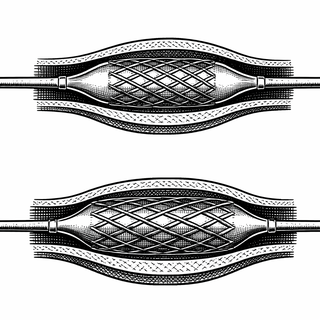
An endoprosthesis is basically a tube that gets placed inside a blood vessel. "Endo" means inside, and "prosthesis" means an artificial device that replaces or supports a body part. The GORE VIABAHN VBX specifically consists of a 316L surgical grade stainless steel balloon expandable stent covered with a fluoropolymer graft.
The "balloon expandable" part refers to how the device is deployed. The stent is delivered to its target location while compressed around a deflated balloon on a catheter. Once in position, the balloon is inflated, which expands the stent to its final diameter and presses it firmly against the vessel wall. Then the balloon is deflated and removed, leaving the stent in place like a tiny scaffolding structure inside your artery.
It's a bit like those compressed towels you get at hotels that expand when you add water - except made of surgical steel, covered in specialized polymer, and deployed inside your cardiovascular system. So, you know, slightly higher stakes.
The Iliac Arteries: Your Body's Highway System
The GORE VIABAHN VBX is FDA-approved for treating lesions in the iliac arteries - the major blood vessels that branch off from your aorta and supply blood to your legs and pelvic region.
Your iliac arteries are like the interstate highways of your lower body's circulation. When they develop problems - narrowing (stenosis), blockages, or damage - the consequences range from leg pain during exercise to tissue death in severe cases. Peripheral artery disease (PAD) affecting these vessels is common, especially in people with risk factors like diabetes, smoking, high blood pressure, and high cholesterol.
The VBX stent is indicated for treating lesions in iliac arteries with reference vessel diameters ranging from 5 mm to 13 mm and lesion lengths up to 110 mm - which, for context, means it can handle vessels from about the width of a pencil to slightly larger than your pinky finger, with blockages up to about 4 inches long.
That's actually a pretty wide range, which is part of what makes this device useful. Different patients have different anatomy, and a one-size-fits-all approach doesn't work well when you're dealing with blood vessels.
Why Covered Stents Matter
Not all stents are created equal. Traditional bare metal stents are essentially mesh tubes - they keep the vessel open but don't provide a complete barrier between the stent and the blood flowing through it.
The VBX is a covered stent - that fluoropolymer graft I mentioned earlier completely covers the metal framework. This coverage provides several advantages:
- Sealing capability: The graft can seal off problems like vessel ruptures, perforations, or leaking aneurysms
- Lesion exclusion: The covering can exclude diseased portions of the vessel wall from blood flow
- Reduced tissue ingrowth: While bare metal stents can experience tissue growing through the mesh (which can lead to re-narrowing), covered stents present a smooth surface
Think of it as the difference between a chain-link fence and a solid wall. Both provide structure, but they interact very differently with what's around them.
The EXPAND Registry: Tracking Real-World Performance
Gore completed enrollment in the EXPAND Post-Market Registry in 2022, with 280 patients at 15 European sites. This registry is collecting safety and performance data on the VBX stent graft across various uses - from treating occlusive disease to serving as a bridging stent in complex aortic repairs.
One particularly interesting aspect of the EXPAND registry is its focus on the VBX as a bridging stent for fenestrated and branched endovascular aortic repair (F/BEVAR). This is a technique used to treat complex aortic aneurysms that involve the branches to vital organs like the kidneys and intestines.
In these procedures, a customized stent graft is placed in the main aorta, with openings (fenestrations) or branches that align with the branch vessels. Smaller stents - bridging stents - are then deployed to connect these openings to the branch vessels, maintaining blood flow to the organs.
It's like building an intersection in the middle of a highway without stopping traffic. Extremely tricky, technically demanding, and absolutely requiring equipment you can trust.
The VBX FORWARD Study: The Next Chapter
In January 2024, Gore announced the enrollment of the first patients in the VBX FORWARD Clinical Study (NCT05811364) - a global prospective, multicenter, randomized controlled trial comparing the VBX stent graft to bare metal stents for patients with complex iliac occlusive disease.
This study aims to enroll approximately 244 subjects across 40 sites in the United States, Australia, New Zealand, and Europe. Participants are randomized 1:1 to either the VBX group or a control group receiving bare metal stents, with follow-up extending to five years.
The primary endpoint is 12-month primary patency - essentially, whether the treated vessel remains open without needing additional intervention. This will be evaluated by an independent imaging core laboratory and Clinical Events Committee, removing any potential for bias from the investigators performing the procedures.
Five years of follow-up is significant. Many stent problems don't emerge immediately - restenosis (re-narrowing), stent fracture, and other issues can develop over time. Long-term data helps physicians and patients make informed decisions about which devices to use.
The Evolution: Lower Profile, Broader Application
Medical devices, like smartphones, keep getting better with each iteration. Gore has been progressively improving the VBX stent graft's profile - the diameter of the delivery system required to deploy it.
A lower profile matters because it means the device can be delivered through smaller access points, potentially allowing treatment of patients who wouldn't have been candidates for earlier, bulkier versions. The most recent FDA approval includes 6-French compatible configurations - that's a catheter outer diameter of about 2mm.
The device now comes in a 79mm length configuration and offers a wide range of stent diameter adjustability. This flexibility means physicians can treat a broader range of vessel sizes and lesion lengths with a single product family.
In July 2025, Gore received CE Mark approval in Europe for an expanded indication - using the VBX as a bridging stent with branched and fenestrated aortic endografts for treating aortic aneurysms involving the renal and mesenteric arteries. This regulatory expansion reflects the accumulated experience showing the device performs well in these demanding applications.
Long-Term Data: The 5-Year Story
Published data from the VBX FLEX study - a prospective, multicenter, nonrandomized, single-arm study - provides 5-year follow-up on patients treated for de novo or restenotic aortoiliac lesions. These results, published in the Journal of Endovascular Therapy in early 2025, represent some of the longest-term data available for this device.
Long-term studies like this are invaluable. They answer questions that simply can't be addressed in shorter trials: How does the device hold up over time? Does the stent fracture? Does the vessel around it remain healthy? Are there late complications that weren't apparent initially?
For physicians choosing between different devices, this kind of durable, real-world evidence is exactly what they need to make informed recommendations to their patients.
What Post-Market Studies Tell Us
Post-market studies like NCT07279649 serve several important purposes:
Confirmation of safety in broader populations: Clinical trials that lead to FDA approval typically have strict inclusion and exclusion criteria. Post-market studies capture data from patients who might not have qualified for initial trials - older patients, those with more complex anatomy, or those with additional medical conditions.
Long-term durability data: Initial approval studies might only follow patients for a year or two. Post-market registries can track outcomes for five years or more, revealing late-emerging issues.
Real-world practice patterns: How do physicians actually use the device? In what conditions? Combined with what other treatments? This practical information helps refine best practices and identify optimal patient selection.
Rare adverse events: Some complications only occur in one in several thousand patients - too rare to show up reliably in trials of a few hundred subjects, but real enough to matter. Large registries can detect these rare events.
The Bigger Picture
The ongoing monitoring and study of the VBX stent graft represents how modern medical device oversight should work. Approval isn't the end of the story - it's the beginning of a long-term commitment to understanding how the device performs in the real world.
For patients with iliac artery disease or complex aortic aneurysms, this matters. When a physician recommends the VBX stent graft, they're not just relying on initial approval data - they're drawing on years of accumulated experience, multiple registries, and ongoing studies that continue to refine our understanding of when and how to use this device most effectively.
Is it the most exciting research happening in medicine? Probably not. But it's exactly the kind of careful, systematic, long-term follow-up that separates genuinely good devices from those that looked promising initially but didn't pan out over time.
And if that stent is holding open your iliac artery, keeping blood flowing to your legs, you probably care quite a bit about whether it's going to keep working for the next decade.
Clinical Trial Reference: NCT07279649 - "Post-Market Registry of the GORE VIABAHN VBX Balloon Expandable Endoprosthesis"
For more information on VBX clinical studies: Journal of Endovascular Therapy 2025;32:68-76 (5-year FLEX study results); www.goremedical.com
Disclaimer: This blog post is for informational purposes only and does not constitute medical advice. Medical devices should only be used as directed by qualified healthcare providers. Always consult with a vascular specialist for guidance on treatment options for peripheral artery disease or aortic conditions. Images and graphics are for illustrative purposes only and do not depict actual medical devices, procedures, mechanisms, or research findings from the referenced studies.