
Things I learned this week, over coffee and a mildly overworked inbox: some chemical bonds are drama queens, blood is a messier testing environment than most lab diagrams politely admit, and a new Alzheimer’s biosensor paper makes a surprisingly convincing case that palladium might outshine gold for one very specific job.
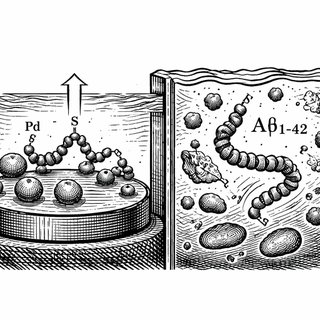
That job is detecting amyloid-beta 1-42, often written as Aβ1-42, a biomarker associated with Alzheimer’s disease. And if that phrase makes your eyes glaze over a little, stay with me. The core idea is simpler than it sounds. Researchers are trying to build sensors that can pick a meaningful signal out of a biological soup full of proteins, salts, and assorted molecular party crashers. It is a bit like trying to hear one violin in a cafeteria during peak lunch hour.
Why this matters to patients
In clinic-facing research, I always come back to the same question: does this make life better for patients and families, or is it just a fancy graph in a paper?
Alzheimer’s disease is one of those conditions where earlier, more reliable detection could matter enormously. Better biomarkers could help identify disease sooner, track progression more accurately, and eventually support treatment decisions or clinical trial enrollment with less guesswork. Right now, many of the strongest biomarker tools involve expensive imaging, specialized lab methods, or procedures that are not exactly anyone’s idea of a relaxing Tuesday.
That is why blood-based detection keeps attracting attention. A serum test that is sensitive, stable, and practical would be easier to scale and easier on patients. The catch is that blood is not cooperative. It fouls sensors. It contains compounds that interfere with measurements. It behaves, in other words, like real life.
The problem with “gold standard” chemistry
This paper focuses on a technical headache in electrochemical biosensing. Many biosensors are built using gold-sulfur bonds, often abbreviated as Au-S bonds. Gold has long been a favorite material because it is chemically useful and relatively easy to work with. But in complex biological fluids, that bond can run into trouble.
Two big problems show up. First, there is biofouling. Unwanted molecules in serum stick to the sensor surface and gum up the works. Second, there is interference from biothiols, sulfur-containing molecules in the body that can displace or disrupt what the sensor is trying to hold in place. If your sensor depends on a tidy surface and stable chemistry, serum can arrive like a toddler with syrupy hands.
The researchers here asked a very practical question: what if the usual gold-sulfur setup is simply not the best anchor for this kind of sensor?
What they built instead
Their answer was a biosensor based on palladium-sulfur, or Pd-S, bonding.
They designed a multifunctional peptide that does three jobs at once. One part helps anchor the peptide to the sensor surface. Another part helps resist fouling. A third part recognizes the target biomarker, Aβ1-42. That peptide was then immobilized onto a palladium nanoparticle-modified electrode through the Pd-S bond.
I like this design because it is not just “swap one metal for another and hope for the best.” It is more thoughtful than that. The peptide is doing structural work, protective work, and detection work. In translational research terms, that matters, because elegant systems often fail when each component only performs well under pampered lab conditions.
Why palladium may be better than gold here
According to the paper, the Pd-S bond showed several advantages over the conventional Au-S bond. The authors report higher binding energy, shorter bond length, and better electron transfer. Those are chemistry details, yes, but they translate into something more intuitive: a stronger, tighter, more functionally efficient connection at the sensor surface.
That stronger bond seems to help in exactly the places where real-world biosensors often stumble. The sensor showed strong antifouling performance in complex biofluids and better resistance to displacement by biothiols. In plain English, it stayed put and kept working when surrounded by the kind of biological clutter that usually causes trouble.
For anyone who has ever watched a beautiful prototype collapse the moment it meets actual patient samples, that is the interesting part. Plenty of sensors perform wonderfully in clean buffer solutions. Serum is where optimism goes to get peer reviewed.
The detection result worth noticing
The target here was Aβ1-42, one of the better-known Alzheimer’s-related biomarkers. The paper reports that the biosensor achieved electrochemical detection in serum with a wide linear range beginning at 0.1 pg/mL. The abstract provided here is truncated, so I am being careful not to fill in numbers that were not included, but even the reported lower end suggests the authors were aiming for high sensitivity.
Sensitivity alone is not enough, of course. A clinically useful test also needs reproducibility, specificity, manufacturability, and validation in appropriately diverse patient populations. Still, when I read a biosensor paper, I pay close attention to whether the authors are tackling the annoying practical barriers or quietly stepping around them. This group tackled them directly.
What makes this research intriguing
The most interesting thing about this study is not just that it detects an Alzheimer’s biomarker. It is that it addresses a boring-sounding but deeply important reason many promising sensors never become useful tools: surface chemistry instability in messy samples.
That may sound niche, but it is often the difference between a paper and a platform. If Pd-S immobilization really offers a more robust way to build peptide-based electrochemical sensors, the implications could extend beyond Aβ1-42. Similar strategies might be adapted for other disease biomarkers where blood-based detection is attractive but technically stubborn.
This is one of those moments where the innovation is not a flashy new gadget. It is a better handshake between the sensing surface and the molecule doing the sensing. Quietly powerful, if it holds up.
What still needs to happen next
No one should read this as “Alzheimer’s blood test solved.” Not even close.
The next questions are the ones that decide whether a promising sensor becomes a useful clinical tool. How does it perform across larger sample sets? How does it compare with existing biomarker platforms? Can it distinguish disease states in ways that change clinical care? Is manufacturing consistent? Does the signal remain reliable across time, storage conditions, and routine handling?
And because this is Alzheimer’s disease, the bar should be high. Families deserve tools that are not only innovative but dependable. A test that performs beautifully in a controlled experiment is encouraging. A test that still performs when scaled, standardized, and clinically validated is the real prize.
The bedside view
From the lab bench to the bedside, this paper speaks to a familiar truth: the hard part is often not detecting a biomarker once. It is detecting it accurately in the unruly environment of actual human samples, again and again, without the chemistry quietly falling apart.
That is why this study caught my attention. It takes a common biosensor weakness, rethinks the bond holding the system together, and shows a plausible path toward more robust serum detection of an Alzheimer’s biomarker. No fireworks required. Just better chemistry, used intelligently.
And honestly, medicine could use more of that. Fewer grand promises. More sturdy ideas that survive contact with reality.
This blog post discusses research findings and should not be taken as medical advice. If you have concerns about Alzheimer’s disease or memory-related symptoms, please consult a healthcare provider. Research discussed here represents ongoing scientific investigation and clinical validation is still in progress.
All images used in this post are decorative illustrations only and do not represent or reflect the accuracy, reality, or correctness of the referenced research.
Primary Source: A Robust Biosensor Based on the Pd-S Bond-Immobilized Peptide toward Antifouling Electrochemical Detection of an Alzheimer’s Disease Biomarker in Serum. PubMed Record 42011957. https://pubmed.ncbi.nlm.nih.gov/42011957/