
In the time it takes you to read this sentence, immune cells have inspected thousands of microbes, a few bacteria have divided, and somewhere a clinician has ordered an antibiotic while hoping the lab result arrives before the patient gets worse. That last part is the bottleneck. Modern infection care still too often runs like a dinner service where the soup is on fire and the ingredients are being identified after plating.
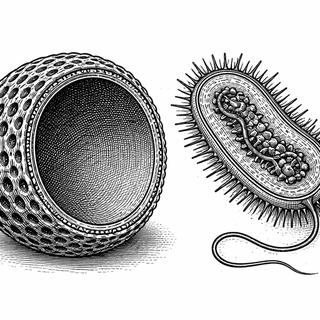
That is why this review on hollow micro- and nanostructures is worth paying attention to. The paper argues that these tiny hollow particles are not just another fancy material looking for a problem. They may offer a practical platform for both finding pathogens faster and hitting them harder, which is exactly the kind of double-duty engineering people in diagnostics and devices like to see. In industry terms, this is not a one-trick pony. It is a packaging strategy with range.
Why “hollow” matters
At first glance, “hollow micro- and nanostructures” sounds like something produced when materials scientists are left unsupervised near a grant budget. But the basic idea is straightforward. These are very small particles or shells with an empty interior and a tunable outer surface. That architecture gives engineers more room to load cargo, more surface area for reactions, and more ways to control how the structure interacts with bacteria, light, heat, drugs, or chemical signals.
Think of a solid particle as a potato. Useful, sturdy, familiar. A hollow particle is more like a stuffed pasta shell. Same footprint, but now you can put something inside, season the outside, and decide how fast the filling comes out. Device people hear that and immediately start sketching workflows.
According to the review, these hollow structures can be built with a wide range of compositions and fabrication methods. That matters because no single material wins every market. A platform gets interesting when it can be tuned for sensitivity, biocompatibility, manufacturability, and cost without collapsing into a lab-only curiosity.
Better sensing, faster answers
The diagnostic side of this story is probably the easier commercial sell. When clinicians suspect bacterial infection, speed and specificity are everything. The longer it takes to identify the bug, the more medicine defaults to broad-spectrum antibiotics, which is a bit like fixing a delicate watch with a frying pan.
The review describes how hollow micro- and nanostructures improve several sensing modes, including colorimetric, fluorescence, surface-enhanced Raman scattering, electrochemical, and photothermal detection. For a general audience, the translation is simple: these particles can make weak biological signals louder, cleaner, or easier to measure.
That could mean a color change that is easier to see, a fluorescence signal that is brighter, an electrochemical readout that is more sensitive, or a Raman signature that is more distinct. From an engineering perspective, the hollow design helps because it increases reactive surface area and creates little environments where detection chemistry performs better. More contact, better amplification, tighter control.
If that sounds incremental, good. Diagnostics often improve by increments that add up to major workflow gains. Nobody throws a parade for a 15-minute improvement in pathogen detection time, but hospitals notice. So do purchasing committees, eventually.
Not just diagnosis - therapy too
Where the review gets more ambitious is on the treatment side. These hollow structures are being explored not only as passive carriers, but as active antibacterial tools. Their reported capabilities include enzyme-like catalysis, photothermal effects, photocatalytic activity, controlled drug release, and even piezocatalytic effects.
That is a busy menu, but the theme is consistent: use the material itself to damage bacteria, disrupt biofilms, generate reactive species, release drugs in a controlled way, or convert external energy into a local antimicrobial effect. In plain English, the particle is not just carrying the medicine to the fight. In some cases, it is also bringing a flashlight, a blowtorch, and a timer.
This is especially appealing in the age of antimicrobial resistance. Resistant bacteria do not care how elegant your mechanism diagram looks. If a platform can combine direct bacterial killing with targeted delivery and a diagnostic signal, that starts to look like a more serious answer to a harder problem.
The word the paper uses is “theranostics,” meaning therapy plus diagnostics in one system. That term gets abused often enough to deserve probation, but here it fits. The promise is a platform that can help detect a pathogen, characterize the problem, and then deliver or activate treatment with more precision than conventional approaches.
The business case is real, but the road is still ugly
This is where skepticism earns its keep. Great material properties do not automatically become useful products. The review is refreshingly clear that hollow micro- and nanostructures still face familiar translation headaches: scalability, biocompatibility, mechanistic clarity, and clinical adoption.
Scalability is the first cold shower. A particle that behaves beautifully in a paper does not necessarily behave beautifully in a manufacturing line, in a shipping box, or in a regulated quality system. Reproducibility at scale is where many elegant platforms discover they were really just artisanal.
Biocompatibility is the second. If a structure is reactive enough to damage bacteria, the obvious next question is what else it might irritate, oxidize, or accumulate in. Safety packages for advanced materials can get expensive fast, and not in the fun way.
Then there is integration into clinical workflow. Hospitals do not buy mechanisms. They buy outcomes, reliability, reimbursement pathways, and devices that do not make the lab manager sigh into a coffee cup. A theranostic platform has to prove not only that it works, but that it improves decisions, shortens time to action, or reduces downstream costs enough to justify the complexity.
There is also the usual issue of scientific storytelling. When a platform can do colorimetric sensing, fluorescence, photothermal therapy, photocatalysis, and controlled release, the risk is that the product roadmap starts to resemble a restaurant with a 19-page menu. Impressive, perhaps. Focused, not always.
Why this paper still matters
Even with those caveats, this review lands on an area that deserves attention. It frames hollow micro- and nanostructures not as decorative nanotech garnish, but as a flexible systems-engineering approach to a real market need: better pathogen management when antibiotics alone are losing leverage.
That is the larger point. Antimicrobial resistance is forcing diagnostics and treatment developers to stop treating infection like a solved category. Faster identification, smarter local therapy, multi-function materials, and interdisciplinary design are no longer academic luxuries. They are what the field looks like when the old playbook starts smoking.
If follow-up development succeeds, the real-world impact could be substantial. Earlier and more accurate detection could reduce unnecessary antibiotic use. Smarter antibacterial materials could help where resistant organisms or biofilms make standard treatment less effective. Combined diagnostic-treatment platforms could tighten the loop between identifying an infection and acting on it. In medtech terms, that means better information density per clinical encounter, which is not a bad place to be.
For now, the sensible stance is cautious interest. The engineering logic is strong. The unmet need is obvious. The translation burden is heavy. Still, if infection care needs new cookware for a harder kitchen, hollow micro- and nanostructures look like one of the more serious items on the shelf.
This blog post discusses research findings and should not be taken as medical advice. If you have concerns about bacterial infections or antimicrobial resistance, please consult a healthcare provider. Research discussed here represents ongoing scientific investigation and clinical validation is still in progress.
All images used in this post are decorative illustrations only and do not represent or reflect the accuracy, reality, or correctness of the referenced research.
Primary Source: Hollow micro-/nanostructures for enhanced pathogen theranostics. PubMed Record 42052671. https://pubmed.ncbi.nlm.nih.gov/42052671/