
Dear Wearable Health Technology,
We need to talk. You've been sitting in boxes, collecting dust on nightstands, and being regifted at family gatherings for far too long. It's not that older adults don't like you - they just don't quite trust you yet. And honestly? A new study from Hong Kong suggests maybe it's not them, it's you.
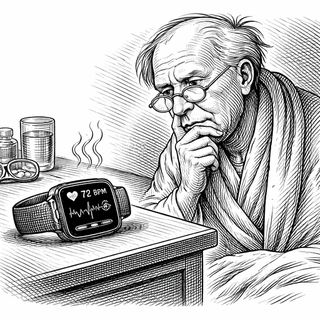
After thirty-some years of watching technology march forward while human nature stays stubbornly human, I've seen this dance before. Remember when ATMs were going to replace banks? When nobody over fifty would ever use email? The gap between what technology can do and what people will actually let it do has always been wider than Silicon Valley wants to admit.
The Curious Case of the Unworn Fitness Tracker
Here's a puzzle that's been nagging at researchers: older adults will happily adopt smartphones and tablets at impressive rates, yet health-monitoring wearables and mobile health apps sit largely ignored. It's like accepting an invitation to a party but refusing to dance.
A recent study published in 2025 examined exactly this conundrum among middle-aged and older adults in Hong Kong. The researchers wanted to understand why people who could genuinely benefit from health monitoring technology - tracking heart rhythms, detecting falls, monitoring cognitive changes - seem to view these devices with the same enthusiasm one might reserve for a suspicious casserole at a potluck.
Using an online scenario-based survey, the research team presented participants with hypothetical situations involving individuals facing health vulnerabilities. This clever approach let them probe attitudes without the awkwardness of asking "So, do YOU think you're falling apart?"
The Trust Gap Nobody's Bridging
What emerges from this research is something I've been muttering about in faculty lounges for decades: we've built remarkable technology and then handed it to people without bothering to understand what actually matters to them.
The study reveals that attitudes toward wearable health devices among older populations aren't simply about technophobia or inability to learn new tricks. These are folks who've navigated decades of technological change - they learned to program VCRs, survived the transition to digital, and many now text their grandchildren with surprising fluency.
No, the issue runs deeper. It touches on perceptions of personal autonomy, concerns about what happens to intimate health data, and that fundamental human question: "Does this thing actually work, or is it just expensive jewelry with a charging cable?"
The skepticism isn't irrational. It's the accumulated wisdom of people who've seen plenty of "revolutionary" products come and go. They've watched health fads rise and fall like empires. They're not about to strap something to their wrist just because a marketing team promises it will change their lives.
Why This Matters More Than You Think
Here's where my professorial optimism kicks in. This research isn't just cataloging complaints - it's mapping the territory we need to cross.
The potential of wearable health technology for aging populations is genuinely remarkable. Continuous heart monitoring can catch atrial fibrillation before it causes a stroke. Fall detection can summon help when seconds matter. Cognitive tracking might one day spot early signs of decline when intervention is most effective.
But potential means nothing if the devices stay in drawers.
What the Hong Kong study highlights is that addressing this adoption gap requires understanding attitudes first, then designing solutions that respect those attitudes. It's not about making simpler technology for simple people - it's about making trustworthy technology for justifiably skeptical people.
The Path Forward (No Lecturing Required)
The findings point toward some practical directions. For one, health technology designed for older adults needs to earn trust through transparency. Where does the data go? Who sees it? What happens if the device flags something concerning?
There's also the matter of perceived benefit. Younger users might wear fitness trackers for the gamification, the daily step competitions, the satisfaction of closing rings. Older adults often need clearer answers to a more fundamental question: "Will this actually help me stay healthy and independent?"
And perhaps most subtly, there's the matter of identity. Nobody wants to wear a device that broadcasts "I am old and monitored." The most successful health wearables for this population may be the ones that look and feel like regular technology, not medical equipment.
A Generational Experiment We're All Part Of
I've spent enough years watching students become professors become retirees to know that today's skeptical older adults were yesterday's early adopters of something. And today's enthusiastic twenty-somethings will eventually become the skeptical older adults of 2060, suspicious of whatever neural interface technology their grandchildren insist is perfectly safe.
The Hong Kong research reminds us that technology adoption isn't just about capability - it's about trust, culture, and the slow work of proving that new tools genuinely serve human needs.
For now, that smartwatch might keep sitting on the nightstand. But with research like this helping designers understand what older adults actually want and worry about, there's hope that the next generation of wearable health technology will finally earn its place on the wrist.
And dear wearable technology? Maybe try being a little less pushy about those daily activity reminders. Nobody likes a nag, no matter how well-intentioned.
This blog post discusses research findings and should not be taken as medical advice. If you have concerns about health monitoring technology or aging-related health issues, please consult a healthcare provider. Research discussed here represents ongoing scientific investigation and findings may evolve as more studies are conducted.
All images used in this post are decorative illustrations only and do not represent or reflect the accuracy, reality, or correctness of the referenced research.
Primary Source: Attitudes and Perceptions Toward Mobile and Wearable Technologies to Support Health and Cognition Among Middle-Aged and Older Adults in Hong Kong. 2025. DOI: PMID 40552879