
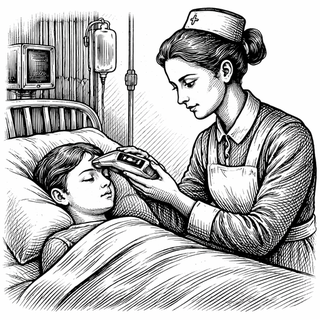
Meanwhile, in a pediatric intensive care unit somewhere in America, a nurse is holding what looks like a space-age thermometer against a sedated child's forehead. The patient - let's call her Emma - is recovering from cardiac arrest, and her medical team needs to know her core body temperature with the kind of precision usually reserved for laboratory experiments. The catch? They'd rather not thread another invasive probe into her tiny body if they don't have to. Welcome to the surprisingly high-stakes world of temperature monitoring, where a device called Temple Touch Pro is hoping to prove that sometimes, the gentlest approach is also the smartest one.
Why Temperature Matters More Than You Think
Here's the thing about body temperature in critically ill children: it's not just a number. When a child experiences cardiac arrest, traumatic brain injury, or other catastrophic events, their brain becomes exquisitely sensitive to temperature fluctuations. Too hot, and the brain cells that survived the initial insult start dying faster than a houseplant in a heatwave. This is why pediatric intensivists practice something called "targeted temperature management" - essentially, keeping the body at a carefully controlled temperature to protect the brain.
The concept isn't new. Therapeutic hypothermia (deliberately cooling patients) has been used for decades, and we have reasonably solid evidence that keeping post-arrest patients cooler can improve neurological outcomes. The American Heart Association has incorporated temperature management into their resuscitation guidelines, acknowledging that fever in the post-arrest period is basically the brain's worst enemy.
But here's where it gets tricky: to manage temperature precisely, you need to measure it precisely. And measuring core body temperature in a sick child traditionally means sticking probes in places where probes probably shouldn't go - esophageal, rectal, or bladder catheters, each with their own list of complications and general unpleasantness.
Enter Temple Touch Pro: The Non-Invasive Contender
The clinical trial in question (NCT07507396) is evaluating whether a device called Temple Touch Pro can accurately monitor temperature in pediatric ICU patients who require targeted temperature management. The appeal is obvious: if a sensor placed on the forehead can give you the same information as an invasive probe, that's one less tube in a critically ill child.
Temple Touch Pro works by measuring heat flux through the skin at the temple - essentially calculating core temperature based on how heat flows from inside the body to the surface. It's a bit like estimating how hot your coffee is by touching the outside of the mug, except with considerably more sophisticated mathematics and engineering involved.
The study is recruiting pediatric intensive care patients who already require targeted temperature control, then comparing the Temple Touch Pro readings against whatever gold-standard invasive monitoring they're already receiving. It's the medical device equivalent of a job interview: "Show us you can do what the incumbent does, but without making the patient uncomfortable."
Why This Research Actually Matters
I know what you're thinking - we've been taking temperatures since Galileo's thermoscope in the 1600s. Why is this still a problem? The answer lies in the precision required for targeted temperature management.
When you're managing fever at home, a degree or two of measurement error is no big deal. Take some acetaminophen, drink fluids, binge-watch something comforting. But when you're keeping a post-arrest child at exactly 36°C to protect their brain, that same measurement error could mean the difference between neuroprotection and neurological devastation. The accuracy bar is set extraordinarily high.
Non-invasive temperature monitoring devices have historically struggled in critical care settings. Temporal artery thermometers - the kind your pediatrician waves across your kid's forehead - are convenient but notoriously unreliable in ICU patients. Peripheral perfusion issues, ambient temperature variations, and the general physiological chaos of critical illness all conspire to make surface measurements unreliable.
What makes Temple Touch Pro interesting is its heat flux approach. Rather than just measuring skin surface temperature and hoping it correlates with core temperature, it actively measures the flow of heat through the skin. In theory, this should be more resistant to the confounders that trip up conventional surface thermometers.
The Pediatric Imperative
There's another layer to this story that shouldn't be overlooked: children are not small adults. Pediatric patients present unique challenges for medical device developers. Their bodies have different surface-area-to-volume ratios, different metabolic rates, and different thermoregulatory capabilities than adults. A device that works brilliantly in adult ICUs might fall flat in the PICU.
The fact that this trial specifically targets pediatric patients is significant. Too often, medical devices are validated in adults and then deployed in children with a shrug and a prayer. This study is doing the work of actually testing the device in the population where it will be used.
The children enrolled in this study are among the sickest patients in any hospital - those requiring aggressive temperature management after neurological catastrophes. If Temple Touch Pro can perform accurately in this challenging population, it would represent a meaningful advancement in how we care for these vulnerable patients.
The Bigger Picture: When Less Is More
Modern intensive care medicine has a complicated relationship with invasiveness. For decades, the prevailing philosophy was that more monitoring was always better - more lines, more probes, more data points. But we've learned that every invasion carries risk: infection, bleeding, tissue damage, pain. The current trend is toward achieving the same clinical goals with gentler means.
This trial is part of that broader movement. If we can monitor temperature effectively without additional invasive devices, we reduce the burden on patients and potentially decrease complication rates. It's the kind of incremental progress that doesn't make headlines but genuinely improves patient care.
Of course, non-invasive monitoring only helps if it's accurate. A comfortable but unreliable thermometer is useless - worse than useless, actually, if it gives clinicians false confidence. The whole point of this trial is to determine whether Temple Touch Pro can thread that needle: accurate enough for critical care, gentle enough to justify replacing invasive alternatives.
What Happens Next
Clinical trials are marathons, not sprints. Even after enrollment completes, there will be data analysis, peer review, and regulatory considerations before Temple Touch Pro could become standard practice in PICUs. But the fact that rigorous evaluation is happening is encouraging.
For now, little Emma and patients like her will continue to receive the best care their medical teams can provide, invasive probes and all. But if this trial succeeds, future patients might experience the same precise temperature management with one less thing poking into their bodies. In pediatric critical care, that's the kind of progress worth measuring.
Disclaimer: This blog post is for educational and informational purposes only and does not constitute medical advice. Clinical trials are ongoing research, and the effectiveness of Temple Touch Pro has not been definitively established. Always consult qualified healthcare providers for medical decisions.
Primary Source:
ClinicalTrials.gov. "Non-invasive Temperature Monitoring in Pediatric Intensive Care Patients Requiring Targeted Temperature Management: Evaluation of Temple Touch Pro." Identifier: NCT07507396. Available at: https://clinicaltrials.gov/study/NCT07507396