
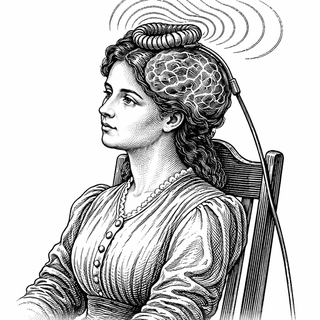
Somewhere in a research lab right now, a coil-shaped device is firing rapid magnetic pulses through the skull of a female athlete, rewiring the neural circuits tangled up by both concussion and depression - at the same time. No surgery. No pharmaceuticals. Just precisely targeted electromagnetic fields nudging neurons back into working order like a really expensive, FDA-approved magnet on the fridge of your brain. Welcome to 2026, where science fiction is just... science.
The trial is called ONE-D - short for Optimized, Neuroplasticity Enhanced-Depression Transcranial Magnetic Stimulation Treatment - and it's targeting a problem that sports medicine has been politely ignoring for decades: female athletes who develop depression after a concussion.
The Problem Nobody Wanted to Talk About
Here's the thing about concussion research: for years, the default study participant looked a lot like a college football player named Brad. Male athletes have dominated concussion studies to a degree that would be impressive if it weren't so frustrating. Meanwhile, female athletes have been sustaining concussions at equal or higher rates in comparable sports and reporting worse outcomes - more severe symptoms, longer recovery times, and significantly higher rates of depression afterward.
The numbers are genuinely alarming. Female athletes are roughly twice as likely to experience prolonged post-concussion symptoms compared to their male counterparts, and the overlap between post-concussive syndrome and major depressive disorder is so common that some researchers argue they may share underlying neurological mechanisms (Covassin et al., 2016). Depression and concussion aren't just co-travelers - they're neurological roommates who keep making each other worse.
And yet, until recently, the research community's response to this comorbidity in female athletes has been roughly equivalent to a shrug emoji.
So What Exactly Is TMS, and Why Should You Care?
Transcranial Magnetic Stimulation, or TMS, is one of those treatments that sounds vaguely like something a Bond villain would use but is actually remarkably well-studied and surprisingly gentle. A magnetic coil placed against the scalp generates focused electromagnetic pulses that stimulate specific brain regions - typically the dorsolateral prefrontal cortex (DLPFC), which is basically the brain's project manager for mood regulation.
For treatment-resistant depression, TMS has been an FDA-cleared option since 2008 and has been quietly racking up impressive results. The Stanford Accelerated Intelligent Neuromodulation Therapy (SAINT) protocol, for instance, demonstrated remission rates around 79% in just five days of intensive treatment in a double-blind randomized controlled trial (Cole et al., 2022). That's not a typo. Five days. For a condition that typically takes weeks or months to respond to medication - if it responds at all.
What makes the ONE-D trial particularly clever is the convergence it exploits. Recent functional MRI studies in concussed athletes have revealed that the patterns of disrupted neural connectivity in the frontal cortex after a head injury overlap almost eerily with the connectivity disruptions that TMS has been shown to correct in depression. The Venn diagram of "brain regions messed up by concussion" and "brain regions TMS can fix" is practically a circle.
One Treatment, Two Conditions - The Holy Grail of Comorbidity
If you've ever tried to treat two overlapping conditions simultaneously, you know it usually involves a lot of medication juggling, side effect management, and what I like to call "pharmaceutical Jenga." Treat the depression aggressively? Great, but some antidepressants can slow cognitive recovery from concussion. Focus on the concussion rehab? Sure, but untreated depression tanks motivation, disrupts sleep, and makes every other symptom feel approximately ten thousand percent worse.
The ONE-D trial proposes something radical in its simplicity: what if one non-invasive treatment could address both? Previous TMS studies have reported depression remission rates around 70%, and there's growing evidence that the same neural pathway modulation could alleviate post-concussive symptoms like brain fog, headaches, and emotional dysregulation (Siddiqi et al., 2019). This isn't just treating one condition while managing the other - it's potentially resolving both through the same mechanism of action.
For female athletes specifically, this could be transformative. Current treatment pathways often involve a frustrating cycle of "rest and wait" for the concussion and "try this medication" for the depression, neither of which is well-calibrated for young, active women who want to get back to their sport and their lives.
Why the Gender Gap in This Research Matters
Let's be honest for a second. The underrepresentation of female athletes in concussion research isn't just a statistics problem - it's a health equity crisis wearing a lab coat. When we build treatment protocols primarily from male data, we end up with guidelines that may not account for hormonal influences on brain recovery, sex-based differences in neural connectivity, or the distinct psychosocial pressures female athletes face around injury disclosure and mental health stigma.
Research has consistently shown that female athletes report more cognitive and emotional symptoms after concussion (Broshek et al., 2005), and that these differences aren't simply a matter of reporting bias - there appear to be genuine neurobiological differences in how male and female brains respond to and recover from traumatic injury (Blumberger et al., 2018).
The ONE-D trial doesn't just address a treatment gap. It addresses a knowledge gap. By specifically enrolling female athletes with comorbid depression and concussion, it generates the kind of sex-specific data that the field desperately needs.
What This Could Mean Going Forward
If this trial demonstrates what its investigators hope, the implications ripple outward fast. We're talking about a non-pharmacological, non-invasive treatment that could be administered in clinical settings across the country - from major university sports medicine departments to community health centers serving high school athletes.
Think about the young woman playing club soccer in a rural area who takes a hard header, develops persistent headaches and creeping depression, and currently faces a choice between limited local mental health resources and a long drive to a specialist. A validated TMS protocol for comorbid concussion-depression could standardize treatment, shorten recovery timelines, and - not to get too starry-eyed here - fundamentally change how we think about neurological rehabilitation in female athletes.
The trial is also a proof of concept for something bigger: the idea that neuroimaging-guided TMS could become a precision medicine tool, using each patient's own brain connectivity data to optimize treatment targets. We're inching toward a future where "take two of these and call me in the morning" gets replaced by "let me map your neural circuits and calibrate your magnetic coil."
I'm not saying it's the future of medicine, but I'm also not not saying that.
The Bottom Line
The ONE-D trial represents exactly the kind of research that should have happened a decade ago. It centers a population that has been systematically underserved, leverages cutting-edge neuroscience to tackle a genuinely hard clinical problem, and does it all without the side-effect profile of a pharmaceutical Rube Goldberg machine. Female athletes deserve evidence-based treatments built from evidence that actually includes them. Full stop.
You can follow the trial's progress at ClinicalTrials.gov (NCT07507214) or view the full study details.
References
-
Cole, E.J., Phillips, A.L., Bentzley, B.S., et al. (2022). Stanford Neuromodulation Therapy (SNT): A Double-Blind Randomized Controlled Trial. American Journal of Psychiatry, 179(2), 132-141. DOI: 10.1176/appi.ajp.2021.20101529
-
Covassin, T., Moran, R., & Elbin, R.J. (2016). Sex Differences in Reported Concussion Injury Rates and Time Loss From Participation. Journal of Athletic Training, 51(3), 189-194. DOI: 10.4085/1062-6050-51.3.05
-
Siddiqi, S.H., Trapp, N.T., Hordacre, B., et al. (2019). Repetitive Transcranial Magnetic Stimulation with Resting-State Network Targeting for Treatment-Resistant Depression in Traumatic Brain Injury. Journal of Neurotrauma, 36(8), 1361-1374. DOI: 10.1089/neu.2018.5889
-
Broshek, D.K., Kaushik, T., Freeman, J.R., et al. (2005). Sex Differences in Outcome Following Sports-Related Concussion. Journal of Neurosurgery, 102(5), 856-863. DOI: 10.3171/jns.2005.102.5.0856
-
Blumberger, D.M., Vila-Rodriguez, F., Thorpe, K.E., et al. (2018). Effectiveness of Theta Burst Versus High-Frequency Repetitive Transcranial Magnetic Stimulation in Patients with Depression (THREE-D). The Lancet, 391(10131), 1683-1692. DOI: 10.1016/S0140-6736(18)30295-2
Disclaimer: This blog post is for informational and educational purposes only and does not constitute medical advice. The clinical trial discussed (NCT07507214) is an ongoing study, and its outcomes have not yet been determined. Always consult a qualified healthcare provider before making decisions about medical treatment. Information about the trial was sourced from ClinicalTrials.gov.