
Picture your stomach as an overworked dishwasher. Food goes in, gets churned around, and exits in an orderly fashion. Now imagine that dishwasher just... stops mid-cycle. The food sits there. You feel bloated, nauseated, and frankly betrayed by an organ you never thought much about. Welcome to the world of gastroparesis-like symptoms, where your stomach decides it's on an indefinite coffee break and nobody can convince it to come back to work.
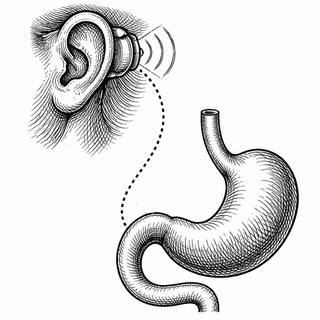
A new pilot trial - NCT07492108 - is asking a genuinely fascinating question: can we fix the stomach by zapping the ear? And honestly? The science behind it is more compelling than you might think.
When Your Stomach Ghosts You
Gastroparesis, literally "stomach paralysis," is a condition where the stomach takes far too long to empty its contents into the small intestine. Classic symptoms include nausea, vomiting, early satiety (feeling full after three bites of toast), bloating, and upper abdominal pain. The condition affects roughly 10 per 100,000 people, though that number is almost certainly an undercount since many patients with gastroparesis-like symptoms (GPLS) never receive a formal motility diagnosis (Camilleri et al., 2018).
Here's the frustrating part: current treatments are, to put it diplomatically, limited. Metoclopramide is the only FDA-approved medication for gastroparesis in the US, and it comes with a black box warning for tardive dyskinesia. Domperidone isn't even approved here. Dietary modifications help some patients. Gastric electrical stimulation (the Enterra device) requires surgical implantation and has shown mixed results in controlled trials. What about the millions of patients who fall somewhere on the spectrum of "my stomach is doing something deeply unpleasant but nobody can quite figure out why"?
That's the gap this trial is trying to fill.
Enter the Ear Zapper (Officially Known as IB-Stim)
The IB-Stim is a small, needle-free device that sits behind the ear and delivers percutaneous electrical nerve field stimulation (PENFS) to branches of the cranial nerves - specifically targeting the vagus nerve and other nerve pathways accessible through the external ear. If you're thinking "that sounds like acupuncture met a TENS unit at a neuroscience conference," you're not entirely wrong, but the mechanism is more sophisticated than that comparison suggests.
The ear is a surprisingly rich piece of neurological real estate. Multiple cranial nerves have branches there, including the vagus nerve, which is basically the gut-brain superhighway. Stimulate the right auricular nerve branches, and you can potentially modulate the brain's processing of visceral pain signals and influence autonomic nervous system function.
The IB-Stim already earned its stripes in 2019 when it became the first FDA-cleared device for treating functional abdominal pain in adolescents (ages 11-18) with irritable bowel syndrome. The pivotal trial by Kovacic and colleagues showed significant pain reduction in teens receiving active PENFS compared to sham, with effects that persisted even after treatment ended (Kovacic et al., 2017). That's not nothing. That's a non-pharmacological, non-invasive intervention that actually outperformed a sham device in a rigorous trial.
So the natural next question becomes: if it works for functional gut pain in teenagers, could it help adults whose stomachs have essentially gone on strike?
What This Trial Is Actually Testing
This randomized, double-blind, sham-controlled pilot study is enrolling adults with gastroparesis-like symptoms to receive either active IB-Stim treatment or a sham device. The double-blind, sham-controlled design is exactly what you want to see - it's the gold standard for reducing placebo effects, which, let's be honest, are notoriously strong in GI symptom trials (Elsenbruch & Enck, 2015).
The primary outcome focuses on symptom improvement in adults with GPLS. But here's where it gets extra interesting: the secondary aim looks at whether PENFS treatment changes heart rate variability (HRV), a marker of autonomic nervous system function.
Why does that matter? Because gastroparesis isn't just a stomach problem. It's increasingly understood as a disorder of the gut-brain axis, often involving autonomic dysfunction. Many gastroparesis patients show reduced vagal tone - essentially, their parasympathetic nervous system isn't holding up its end of the digestive bargain. If PENFS can measurably shift autonomic balance (as reflected in HRV), that would not only suggest a plausible mechanism of action but also point toward which patients might benefit most (Vinik & Ziegler, 2007).
Why Should We Care?
Let me put my clinical hat on for a moment. I've watched patients with gastroparesis-like symptoms bounce between specialists for years. They're too sick to eat normally but not sick enough for surgical interventions. Their symptoms are real, debilitating, and frequently dismissed. Many lose weight, miss work, and develop anxiety around meals - because who wouldn't develop anxiety about an activity that reliably makes you miserable?
A non-invasive, drug-free option that patients could potentially use at home? That changes the conversation entirely. We're not talking about another pill with a list of side effects longer than a CVS receipt. We're talking about a device you wear on your ear that modulates nerve signaling. The risk profile is fundamentally different from pharmacological approaches.
And the fact that this trial is specifically targeting adults fills an important evidence gap. The adolescent data is promising, but medicine learned long ago that you can't just assume pediatric results translate directly to adults (or vice versa). Adult gastroparesis patients tend to have different underlying etiologies - diabetes, post-surgical complications, idiopathic causes - and their autonomic dysfunction patterns may differ as well (Parkman et al., 2024).
The Bigger Picture
This trial sits at the intersection of several exciting trends in medicine: neuromodulation as therapy, the gut-brain axis as a therapeutic target, and the push toward non-pharmacological interventions for chronic conditions. If the results are positive, even modestly so, it would justify larger, multi-center trials and potentially expand the FDA indication for IB-Stim to include adult GI conditions.
Is this going to cure gastroparesis? No. Will it replace the need for prokinetic medications in severe cases? Unlikely. But could it offer meaningful symptom relief to adults who've run out of good options? That's a question very much worth answering. And the fact that someone is running a properly controlled trial to find out - rather than just selling ear stimulators on late-night TV - is exactly how medicine should work.
I'll be watching this one closely. My stomach tells me the results could be interesting. (Sorry. Had to.)
Trial Details: NCT07492108 on ClinicalTrials.gov | Table View
References
-
Kovacic K, Hainsworth K, Sood M, et al. Neurostimulation for abdominal pain-related functional gastrointestinal disorders in adolescents: a randomised, double-blind, sham-controlled trial. Lancet Gastroenterol Hepatol. 2017;2(10):727-737. DOI: 10.1016/S2468-1253(17)30253-4
-
Camilleri M, Chedid V, Ford AC, et al. Gastroparesis. Nat Rev Dis Primers. 2018;4(1):41. DOI: 10.1038/s41572-018-0038-z
-
Elsenbruch S, Enck P. Placebo effects and their determinants in gastrointestinal disorders. Gastroenterology. 2015;148(7):1230-1240. DOI: 10.1053/j.gastro.2015.07.034
-
Vinik AI, Ziegler D. Diabetic cardiovascular autonomic neuropathy. Am J Med. 2007;120(8 Suppl 2):S12-S20. DOI: 10.1016/j.amjmed.2007.03.004
-
Parkman HP, et al. Gastroparesis: New insights into an evolving disease. Gastroenterology. 2024;166(1):28-45. DOI: 10.1053/j.gastro.2023.04.039
Disclaimer: This blog post is for educational and informational purposes only and does not constitute medical advice. The clinical trial discussed is ongoing, and results have not yet been published. Always consult with a qualified healthcare provider regarding any medical condition or treatment. The views expressed are those of the author and do not represent official positions of any institution.