
Remember when “advanced food preservation” meant a refrigerator that sounded like a lawn mower and plastic wrap that clung lovingly to everything except the bowl? Food packaging has come a long way since the era of heroic Tupperware lids and freezer burn roulette. Now researchers are asking a far more ambitious question: what if a food film could fight microbes, manage gases, and help keep food cooler, all while being made from more sustainable materials?
That is the promise behind a recent PubMed-indexed study on halloysite nanotube-modified chitosan/hydroxypropyl methylcellulose multifunction microporous food packaging film. Yes, the title arrives wearing a lab coat, safety goggles, and possibly a tiny clipboard. But the idea is surprisingly practical.
The researchers developed porous films based on chitosan and hydroxypropyl methylcellulose, then modified the system with amino-functionalized halloysite nanotubes. The goal was to improve several weak spots at once: antimicrobial performance, passive cooling, and gas transport.
In normal kitchen language: they are trying to make smarter food wrap.
Chitosan: The Shrimp-Shell Polymer With Ambition
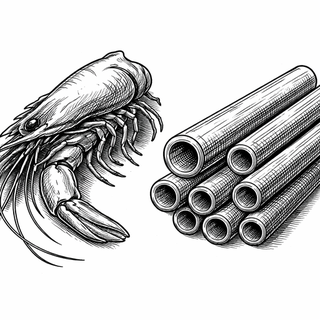
Chitosan is a natural polymer usually derived from chitin, the tough material found in crustacean shells. It has been a favorite in biomedical and food packaging research for years because it is biodegradable, film-forming, and naturally antimicrobial.
That last part matters. Food spoilage is not just about food “going bad” in some vague moral sense. It is often about bacteria and fungi settling in, multiplying, and turning dinner into a microbial networking event.
Chitosan can help slow that process. Its positively charged molecular structure can interact with negatively charged microbial cell surfaces, disrupting membranes and making life harder for unwanted microbes. A mild inconvenience for bacteria, perhaps. A useful feature for the rest of us.
But chitosan films have drawbacks. They can be brittle. They may not handle water vapor or gas transport perfectly. They can also struggle mechanically, especially when real-world packaging needs flexibility, durability, and consistency.
That is where blending comes in.
Why Add Hydroxypropyl Methylcellulose?
Hydroxypropyl methylcellulose, often shortened to HPMC, is a cellulose-derived polymer already used in foods, pharmaceuticals, and coatings. It forms clear films, mixes reasonably well with other biopolymers, and can improve texture and handling.
In this study, HPMC appears to serve as a partner polymer for chitosan. Think less “solo violin” and more “small but efficient string section.” Chitosan brings antimicrobial character. HPMC helps with film formation and structure. Together, they create a base material that can be tuned further.
The tuning device here is halloysite.
Halloysite Nanotubes: Tiny Clay Straws
Halloysite nanotubes are naturally occurring clay minerals shaped like microscopic tubes. They are small, hollow, and chemically useful. In packaging materials, they can act like nanoscale reinforcements, improving strength, barrier behavior, or functional performance.
They are not new to materials science, but they are easy to underestimate. A clay nanotube sounds like something found in a very ambitious kindergarten art project. In reality, these tiny structures can change how a film behaves at the molecular and microscopic levels.
The researchers used amino-modified halloysite nanotubes, meaning the nanotubes were chemically decorated with amino groups. This kind of modification can improve compatibility with polymers such as chitosan and HPMC. Better compatibility usually means better dispersion, stronger interactions, and fewer clumps.
Nanomaterials are like dinner guests: even excellent ones cause trouble if they all cluster in one corner.
The Microporous Twist
One of the more interesting parts of the study is the film’s microporous design. Porosity can sound like a flaw. In some packaging, holes are exactly what you do not want. But controlled pores can be useful, especially for fresh produce.
Fruits and vegetables keep respiring after harvest. They consume oxygen and release carbon dioxide and water vapor. Seal them too tightly and the internal atmosphere can become unhealthy for the produce. Leave them too exposed and they dry out, oxidize, or invite microbial guests.
A packaging film with carefully managed gas transport can help maintain a better internal environment. It is the difference between giving produce a breathable jacket and sealing it in a panic room.
The film described in this research aims to balance that gas movement while also delivering antimicrobial and cooling functions.
Passive Cooling, No Plug Required
The “radiative cooling” part is especially intriguing. Radiative cooling materials are designed to reflect incoming solar radiation and emit heat in infrared wavelengths. In the right conditions, they can cool surfaces without electricity.
This has been explored in building materials, textiles, and outdoor coatings. Applying it to food packaging is a clever move. Temperature is one of the main drivers of food spoilage. Even modest cooling could matter during transport, display, or storage, particularly when refrigeration is limited or inconsistent.
To be clear, this is not a replacement for a refrigerator. A thin film is not going to stare down a July loading dock and win every time. But if a package can reduce heat gain or help shed heat passively, it could become one more tool for protecting food quality.
That matters for food waste, too. Globally, huge amounts of food are lost between harvest and consumption. Better packaging is not glamorous. It rarely gets a movie montage. But it can have real effects on shelf life, safety, and waste reduction.
Why This Research Is Worth Watching
The exciting part of this study is not just one feature. It is the combination.
A packaging film that is biodegradable but weak is interesting. A film that is antimicrobial but traps too much moisture has a problem. A cooling film that ignores microbial growth is incomplete. The research target here is multifunctionality: one material doing several jobs at once.
That is where food packaging research is heading. The old model was mostly passive containment. Wrap it. Seal it. Stack it. Hope for the best.
The newer model is active and responsive. Packaging can interact with gases, moisture, microbes, light, and heat. It becomes less like a plastic bag and more like a quiet little environmental manager. A tiny facilities department for strawberries, if you will.
The halloysite-modified chitosan/HPMC films described in this PubMed record fit that trend. They combine natural polymers, clay nanotube engineering, porosity, antimicrobial function, and thermal management into one material platform.
What Still Needs Work
As promising as this sounds, there are the usual practical questions.
Can the film be produced at scale? Does it remain stable under real storage conditions? How does it perform with different foods, humidity levels, temperatures, and microbial communities? Is it cost-effective? Are there regulatory hurdles for food-contact use? Does the nanotube modification remain safely bound within the material?
Those are not small details. Food packaging has to survive manufacturing, shipping, shelves, kitchens, and human behavior. Humans are not gentle experimental conditions. We overstuff drawers, forget leftovers, and occasionally treat grocery bags like gym equipment.
There is also the question of biodegradability in practice. A material may be based on natural polymers, but its real environmental profile depends on processing, additives, disposal conditions, and whether composting or degradation pathways are actually available.
Still, the study points toward a future where packaging does more useful work with fewer petroleum-based materials.
A Smarter Wrapper for a Messier Food System
The broader story here is that food preservation is becoming more biologically and physically sophisticated. Researchers are not just asking how to seal food away from the world. They are asking how to design a tiny microenvironment around it.
That means borrowing from microbiology, polymer chemistry, nanomaterials, thermal physics, and plant physiology. It is a surprisingly crowded party inside a piece of film.
The halloysite nanotube-modified chitosan/HPMC film is part of that shift. If follow-up studies confirm strong antimicrobial activity, useful cooling performance, reliable gas transport, and safety for food-contact applications, materials like this could help extend shelf life and reduce waste.
Not bad for something that might one day sit quietly around a cucumber.
This blog post discusses research findings and should not be taken as medical advice. If you have concerns about food safety, foodborne illness, or spoiled food exposure, please consult a qualified healthcare provider or food safety authority. Research discussed here represents ongoing scientific investigation and real-world validation is still in progress.
All images used in this post are decorative illustrations only and do not represent or reflect the accuracy, reality, or correctness of the referenced research.
Primary Source: Halloysite nanotube-modified chitosan/hydroxypropyl methylcellulose multifunction microporous food packaging film: Antimicrobial-radiative cooling and gas transportation functions. PubMed Record ID: 41762564. PubMed