
Picture this: you’re at a party, and amid the chatter and laughter, someone brings up the carbon footprint of medical devices. Suddenly, you’re not just discussing small talk but the life cycle of laryngoscopes! Okay, maybe that’s not quite the party vibe, but hear me out - what if the tools used in medical emergencies had a significant impact on our planet? A recent study sheds light on this very topic, comparing the carbon footprints of various intubation devices to help hospitals make greener choices. Who knew that saving the world could start with a simple video laryngoscope?
The Carbon Footprint Conundrum
Healthcare is known for its life-saving abilities, but it’s also responsible for around 5% of the global carbon footprint. That’s right! While we’re out there saving lives, we’re also warming the planet. It’s like running a marathon while eating a giant slice of cake - great fun, but not doing wonders for the waistline, or in this case, the environment.
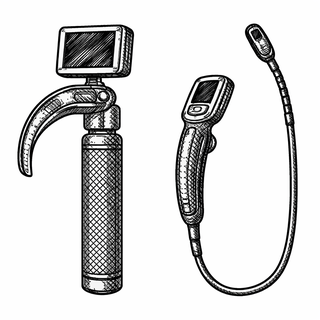
The research conducted by Pan and colleagues dives into the carbon emissions associated with three popular video intubation tools: disposable video laryngoscopes (VLs), reusable VLs, and video stylets. They used a life cycle assessment (LCA) approach, which sounds fancy but essentially tracks the environmental impact from production to disposal. Think of it as the eco-friendly equivalent of checking the nutrition label on your favorite snack - only this time, the snack is a medical device.
What’s Cooking in the Lab?
The study’s authors, hailing from various esteemed institutions in China, meticulously evaluated the emissions of each device. They looked at everything from material extraction to manufacturing, transportation, and waste. It’s like hosting a dinner party where you account for every ingredient, from the oil to the salt, and in this case, even the emissions that come from the devices used in tracheal intubation procedures.
So, you might ask, what did they find? Drumroll, please... The video stylet, when subjected to high-level disinfection (HLD), came out on top with only 98.24 kg of CO₂ equivalents emitted per 500 procedures. That’s a whopping 45.8% lower than reusable VLs and 42% lower than disposable VLs! If that doesn’t get you excited about eco-conscious healthcare, I don’t know what will.
The Balancing Act of Emissions
Now, before we start throwing confetti for the video stylet, let’s talk about the nitty-gritty. The researchers found that the most significant factor affecting emissions was how many devices were sterilized at once. Imagine cooking a meal for 10 people but only using a pan big enough for three - inefficient, right? The same principle applies here. By optimizing sterilization loads, they noted reductions in emissions by up to 91%!
And that’s not the end of it. Variability in emissions was also influenced by the regional energy mix. For instance, the carbon intensity of the electricity grid in India can cause a 24-33% difference in emissions compared to Europe. It’s a bit like comparing the environmental impact of two coffee shops: the one that roasts its beans in a sustainable way versus the one that relies on coal-powered energy.
Real-World Impact: Making Greener Choices
So, what does all this mean for the average person who’s not knee-deep in carbon calculations? Well, if you’re someone who has ever had a loved one undergo an intubation procedure, this research could affect future hospital protocols. By choosing more sustainable devices, healthcare facilities can significantly reduce their carbon footprint - yes, even in the anesthesiology department!
Imagine if hospitals globally started favoring HLD-reprocessed video stylets. We could see a significant decrease in the medical field's overall carbon emissions, making a tangible impact on climate change. How’s that for an “a-ha” moment?
The Takeaway: A Toast to a Greener Future
The research encourages hospitals to weigh the environmental impact against clinical needs. For high-volume, low-risk scenarios, using eco-friendlier equipment can save not just lives but the planet too. Meanwhile, in low-throughput or high-risk situations, providers should consider how often they need these tools and optimize their choices accordingly.
So, next time you find yourself at that hypothetical party, and the conversation shifts to carbon footprints in healthcare, you can chime in with some data-backed insights. Remember, every little choice counts - even in the operating room.
Disclaimer: This blog post is intended for informational purposes only and does not constitute medical advice. Images and graphics are for illustrative purposes only and do not depict actual medical devices, procedures, mechanisms, or research findings from the referenced studies.
Citation: Pan D, Yang Y, Chen S, Deng J, Zhao G, Zhong M. Carbon footprint comparison of video intubation tools: Disposable laryngoscopes, reusable laryngoscopes, and stylets. PLoS One. 2025 Dec 16;20(12):e0339058. doi: 10.1371/journal.pone.0339058