
Once upon a time, in the Golden Age of "just three TV channels," the electromagnetic spectrum was a peaceful place. Signals traveled their lanes. Radios played oldies. Microwaves heated leftovers without bothering anyone. Then came the villain origin story: 5G towers sprouted like dandelions, smart devices multiplied like gremlins after midnight, and suddenly every gadget in your house was screaming invisible waves at every other gadget. Your baby monitor was picking up the neighbor's Wi-Fi router. Your car's sensors were having an existential crisis near a cell tower. Electromagnetic interference - EMI for short - had become the supervillain nobody asked for. And now, scientists are building its kryptonite out of... plastic. Fancy, ridiculously engineered plastic.
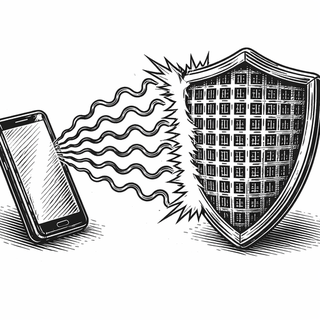
Why Should a Parent Care About EMI Shielding?
Fair question. You're not building satellites. You're building Lego towers and negotiating bedtime. But here's the thing: your kid is growing up in an electromagnetic soup. Their tablet, your phone, the Wi-Fi router, the Bluetooth speaker playing lullabies, the smart thermostat, the electric car in the driveway - all of these emit electromagnetic waves, and all of them need to play nicely together. EMI shielding is the reason your pacemaker-wearing grandpa can sit next to a microwave without incident. It's the reason your car's anti-lock brakes don't freak out when you drive past a radio station. It's invisible infrastructure that keeps modern life from turning into electronic chaos.
And the materials we've traditionally used for this job - metals like copper and aluminum - are heavy, expensive, prone to corrosion, and about as flexible as your toddler's opinion on which cup to use. Enter: conductive polymeric composites. Or as I like to call them, "smart plastics with a side hustle."
The Rise of the Smart Plastics
A comprehensive new review paper takes a deep dive (sorry, a thorough look) into how researchers are engineering lightweight polymer-based materials to block electromagnetic interference. The review covers the entire landscape of conductive polymeric composites, or CPCs, that can shield electronics from rogue electromagnetic waves while being light enough to use in everything from aerospace to electric vehicles.
What makes CPCs so appealing? They're flexible. They resist corrosion. They're easy to process into different shapes. And some of them are even biocompatible, meaning they play well with biological systems. Compare that to a slab of copper, and you can see why materials scientists are excited.
But the real magic is in the structure. Not just what these materials are made of, but how they're built.
It's All About Architecture
Think of it like building a house. You can use the same bricks and get wildly different results depending on the blueprint. The review breaks down four main structural approaches:
Uniform structures - the "plain oatmeal" approach, where conductive fillers are evenly distributed throughout the polymer. Simple, reliable, a bit boring.
Segregated structures - imagine pushing all the chocolate chips to the edges of the cookie. By concentrating conductive particles along specific boundaries, you can create effective shielding pathways using way less material. Efficiency at its finest.
Porous structures - think of a sponge. These foam-like materials trap and bounce electromagnetic waves around inside their tiny holes, absorbing energy like a toddler absorbs chicken nuggets. Plus, all those air pockets make the material incredibly lightweight.
Layered structures - the lasagna method. Stack different materials on top of each other, each layer doing a specific job. One layer reflects. Another absorbs. Another reflects again. The electromagnetic wave bounces around like a pinball until it gives up.
What's genuinely cool about this review is that it's the first to systematically classify "structural composites" as a category - materials where the physical architecture itself is doing the heavy lifting, not just the chemical composition. It's the difference between a pile of lumber and a well-designed house.
The Multitasking Materials
Here's where it gets really interesting for those of us who appreciate a good multitasker (because let's be honest, parenthood is just multitasking with snacks). These polymer composites aren't content with just blocking EMI. Researchers are engineering them to simultaneously handle thermal management, flame retardancy, mechanical strength, and even sensing capabilities.
Imagine a material in your electric car that shields the battery's electronics from interference, dissipates heat so nothing overheats, resists catching fire, AND is light enough to extend your driving range. That's not science fiction. That's the direction this research is heading.
For the "will this help my kid?" crowd: lighter electric vehicles mean better range and lower emissions. Better EMI shielding in medical devices means safer MRI machines and more reliable health monitors. Improved aerospace materials mean safer flights. These are the unglamorous background upgrades that make the modern world work better.
The Challenges Ahead
This isn't a "problem solved, let's go home" situation. The review is refreshingly honest about the challenges. Balancing lightweight design with effective shielding is genuinely hard. Making these materials at scale, affordably, while maintaining performance? Also hard. Ensuring long-term durability in harsh environments like engine bays or aircraft wings? You guessed it - hard.
There's also the tension between absorption and reflection. You can build a material that bounces electromagnetic waves away like a mirror, but then you've just redirected the problem to your neighbor's gadgets. Absorption-based shielding is more elegant - the material soaks up the energy and converts it to tiny amounts of heat - but it's trickier to engineer effectively.
Why This Review Matters
In a field that's rapidly expanding, having someone organize the entire landscape into a coherent framework is genuinely valuable. This review doesn't just catalog what's been done; it maps out design strategies and identifies where the field needs to go. For researchers, it's a roadmap. For the rest of us, it's reassuring evidence that very smart people are working on the invisible problems we don't even realize we have.
So next time your kid is FaceTiming grandma on a tablet while sitting in an electric car that's navigating via GPS near a 5G tower, and everything just... works? Tip your hat to the materials scientists quietly making electromagnetic peace, one clever polymer at a time.
This blog post discusses research findings and should not be taken as medical advice. If you have concerns about electromagnetic interference or material safety, please consult a qualified professional. Research discussed here represents ongoing scientific investigation and clinical validation is still in progress.
All images used in this post are decorative illustrations only and do not represent or reflect the accuracy, reality, or correctness of the referenced research.
Primary Source: Structural Composite and Multifunctional Applications of Lightweight Polymer-Based Electromagnetic Interference Shielding Materials: A Review. DOI: PubMed 42029409