
Your head throbs. Again. Is it the weather? Stress? Too much screen time? Or is it the shunt in your brain failing - the one keeping fluid from crushing your neurons? For people living with hydrocephalus, this guessing game isn't hypochondria. It's Tuesday.
The condition affects roughly 1 in 500 children at birth and accumulates more patients throughout life from injuries, tumors, and infections. Cerebrospinal fluid builds up in the brain's ventricles, creating pressure that can damage tissue if left unchecked. The standard fix involves surgically implanting a shunt - essentially a drainage tube that diverts excess fluid elsewhere in the body.
Here's the problem. Shunts fail. A lot. Studies suggest roughly half of pediatric shunts malfunction within two years. When they do, patients experience symptoms that sound like a bad hangover: headaches, nausea, vision changes. Doctors then face an uncomfortable question. Is this a shunt emergency or a sinus infection?
The 0.28-Gram Brain Monitor
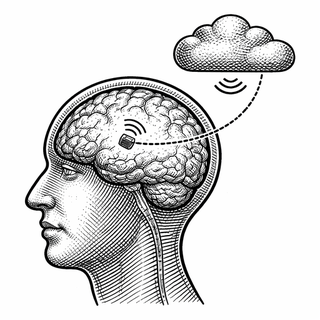
A research team has developed what might be the world's smallest medical tattletale. Their implantable pressure sensor weighs just 0.28 grams - about the same as a single grain of rice. But unlike rice, this device can measure intracranial pressure continuously and beam that data to physicians remotely.
The implant sits within the cerebral cortex itself. No external wires. No bulky hardware poking through the skull. Just a tiny sentinel, quietly measuring the hydraulic drama inside your head and sending updates to the cloud.
In a first-in-human trial registered as NCT06402786, the team tested their creation in 20 patients with hydrocephalus - half adults, half children. The results, published recently, showed the device could safely monitor pressure for up to 18 months while patients went about their lives at home.
When Data Beats Guesswork
The real magic happened during the study's messier moments. Several children experienced shunt failures during the monitoring period. In the old world, parents would notice their kid seemed "off." Maybe more irritable. Maybe complaining of headaches. Then came the anxious drive to the hospital, the CT scan radiation, the waiting.
This time? Physicians could pull up real-time pressure readings. The numbers told the story. Elevated intracranial pressure confirmed the shunt had failed. No ambiguity. No "let's wait and see if symptoms worsen."
For families who've lived the hydrocephalus rollercoaster, this shift from symptom interpretation to actual measurement feels almost revolutionary. It's the difference between asking "does my car sound funny?" versus checking the dashboard warning light.
The Challenges of Brain Tech
Developing electronics that live inside human skulls presents what engineers politely call "non-trivial challenges." The brain is not a welcoming host for foreign objects. The body's immune system treats implants like uninvited party guests and tries to wall them off. Materials degrade. Batteries die.
Power remains particularly vexing. You can't exactly plug in your brain sensor to charge overnight. The team's device apparently solved this problem well enough for 18 months of operation, though the paper focuses more on safety and accuracy than the technical wizardry underneath.
Size matters too. Larger implants mean larger surgical incisions, longer procedures, and more brain tissue disrupted during placement. At 0.28 grams, this sensor minimizes its footprint. The surgery required to place it is less invasive than many existing neurosurgical procedures.
Long-term accuracy presents another hurdle. Pressure sensors can drift over time, like a bathroom scale that gradually tells increasingly flattering lies. The trial demonstrated the device maintained reliable readings throughout the study period - a promising sign for real-world use.
Beyond Hydrocephalus
The researchers frame their work within a broader movement toward implantable neurotechnology. Brain-computer interfaces get the headlines, promising to let paralyzed patients control robotic arms with their thoughts. But simpler sensors measuring basic parameters like pressure might reach more patients sooner.
Intracranial pressure monitoring matters beyond hydrocephalus. Traumatic brain injuries, brain tumors, and various neurological conditions all involve pressure dynamics that physicians currently assess through intermittent hospital visits or invasive temporary monitors. A permanent home-monitoring solution could change management strategies across multiple conditions.
The trial included both children and adults, which matters for regulatory purposes. Pediatric medical device trials are notoriously difficult to conduct. Companies often skip them, leaving doctors to use adult devices off-label in kids. This team gathered safety data in both populations from the start.
What Comes Next
Twenty patients followed for 18 months represents a solid proof-of-concept. It's not the final word. Larger trials will need to confirm these findings. Longer follow-up will reveal whether the device maintains accuracy for years, not just months. Cost and accessibility questions remain unaddressed.
But for families currently managing hydrocephalus through symptom-watching and emergency room visits, the concept of objective remote monitoring represents a genuine advance. Instead of interpreting vague signals, they could have data.
The device doesn't fix hydrocephalus. Shunts will still fail. But catching those failures earlier - before symptoms become severe - could reduce emergency surgeries and prevent some of the brain damage that occurs when elevated pressure goes undetected.
Medicine loves to talk about personalized care and patient-centered approaches. Sometimes that means genomic sequencing and targeted therapies. Sometimes it means a grain-of-rice-sized sensor that tells your doctor what's happening inside your skull before you even feel sick.
For a condition where "is my shunt failing?" has historically been answered with "let's wait and see," that counts as progress.
This blog post discusses research findings and should not be taken as medical advice. If you have concerns about hydrocephalus or intracranial pressure, please consult a healthcare provider. Research discussed here represents ongoing scientific investigation and clinical validation is still in progress.
All images used in this post are decorative illustrations only and do not represent or reflect the accuracy, reality, or correctness of the referenced research.
Primary Source: Long-term brain pressure monitoring via a discrete microimplant; a first-in-human safety and initial efficacy trial in adults and children with hydrocephalus. PubMed. 2026. PMID: 41927547