
Ovarian cancer has earned a grim nickname in oncology circles: the silent killer. Not because it's particularly stealthy in a ninja-like way, but because it tends to show up late to the diagnostic party - often after it's already set up shop in places it really shouldn't be. By the time most patients experience symptoms worth mentioning to their doctor, the cancer has frequently spread beyond the ovaries, and survival rates drop from "really quite good" to "genuinely concerning."
Here's the thing: when ovarian cancer is caught early - like, really early, still-localized-to-the-ovary early - the five-year survival rate is around 91.7%. But only about 20% of cases get caught at that stage. The rest? They're diagnosed after the cancer has spread, and five-year survival drops to less than 30%.
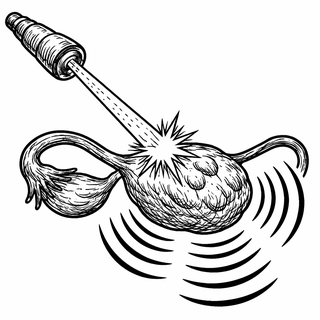
This is where a clinical trial called NCT04178018 enters the picture, armed with lasers and sound waves and the ambition to change those statistics. It's called transvaginal ultrasound and photoacoustic imaging of the ovary, and while the name won't win any awards for catchiness, the science behind it is genuinely exciting.
The Problem with Current Screening
Here's an uncomfortable truth: there is currently no recommended screening test for ovarian cancer. You read that right. Despite decades of research and billions of dollars spent on women's health, we don't have a reliable way to screen for one of the deadliest gynecologic cancers.
Ultrasound imaging is the current standard of care for evaluating suspicious ovarian lesions, and it's... fine. It can detect masses. It can give some indication of whether a mass looks concerning. But it's not particularly good at distinguishing between benign cysts (which are extremely common) and early-stage cancer. This leads to two problems: some cancers get missed, and some women have unnecessary surgeries to remove ovaries that turn out to be totally fine.
The numbers tell the story. In 2025, an estimated 20,890 new cases of ovarian cancer will be diagnosed in the United States, and approximately 12,730 people will die from the disease. Ovarian cancer causes more deaths than any other cancer of the female reproductive system. The good news is that mortality rates have decreased by 43% since 1976 - but most of that progress came from improved treatment, not from catching cancer earlier.
We desperately need better early detection tools. And researchers at Washington University in St. Louis think they might have one.
Photoacoustic Imaging: When Ultrasound Met Lasers
Photoacoustic imaging sounds like something from a science fiction movie, and honestly, the technology is pretty wild. Here's how it works: a short pulse of near-infrared laser light is sent into tissue. Different substances absorb light at different rates - specifically, oxygenated hemoglobin (the oxygen-carrying molecule in blood) and deoxygenated hemoglobin absorb light differently. When tissue absorbs the light, it heats up ever so slightly and expands, generating a tiny sound wave. That sound wave can be detected with an ultrasound transducer.
In other words, researchers are using lasers to make tissue sing, and then listening to the tune.
Why does this matter for cancer detection? Tumors need blood vessels to grow. Lots of them. And the blood vessels in tumors tend to be abnormal - leakier, more chaotic, and often poorly oxygenated because the tumor is growing faster than its blood supply can keep up. Photoacoustic imaging can detect these characteristics because it's directly measuring hemoglobin content and oxygen saturation.
Normal ovarian tissue contains lots of collagen but relatively few blood vessels. An ovary with invasive cancer has extensive blood vessel networks and lower oxygen saturation. Photoacoustic imaging can see this difference.
The Washington University Approach
The clinical trial NCT04178018 at Washington University School of Medicine and Siteman Cancer Center is led by Quing Zhu, the Edwin H. Murty Professor of Engineering at McKelvey School of Engineering, working alongside physicians led by Matthew Powell, MD, director of the Division of Gynecologic Oncology, and Cary Siegel, MD, a professor of radiology.
Their approach combines traditional transvaginal ultrasound with photoacoustic imaging in a single probe. The ultrasound localizes the lesion - tells you where to look - and then photoacoustic imaging provides functional information about what's happening inside that lesion. Structure plus function equals much better diagnostic accuracy.
The team has built a prototype imaging probe consisting of 36 optical fibers (each 200 microns in diameter) distributed around a commercial transvaginal ultrasound transducer, all housed in a protective shield. Blood vessel imaging has been successfully demonstrated at depths up to approximately 30 millimeters through tissue, using laser fluence levels below the safety limits set by the American National Standards Institute.
In early clinical studies, 68 patients scheduled for ovarian surgery underwent both standard clinical ultrasound and the combined photoacoustic/ultrasound technology. Among these patients, 14 had malignant lesions, 2 had malignant fallopian tubes, and 52 had benign lesions. The results were striking: standard imaging alone achieved an area under the ROC curve (AUC) of 0.85. With the addition of photoacoustic data on tumor vasculature and oxygen saturation, the overall AUC improved to 0.93.
For context, an AUC of 1.0 is perfect discrimination, and 0.5 is random chance. Moving from 0.85 to 0.93 represents a meaningful improvement in diagnostic accuracy - the kind of improvement that could mean fewer missed cancers and fewer unnecessary surgeries.
Machine Learning Makes It Better
As if combining lasers and ultrasound weren't enough, the research team has also developed machine learning models to analyze the imaging data. In a pilot study of 35 patients with more than 600 regions of interest, their model achieved 90% accuracy in distinguishing benign from malignant lesions.
The approach is clever: they use existing ultrasound features to train the model to recognize patterns in the photoacoustic images. This helps overcome one of the challenges of photoacoustic imaging, which is that the reconstructed images can be tricky to interpret visually. The machine learning model essentially learns to see what human eyes might miss.
Earlier ex vivo studies (using surgically removed tissue) showed that logistic regression and support vector machine classifiers achieved sensitivities of 70.4% and 87.7%, and specificities of 95.6% and 97.9%, respectively. High specificity is particularly valuable here - it means fewer false positives, which translates to fewer women having their ovaries removed unnecessarily.
What About High-Risk Women?
The trial has two arms. The first involves patients already scheduled for surgery - women who have lesions suspicious enough that their doctors have recommended removing their ovaries. This arm allows researchers to correlate imaging findings with surgical pathology, the gold standard for diagnosis.
The second arm is perhaps even more intriguing: it follows high-risk young patients with genetic mutations who are not yet candidates for surgery. These women - often carrying BRCA1 or BRCA2 mutations - have significantly elevated lifetime risk of ovarian cancer, sometimes as high as 40-60%. Currently, the main risk-reduction option for these women is prophylactic oophorectomy (surgically removing the ovaries), but this comes with significant hormonal consequences, especially for younger women.
If photoacoustic imaging can reliably detect very early changes before they become invasive cancer, it might offer an alternative: close surveillance instead of preventive surgery. Women could keep their ovaries longer, potentially avoiding premature menopause, while still catching any problems at a curable stage.
This is, admittedly, a big "if." The technology still needs validation in larger studies, and there are questions about how early is early enough for detection. But the potential is genuinely exciting.
The Road Ahead
The team is currently recruiting approximately 200 patients for ongoing studies. That's a meaningful sample size - large enough to start generating statistically robust data about real-world performance.
There are challenges ahead. Photoacoustic imaging requires specialized equipment that doesn't exist in most hospitals. The technique needs skilled operators. And like any imaging modality, it will have limitations - certain body types, certain lesion locations, certain edge cases where it just doesn't work as well.
But the fundamental science is solid. Cancers need blood vessels. Photoacoustic imaging can see blood vessels. And by adding functional information to the structural data from ultrasound, the combined approach appears to offer significantly better diagnostic accuracy than either technique alone.
As someone who covers biomedical research, I see a lot of promising technologies that never quite make it to the clinic. But this one feels different. The research group has been working on this approach for over a decade, systematically building evidence, refining the technology, and conducting increasingly rigorous clinical studies. They're not just publishing papers - they're laying the groundwork for actual clinical implementation.
Ovarian cancer remains a devastating disease, largely because we catch it too late. If photoacoustic imaging can change that - if we can reliably catch more cancers at that early, curable stage - the impact on survival rates would be substantial. More women would live. It's that simple.
And all it takes is shining some lasers into the darkness and listening for what the tissue has to say.
References:
- ClinicalTrials.gov Identifier: NCT04178018
- Washington University in St. Louis. Photoacoustic imaging improves diagnostic accuracy of cancerous ovarian lesions. The Source. December 2023.
- Zhu Q et al. A review of co-registered transvaginal photoacoustic and ultrasound imaging for ovarian cancer diagnosis. Photoacoustics. 2022. PMC9491380. DOI: 10.1016/j.pacs.2022.100415
- American Cancer Society. Key Statistics for Ovarian Cancer. 2025.
- SEER Cancer Statistics. Ovarian Cancer - Cancer Stat Facts. National Cancer Institute. 2025.
Disclaimer: This blog post is for informational purposes only and should not be considered medical advice. Clinical trials are research studies, and participation involves risks and benefits that should be discussed with qualified healthcare providers. The views expressed here do not represent the opinions of any institution or research organization. Always consult with healthcare professionals before making decisions about your health or treatment options. Images and graphics are for illustrative purposes only and do not depict actual medical devices, procedures, mechanisms, or research findings from the referenced studies.