
If polymeric micelles were an everyday object, they would be a very competent lunchbox: compact, protective, oddly good at keeping leaky things contained, and designed so the good stuff arrives where it is supposed to go. Not glamorous, perhaps. But in medicine, a better lunchbox can be the difference between a promising plant compound and a therapeutic no-show.
A new decade-spanning review in PubMed looks at how polymeric micelles have been used to package plant-derived bioactives for antimicrobial, antitumor, and antioxidant applications. That sounds like something whispered solemnly at a nanotechnology conference. The basic idea is friendlier: many useful compounds from plants have a water problem. They do interesting things in cells, but they often dissolve poorly, degrade easily, or fail to reach their biological targets in useful amounts.
Nature makes excellent molecules. Nature does not always include a delivery tracking number.
The Plant Compound Problem
Plant-derived bioactives include compounds with antimicrobial, antioxidant, anti-inflammatory, and anticancer potential. Think polyphenols, flavonoids, terpenoids, alkaloids, and other chemically lively molecules that plants use for defense, signaling, and survival.
In the lab, many of these compounds look impressive. They can slow microbial growth, reduce oxidative stress, or interfere with tumor-related pathways. But in the body, the story often gets messier. Some are poorly water-soluble. Some break down before they get anywhere useful. Some are cleared quickly. Others need doses that become impractical or raise safety concerns.
This is where polymeric micelles enter with the quiet confidence of a well-organized pharmacist.
What Are Polymeric Micelles?
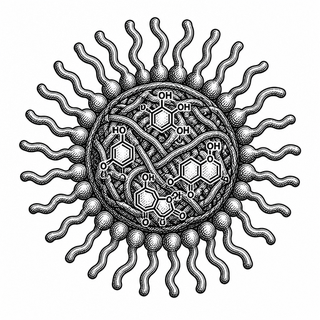
Polymeric micelles are nanoscale carrier particles, usually around 10 to 200 nanometers in size. They form from amphiphilic polymers, meaning the molecules have both water-loving and water-avoiding parts.
In water, these polymers arrange themselves into tiny spheres. The water-avoiding segments tuck inward, forming a core that can hold poorly soluble compounds. The water-loving segments face outward, helping the whole structure stay suspended in biological fluids.
So the micelle becomes a molecular delivery vehicle: oily cargo inside, water-friendly shell outside. It is less spaceship, more microscopic ravioli.
According to the review, polymeric micelle formulations for plant bioactives commonly show low polydispersity indices, often below 0.300. That means the particles tend to be fairly uniform in size. Uniformity matters because drug delivery systems are fussy. A batch of nanoparticles should not behave like a jar of mixed nuts if researchers expect predictable release and biological activity.
The review also reports encapsulation efficiencies commonly around 70% to above 95%. In plain English: these systems often manage to load a large share of the intended compound into the micelles rather than losing it during formulation.
Why Packaging Changes Biology
Encapsulation is not just cosmetic chemistry. It can change how a compound behaves.
Polymeric micelles can protect plant-derived bioactives from degradation. They can improve apparent solubility. They can help compounds remain available longer. Some formulations release their cargo over hours or days instead of dumping everything at once.
That sustained release matters. A free compound may spike briefly and vanish, like enthusiasm for a new productivity app. A micelle-loaded compound may linger, offering cells a steadier exposure.
The review notes that micelle formulations frequently improve antimicrobial, antitumor, and antioxidant performance compared with free compounds. In some cases, they reduce the effective concentration needed to produce a biological effect.
That is the kind of improvement drug developers care about. Lower effective concentrations may mean better potency, fewer side effects, or more practical dosing. It does not automatically mean a new treatment is ready for clinic. But it does make the candidate harder to ignore.
Antimicrobial Applications
Antimicrobial resistance remains one of medicine’s least charming trends. Bacteria and fungi keep finding ways around existing drugs, while the pipeline for new antimicrobials moves at a speed that could politely be described as glacial.
Plant-derived antimicrobials are attractive because many already show activity against microbes. But again, delivery is a problem. A compound that kills bacteria in a dish may struggle in real biological conditions.
Polymeric micelles can help by improving solubility and stability, and by increasing contact between the bioactive compound and microbial cells. Some micelle systems may also interact with microbial membranes in ways that enhance activity.
That does not make them magic antibacterial dust. Biology rarely signs up for simple plots. Still, the delivery boost could make natural antimicrobials more viable as topical agents, adjunct therapies, coatings, or future drug candidates.
Antitumor Applications
Cancer therapy is another area where plant compounds have long been tempting. Many affect cell proliferation, apoptosis, oxidative stress, inflammation, angiogenesis, or signaling pathways linked to tumor biology.
The challenge is getting enough compound to tumor cells while limiting exposure elsewhere. Polymeric micelles may help by increasing solubility, extending circulation time, and enabling more controlled release. In some nanomedicine strategies, particle size and surface features can also influence accumulation in tumor tissue.
The review emphasizes the importance of physicochemical traits: particle size, surface charge, encapsulation efficiency, and release kinetics. These details are not decorative. They are the knobs that determine whether a micelle behaves like a useful delivery platform or a very tiny chemistry project with commitment issues.
For antitumor applications, a well-designed micelle could make a plant-derived compound more stable, more bioavailable, and more potent in experimental systems. The next steps would require rigorous testing in animal models, safety studies, pharmacokinetics, and eventually clinical trials.
That is a long road. Nanomedicine does not get a shortcut just because the particles are small.
Antioxidant Applications
Oxidative stress is involved in many disease processes, from inflammation to neurodegeneration to cardiovascular injury. Plant antioxidants are widely studied because they can neutralize reactive oxygen species or modulate pathways related to cellular stress.
But antioxidants are especially vulnerable to degradation. Some are chemically fragile. Others have poor absorption. Polymeric micelles can shelter them, improve dispersion in watery environments, and release them gradually.
This matters because antioxidant therapy has often been more complicated than expected. Simply flooding the body with an antioxidant does not guarantee benefit. Cells use reactive oxygen species for normal signaling too, so blunt-force antioxidant strategies can misfire.
A controlled delivery system may offer a more nuanced approach. Less fire hose, more drip irrigation.
Why Sustainability Matters Here
One especially interesting part of this review is its focus on compounds from renewable green sources. Plant-derived bioactives bring potential advantages: natural origin, biocompatibility, generally low toxicity, and alignment with more sustainable pharmaceutical development.
That does not mean “natural” automatically equals safe. Hemlock is natural. So are sunburns. But renewable bioactives paired with biodegradable or biocompatible polymeric carriers could support a more sustainable drug development pipeline.
The appeal is practical as well as philosophical. If researchers can improve the performance of plant-derived molecules that are already known, abundant, or relatively easy to source, they may expand the pool of candidates for antimicrobial, anticancer, and antioxidant therapies.
What Still Needs Work
The review paints polymeric micelles as a high-performance platform, but the field still faces several hurdles.
Formulations need to be reproducible. Manufacturing has to scale. Long-term stability must be proven. Safety profiles need careful study, especially because nanoscale materials can behave differently depending on size, charge, polymer composition, and biological environment.
There is also the classic translation gap. A formulation that looks elegant in vitro may become less cooperative in a living organism. Blood proteins, immune cells, metabolism, tissue barriers, and clearance pathways all get a vote. None are shy.
Researchers also need standardized comparisons. If every study uses different polymers, bioactives, cell models, and release conditions, it becomes harder to decide which design principles truly matter.
The Bigger Picture
This review captures a decade of progress in turning plant-derived compounds into better-behaved therapeutic candidates. The central message is not that polymeric micelles solve everything. They do not.
The message is that delivery can make or break a bioactive molecule. Sometimes the compound is not the only star of the show. Sometimes the packaging deserves a little applause too.
Polymeric micelles offer a way to improve solubility, protect fragile molecules, tune release, and potentially reduce effective concentrations. For plant-derived antimicrobials, anticancer compounds, and antioxidants, that could open doors that free compounds alone could not push through.
The next decade will need fewer pretty nanoparticle diagrams and more hard answers: Which formulations are safest? Which work in animal models? Which can be manufactured consistently? Which actually help patients?
Still, the promise is real. Tiny, tidy, and surprisingly capable, polymeric micelles may help plant chemistry travel farther than it could on its own.
This blog post discusses research findings and should not be taken as medical advice. If you have concerns about infection, cancer, oxidative stress, or any related condition, please consult a healthcare provider. Research discussed here represents ongoing scientific investigation and clinical validation is still in progress.
All images used in this post are decorative illustrations only and do not represent or reflect the accuracy, reality, or correctness of the referenced research.
Primary Source: Polymeric micelles for encapsulation of plant-derived bioactives: a decade of advances in antimicrobial, antitumor, and antioxidant applications. PubMed Record ID: 41544478. PubMed link