
Likes: long walks on your upper arm, 24/7 commitment, honest communication about your blood sugar. Dislikes: fingersticks, data gaps, being ghosted after hospital discharge. Looking for: someone recently discharged on insulin who wants a real relationship - not just a twice-a-day fling with a lancet.
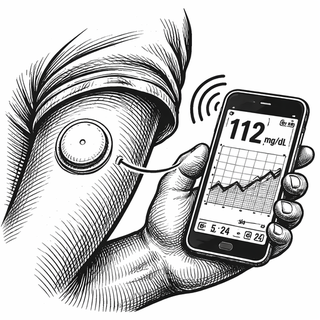
Meet the Libre 3 Plus continuous glucose monitor - a tiny, coin-sized sensor with big ambitions and a new clinical trial (NCT07510386) that's about to play matchmaker, pairing this little device with patients heading home from the hospital on insulin.
The Breakup Problem: What Happens After Discharge
Here's where I get a little fired up as someone who's watched this play out a thousand times. A patient gets admitted to the hospital. Their blood sugars are a mess - maybe they have type 2 diabetes that's been running wild, or maybe they developed steroid-induced diabetes from treatment they're receiving. The hospital team gets them stabilized on insulin, teaches them how to inject, hands them a blood glucose meter and some test strips, and sends them home with a cheerful "good luck!"
And then what?
The patient goes home, overwhelmed, maybe poking their finger two or three times a day (if they remember), trying to interpret numbers without context. Their doctor sees them in a few weeks, looks at a handful of scattered readings, and tries to make insulin dose adjustments based on what amounts to a highlight reel with most of the footage missing. Would you try to understand a movie by watching five random seconds from different scenes? That's fingerstick monitoring for post-discharge insulin management.
Studies suggest roughly 20-30% of patients with diabetes are readmitted within 30 days of discharge, with poor glycemic control being a major contributor. That's not just a statistic - that's someone's grandmother back in the ER because her insulin dose wasn't right and nobody caught it in time.
Enter the Trial: CGM as Your Post-Hospital Wingman
This investigator-initiated randomized controlled trial is asking a beautifully straightforward question: what if we sent patients home from the hospital with a continuous glucose monitor instead of just a fingerstick meter?
The study enrolls patients with type 2 diabetes or steroid-induced diabetes who are being discharged on insulin. Sixty-five participants will be randomized into two groups:
- Intervention group: Gets the Libre 3 Plus CGM system at discharge - real-time glucose readings, trends, and alerts, all streaming to their phone
- Control group: Wears a blinded CGM (collecting data they can't see) plus standard fingerstick monitoring
Both groups wear their sensors for 28 days post-discharge and participate in telehealth diabetes management visits. The whole study wraps up in about 35 days per participant.
What I find particularly clever about this design is the blinded CGM in the control group. Both groups generate the same rich continuous data stream, but only the intervention group (and their care team) can actually use it in real time. This means researchers can compare glucose patterns between the groups without the "well, they weren't wearing a sensor" confound. Smart.
Why Should You Care? (You Really Should)
The transition from hospital to home is one of the most dangerous periods in diabetes care. And while CGM technology has been transforming outpatient diabetes management for years, there's a surprising gap in the evidence for this specific post-discharge window.
The landmark MOBILE study demonstrated that CGM significantly improved glycemic control in patients with type 2 diabetes on basal insulin, reducing HbA1c and increasing time in range compared to traditional blood glucose monitoring (Martens T, et al. JAMA. 2021;325(22):2262-2272. doi:10.1001/jama.2021.7444). But that trial focused on stable outpatients - not the freshly-discharged-on-new-insulin crowd navigating unfamiliar syringes and sliding scales at their kitchen table.
Meanwhile, Spanakis and colleagues showed that CGM-guided insulin management inside the hospital was both feasible and effective, improving time in target glucose range without increasing hypoglycemia (Spanakis EK, et al. Diabetes Care. 2022;45(10):2369-2375. doi:10.2337/dc21-2130). And a consensus guideline on CGM in hospital settings has already laid the groundwork for expanding CGM beyond inpatient walls, highlighting the need for structured transition protocols (Galindo RJ, et al. J Diabetes Sci Technol. 2020;14(6):1066-1099. doi:10.1177/1932296820954163).
So we know CGM works in the hospital. We know it works in the outpatient clinic. But that critical gap between the two? That's exactly what this trial is designed to bridge.
The Telehealth Secret Sauce
Here's something that doesn't get enough attention: both groups receive telehealth diabetes management visits. This isn't just "wear a sensor and figure it out." The study builds in professional support during that vulnerable post-discharge window.
For the intervention group, those telehealth visits become supercharged. Instead of reviewing a handful of fingerstick readings, the care team can pull up 24-hour glucose trend lines, spot overnight lows the patient slept through, identify post-meal spikes, and make precise insulin adjustments. It's the difference between navigating with a hand-drawn map and using GPS with live traffic updates.
The Steroid-Induced Diabetes Angle
Can we talk about how including steroid-induced diabetes in this study is kind of brilliant? Steroid-induced hyperglycemia is notoriously tricky to manage. The glucose patterns are weird - often these dramatic afternoon and evening spikes that don't follow the typical type 2 diabetes playbook. Patients are bewildered, clinicians are adjusting insulin doses based on incomplete data, and everyone is stressed enough to eat their feelings (which, ironically, doesn't help the blood sugar situation).
CGM data in this population could be genuinely revelatory. Imagine seeing, in real time, exactly when those steroid-driven glucose spikes hit and how they respond to insulin. That's actionable intelligence you simply cannot get from four fingersticks a day. It's like upgrading from a weather report that says "it rained somewhere this week" to a live Doppler radar on your phone.
What Could This Mean for Patients?
If this trial shows that CGM at discharge improves glycemic control, reduces hypoglycemia, or decreases readmission rates, the implications are substantial. We could be looking at a shift in the standard of care for how we transition insulin-requiring patients out of the hospital.
Fewer dangerous blood sugar swings in those first critical weeks. Fewer panicked calls to the doctor's office. Fewer return trips to the emergency department. And maybe - just maybe - patients who actually feel confident managing their diabetes at home because they can see what their blood sugar is doing instead of playing a guessing game with a lancet four times a day.
Is 65 participants a small study? Sure. But randomized controlled trials don't need to be massive to generate meaningful signals, especially for a pragmatic question like this one. And sometimes the most important studies are the ones that test ideas everyone already suspects are true but nobody has bothered to prove yet.
The Bottom Line
A tiny sensor on your arm that talks to your phone and helps your doctor keep you safe after you leave the hospital. Is that really too much to ask? Swipe right.
This blog post is for educational and informational purposes only and does not constitute medical advice. Clinical trial information is based on the publicly available record NCT07510386 on ClinicalTrials.gov. Research citations are provided for reference and do not imply endorsement. Always consult with a qualified healthcare provider regarding medical decisions and diabetes management.