
Science sometimes feels like a road trip through the body, and this one begins on a badly damaged stretch of highway. Blood flow to the intestine gets blocked, then restored. Traffic resumes. Everyone should be relieved. Instead, the tissue throws a small biochemical tantrum. Oxidative stress rises, the intestinal barrier weakens, inflammation spills outward, and distant organs can get dragged into the mess. Reperfusion, it turns out, is not always the hero's entrance. Sometimes it arrives like a tow truck that clips the mailbox.
That is the problem behind a new PubMed-listed study on intestinal ischemia-reperfusion injury, a serious condition with very few targeted treatment options. The researchers built a biodegradable nanoparticle designed to soak up an extracellular protein called thrombospondin-1, or TSP-1, in damaged intestinal blood vessels. Their idea is elegantly simple: if one molecule is helping turn local injury into wider chaos, perhaps you remove the molecule before it can keep stirring the pot.
When restored blood flow makes things worse
Intestinal ischemia-reperfusion injury is one of those medical phrases that sounds technical but describes something brutally physical. First, the intestine loses blood supply. Then circulation returns. That return is necessary, of course. Tissue needs oxygen. But the sudden rush can also trigger oxidative damage, microvascular dysfunction, barrier breakdown, and inflammatory signaling. The gut lining becomes more vulnerable. Bacteria and bacterial products may cross where they should not. The immune system notices, loudly.
This matters because the intestine is not some quiet side street in the body. It is a major interface between the outside world and the bloodstream. When its barrier fails, consequences can spread beyond the gut. What begins as local vascular injury can become a systemic problem, affecting other organs as well. Biology has many talents. Overreaction is one of them.
The suspect: thrombospondin-1
The researchers focused on TSP-1, a matricellular protein that accumulates outside cells in ischemic microenvironments. Under normal circumstances, proteins like this help regulate cell behavior and tissue responses. Under pathological conditions, they can become less helpful. In this case, the study suggests extracellular TSP-1 amplifies oxidative stress and worsens tissue damage during reperfusion.
That makes TSP-1 an appealing target, especially because the damage is not just happening inside cells. A lot of drug development loves intracellular targets, where every useful molecule must somehow cross membranes, survive metabolism, and avoid causing trouble elsewhere. Here, the target is extracellular. It is out in the neighborhood, not hiding in the basement.
A molecular cleanup crew
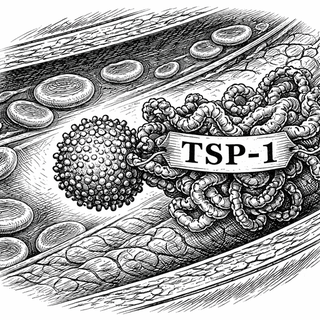
The treatment platform in this study uses PEG-PLGA nanoparticles, a familiar biodegradable material in drug delivery research, functionalized with a peptide called LSKL. These LSKL/NPs were designed to recognize and bind TSP-1 with high affinity and stability. In plain English, they act a bit like tiny, targeted sponges drifting toward injured intestinal microvessels and mopping up a protein that has overstayed its welcome.
That targeting piece is what makes the work especially interesting. The nanoparticles did not merely float around as passive passengers. According to the study summary, they preferentially accumulated in the injured intestinal microvasculature after ischemia-reperfusion. That means the therapy is trying to work where the damage is happening, rather than shouting medical instructions from across the body and hoping someone listens.
What happened when TSP-1 was removed
Once the nanoparticles scavenged pathological TSP-1, several good things followed. Oxidative stress signaling went down. Endothelial and epithelial cell apoptosis was reduced. Vascular integrity improved. The intestinal barrier held together better. Inflammation was dampened. Bacterial translocation was limited. Systemic inflammatory responses eased. Even distant organ injury was reduced.
That is a long list, but it hangs together logically. If the microvasculature is protected and the intestinal barrier stays more intact, fewer downstream problems should escape into the rest of the body. One of the more compelling features of this work is that it does not chase a single narrow readout and call it a day. It connects the dots from vessel-level injury to barrier failure to systemic consequences.
There is also the matter of safety. The study reports favorable biocompatibility and biosafety in vivo, which is not a glamorous phrase, but it is the sort of sentence that keeps translational dreams from face-planting in the hallway. Fancy nanoparticles are nice. Fancy nanoparticles that the body tolerates are nicer.
Why this stands out
A lot of therapeutic strategies for ischemia-reperfusion injury aim to broadly suppress inflammation or oxidative damage after the fact. That can help, but broad suppression is a blunt instrument. This study takes a more targeted route by removing a specific extracellular amplifier of injury in a defined vascular niche.
That approach feels fresh for two reasons.
First, it treats the extracellular microenvironment as an active driver of damage, not just scenery. Second, it uses biomaterials not merely as delivery vehicles, but as scavengers. The nanoparticle is part courier, part cleanup crew. Less "here is your package," more "we noticed a hazardous spill and brought absorbent pads."
If the concept holds up, it could have implications beyond the intestine. Ischemic injury is not unique to gut tissue. Similar vascular and inflammatory cascades show up in other organs too. A platform that can selectively remove harmful extracellular signals from damaged tissue could become a broader strategy, not just a one-paper curiosity.
The road from clever idea to real treatment
There is still distance between a strong preclinical study and a therapy used in patients. That stretch of road is full of potholes. Researchers will need to show reproducibility, define dosing windows, understand how timing affects benefit, and test whether the approach remains effective in more complex disease settings. Human intestinal ischemia-reperfusion can occur in messy clinical contexts, including surgery, shock, sepsis, and vascular compromise. Real patients rarely arrive with neatly isolated biology.
There is also the classic nanomedicine challenge: what works beautifully in a controlled model can become far less predictable in the clinic. Distribution, clearance, manufacturing consistency, and regulatory scrutiny all tend to become much more interesting once humans enter the chat.
Still, this study offers something more satisfying than vague promise. It presents a mechanistically coherent idea, aimed at a difficult problem, with evidence that local molecular scavenging can reduce both intestinal injury and systemic fallout. That is not a cure. But it is a smart move on the board.
Why this research is worth watching
The gut does not get much public sympathy until it starts failing dramatically, at which point everyone suddenly remembers it was doing important work all along. Studies like this one highlight how much damage can begin in the smallest vessels and the spaces outside cells, far from the flashier headline organs.
What makes this paper intriguing is not just that it used nanoparticles. Plenty of papers use nanoparticles. This one used them with a specific purpose: to remove a harmful extracellular signal at the site of injury before the wider inflammatory domino effect could really get going. That is a sharper, more disciplined vision of nanomedicine than the usual "tiny particles will solve everything" mood board.
For now, the work sits where a lot of good biomedical research sits: promising, mechanistically persuasive, and not yet ready to write prescriptions. But if future studies support it, this kind of extracellular protein scavenging could become a useful new way to protect ischemic tissues. Small particles. Big ambition. Modest, for nanoparticles, is not really their style.
This blog post discusses research findings and should not be taken as medical advice. If you have concerns about intestinal ischemia-reperfusion injury or related gastrointestinal or vascular conditions, please consult a healthcare provider. Research discussed here represents ongoing scientific investigation and clinical validation is still in progress.
All images used in this post are decorative illustrations only and do not represent or reflect the accuracy, reality, or correctness of the referenced research.
Primary Source: Biomaterial-mediated Scavenging of Extracellular Thrombospondin-1 in Peripheral Vessels Mitigates Intestinal Ischemia-Reperfusion Injury. PubMed record 42044682