
In the beginning, there was glucose. Too much of it, actually, swimming through the bloodstream like an overenthusiastic tourist refusing to leave. And in the tiny blood vessels of the retina - those delicate capillaries that supply the tissue responsible for turning light into "hey, that's my cat" - this excess sugar became the origin story nobody wanted. The vessels began to weaken, to leak, to grow where they shouldn't. Diabetic retinopathy was born, and it wasn't interested in being a friendly neighborhood condition. It wanted to steal sight.
Fast forward to today, and we've got treatments. Good ones, even. Anti-VEGF injections that tell those rebellious blood vessels to calm down. Corticosteroids that reduce inflammation like a bouncer at an overcrowded club. The problem? Getting these therapeutic heroes past the eye's own fortress walls is like trying to deliver a soufflé through a revolving door during an earthquake.
The Blood-Retinal Barrier: Nature's Most Annoying Bouncer
Here's the thing about the eye: it's paranoid. Evolutionarily speaking, this makes sense. You really don't want random molecules wandering into your visual processing center. But from a drug delivery standpoint, this is the equivalent of trying to cater a party where the host has installed a moat, drawbridge, and requires a 47-character password for entry.
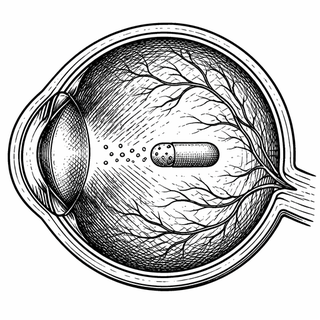
The blood-retinal barrier is remarkably effective at keeping therapeutics out. Eye drops? Mostly decorative - maybe 5% of what you squirt in actually reaches the back of the eye. The rest goes on a tour of your tear ducts and nasal passages. Oral medications? They'd need to survive the digestive system, enter the bloodstream, and then convince the eye to let them in. The odds are not favorable.
This leaves us with intravitreal injections - literally sticking a needle into the eyeball to deliver drugs directly where they're needed. Effective? Yes. Pleasant? About as enjoyable as it sounds. And patients with diabetic retinopathy often need these injections monthly, which is a compliance nightmare wrapped in a patient experience disaster.
Sustained Release: The Slow Cooker Approach to Ocular Therapy
A recent comprehensive review published in the Journal of Drug Delivery Science and Technology examines the emerging innovations that might finally solve this delivery puzzle. And I have to say, reading through the approaches feels like watching the medical device equivalent of a cooking competition where everyone's bringing increasingly creative solutions to the same fundamental problem.
Biodegradable intravitreal implants are essentially the crockpot of drug delivery. You place them once, and they slowly release medication over months or even years. The dexamethasone implant Ozurdex, for instance, can provide therapeutic drug levels for up to six months. That's going from monthly needle-in-the-eye appointments to twice yearly. For anyone keeping score, that's a significant quality of life improvement.
The engineering behind these implants is genuinely elegant. They're designed to degrade into harmless byproducts - typically lactic acid and glycolic acid - that the body can naturally process. It's like a time-release capsule, except the capsule itself becomes part of the recipe rather than waste you need to dispose of.
Nanoparticles: When Smaller Really is Better
If sustained-release implants are the slow cooker, nanoparticle-based carriers are molecular-level sous vide. We're talking about drug delivery vehicles measured in nanometers - particles so small they can slip through biological barriers that would stop larger molecules cold.
The review highlights several nanoparticle platforms under development: liposomes (tiny fat bubbles), polymeric nanoparticles (biodegradable plastic spheres), and dendrimers (branching tree-like molecules that look like microscopic coral). Each has its own advantages for loading different types of drugs and targeting specific retinal cell populations.
What makes these particularly interesting from an engineering perspective is the ability to functionalize their surfaces. You can attach targeting molecules that help the nanoparticles find specific cell types, essentially giving your drug a GPS system. Want to target retinal pigment epithelium specifically? There's a surface modification for that.
The skeptic in me notes that nanoparticle drug delivery has been "five years away" from clinical reality for about twenty years now. Manufacturing consistency, long-term safety data, and regulatory approval remain substantial hurdles. But the science keeps advancing, and for a condition as prevalent as diabetic retinopathy, the economic incentive to solve these problems is considerable.
Microneedles: Tiny Punctures, Big Potential
Perhaps the most practically promising near-term innovation is the microneedle array. These are exactly what they sound like: patches covered in needles so small they can penetrate just the outermost layers of tissue without reaching pain receptors.
For ocular use, these microneedles can be applied to the sclera - the white part of the eye - to create transient microchannels that dramatically improve drug penetration. The procedure could potentially be performed in an office setting without the full ritual of intravitreal injection. The needles dissolve after delivering their payload, and the microchannels heal within hours.
From a manufacturing standpoint, microneedle arrays are surprisingly tractable. They can be produced using established molding techniques, loaded with various drug formulations, and stored stably at room temperature. This matters enormously for global health applications where cold chain logistics are challenging.
The Gene Therapy Frontier: Editing the Recipe Itself
The review also covers gene therapy approaches, including CRISPR-Cas9 editing, which represents a fundamentally different philosophy. Rather than repeatedly delivering drugs to manage symptoms, gene therapy aims to modify the underlying genetic instructions causing disease.
For diabetic retinopathy, this could mean introducing genes that produce anti-VEGF proteins continuously, essentially turning retinal cells into their own pharmaceutical factories. One-time treatment, potentially permanent effect. The concept is elegant enough to make any engineer appreciate the efficiency.
Of course, gene therapy in the eye carries its own baggage. Luxturna, approved for a rare inherited retinal disease, demonstrated the approach works but also costs around $850,000. Manufacturing reproducibility, immune responses to viral vectors, and the permanence of any unintended effects all require careful consideration.
Stem cell-derived exosome therapies represent another emerging approach - using the signaling vesicles that cells naturally release to communicate, loaded with therapeutic cargo. It's like intercepting the body's text messages and inserting your own content into the conversation.
AI and Personalized Medicine: The Algorithmic Sommelier
The integration of artificial intelligence into treatment planning might seem tangential to drug delivery, but the review makes a compelling case for their connection. AI systems analyzing retinal imaging can identify disease progression patterns that inform optimal dosing schedules. Machine learning models can predict which patients will respond to which therapies, potentially reducing the trial-and-error approach that characterizes current treatment.
For sustained-release systems, this matters because implant formulations could theoretically be personalized based on predicted drug clearance rates and disease trajectory. The one-size-fits-all approach works for t-shirts, not necessarily for intraocular implants.
The Realist's Take: What's Actually Coming
Having followed medical device development for longer than I'd care to admit, I've learned to apply a healthy discount rate to translational timelines. The technologies described in this review exist on a spectrum from "currently in clinical use" to "promising laboratory results that may or may not survive contact with regulatory reality."
Sustained-release implants are here now and improving. Microneedle arrays are progressing through clinical trials with reasonable momentum. Nanoparticle platforms continue their slow march toward practical application. Gene therapies face the steepest climb but offer the most transformative potential.
The real breakthrough will likely come from combining these approaches - perhaps nanoparticle-loaded microneedle patches for initial treatment, followed by sustained-release implants for maintenance, with AI optimizing the regimen based on individual response. The future of diabetic retinopathy treatment probably looks less like a single silver bullet and more like a carefully orchestrated multi-course meal.
For the approximately 100 million people worldwide affected by diabetic retinopathy, these innovations represent genuine hope. Not the breathless "cure is just around the corner" variety of hope that medical journalism too often peddles, but the incremental, evidence-based kind that actually tends to pan out. Sometimes the best origin stories don't involve radioactive spiders or gamma rays. Sometimes they involve polymers, lipid bilayers, and a lot of very patient scientists working to outsmart the blood-retinal barrier.
This blog post discusses research findings and should not be taken as medical advice. If you have concerns about diabetic retinopathy or diabetes-related vision changes, please consult a healthcare provider. Research discussed here represents ongoing scientific investigation and clinical validation is still in progress for many of the technologies described.
All images used in this post are decorative illustrations only and do not represent or reflect the accuracy, reality, or correctness of the referenced research.
Primary Source: Emerging innovations in ophthalmic drug delivery for diabetic retinopathy: a translational perspective. Journal of Drug Delivery Science and Technology. 2025. DOI: PMID 40685494