
You know how AirPods Pro automatically adjust their noise cancellation based on your environment? Walking through a busy airport, sitting in a quiet library, jogging past construction - the algorithms constantly adapt to give you the optimal listening experience. Now imagine that same adaptive intelligence, but instead of managing audio, it's fine-tuning electrical stimulation to your brain in real-time. That's essentially what a new clinical trial is attempting to build for people experiencing mild cognitive impairment, and honestly, as someone who's always looking for the next big thing in health tech, I'm pretty excited about this one.
The Problem With One-Size-Fits-All Brain Zapping
Let's back up for a second. Transcranial electrical stimulation (tES) has been around for a while. The basic concept is straightforward: apply low-level electrical currents to the scalp to modulate brain activity. Researchers have been exploring it for everything from depression to stroke recovery to - you guessed it - cognitive enhancement.
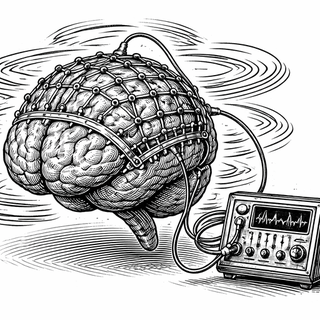
Here's the catch, though. Most tES protocols are about as personalized as a fortune cookie. Everyone gets roughly the same electrode placement, same intensity, same frequency. And shockingly (pun absolutely intended), the results have been... inconsistent. Some studies show promising cognitive improvements. Others show basically nothing. It's been frustrating for researchers and has left the field in a bit of a "does this actually work?" limbo.
The trial registered as NCT07512193 on ClinicalTrials.gov is taking a fundamentally different approach. Instead of applying generic stimulation and hoping for the best, this study creates a closed-loop system that reads your brain's electrical activity via EEG and adjusts the stimulation parameters in real-time. Think of it as the difference between a thermostat set to 70 degrees no matter what, versus a smart home system that learns your preferences and adapts to the weather, time of day, and whether you're actually home.
Meet Your New Brain's Personal Trainer
The study focuses on individuals with mild cognitive impairment (MCI) - that concerning middle ground between normal age-related forgetfulness and dementia. You know, when "where did I put my keys?" starts becoming "wait, do I own keys?" MCI affects roughly 15-20% of people over 65, and it's often a precursor to Alzheimer's disease. Finding effective interventions at this stage could potentially slow or even prevent progression to more severe cognitive decline.
What makes this trial particularly interesting from a product development standpoint is the integration of artificial intelligence. The AI doesn't just collect data - it actively derives insights to customize stimulation parameters for each participant. Electrode placement, intensity, frequency - all tailored to target the specific brain regions showing abnormal signaling in that individual. It's precision medicine applied to neurostimulation.
The intervention pairs this personalized brain stimulation with computerized cognitive training over a 6-8 week period. The researchers are measuring improvements in learning, memory, and something called functional connectivity - basically how well different brain regions communicate with each other.
Why This Could Actually Become a Real Product
Here's where my startup founder brain gets really interested. The study isn't just measuring whether this works. It's explicitly evaluating the viability of transitioning this technology into a "remotely supervised, home-based therapy setting."
Read that again. Home-based. Remotely supervised. Low-cost. Non-invasive.
That's not just a clinical trial - that's a product roadmap.
The researchers are identifying clinical and physiological predictors of treatment response. Translation: they're figuring out who this will work for and why. That's essential information for eventually bringing something like this to market. You can't scale a therapy if you can't predict who will benefit from it.
Imagine a future where someone diagnosed with MCI gets prescribed a headset they can use at home, with AI continuously optimizing their treatment while a clinician monitors progress remotely. No daily trips to the clinic. No expensive hospital equipment. Just consistent, personalized brain training in your living room while you do your cognitive exercises - maybe even while watching your shows (okay, probably not while watching shows, but we can dream).
The Bigger Picture for Brain Health Tech
This trial represents a broader shift happening in neurotechnology. We're moving from blunt instruments to precision tools. The brain isn't a uniform organ - it's an incredibly complex network where different regions handle different functions, and those regions interact in ways we're only beginning to understand. Treating everyone's brain the same way makes about as much sense as giving everyone the same prescription glasses.
The closed-loop aspect is particularly significant. Traditional brain stimulation is "open-loop" - you turn it on, it does its thing, you hope it helps. Closed-loop systems create a feedback mechanism where the treatment constantly adjusts based on what's actually happening in your brain. It's the difference between yelling instructions into a room versus having a conversation.
For MCI specifically, this matters enormously. The condition likely has multiple underlying causes and manifests differently across individuals. A personalized approach that adapts to each person's unique brain activity patterns could explain why generic protocols have shown such mixed results - and could finally unlock consistent benefits.
What We're Watching For
The trial is in its early stages, focused on feasibility and efficacy. That means we won't have definitive answers for a while. But the outcomes they're measuring - cognitive improvement, functional connectivity changes, and importantly, predictors of response - will tell us a lot about whether this approach has legs.
If successful, this could open the door to a new category of adaptive, AI-driven brain health devices. We're already seeing the consumer wellness space flooded with meditation headbands and "brain training" apps of questionable efficacy. A clinically validated, personalized neurostimulation system would be something entirely different - actual medicine, delivered with the convenience of consumer technology.
And let's be honest: with an aging population and Alzheimer's disease representing one of the largest unmet medical needs in the developed world, the market opportunity here is substantial. But more importantly than the business case, the human impact of slowing cognitive decline - helping people maintain their independence, their memories, their sense of self - is incalculable.
I'll be keeping a close eye on this one. The intersection of AI, neuroscience, and home healthcare is exactly where I think some of the most meaningful innovation will happen over the next decade. This trial might just be an early signal of what's coming.
Disclaimer: This blog post is for educational and informational purposes only and does not constitute medical advice. Clinical trials are research studies that may or may not demonstrate the safety or efficacy of the interventions being tested. Always consult with qualified healthcare professionals regarding medical conditions and treatments.
Citation: ClinicalTrials.gov Identifier: NCT07512193. "Personalized Closed-Loop Brain Stimulation for Patients With Mild Cognitive Impairment." Available at: https://clinicaltrials.gov/study/NCT07512193