
Most people assume that if you sever a nerve, doctors can just stitch it back together and you're good to go. Maybe a few weeks of rehab, some tingling, and everything returns to normal. But here's what actually happens: peripheral nerve injuries are devastatingly difficult to repair, and the best treatment we currently have involves stealing a nerve from somewhere else in your body and hoping for the best. Seriously, that's the gold standard. Now a team of researchers has come along and said, "What if we froze some stem cells, stuck them to a tube, and let them do all the heavy lifting?" And honestly? The results are kind of bananas.
The Problem with Borrowing from Yourself
Peripheral nerve injuries (PNI) affect millions of people worldwide and can lead to loss of motor function, sensory deficits, muscle atrophy, and in severe cases, permanent disability. The current go-to treatment is autologous nerve grafting, where surgeons take a nerve from a less important part of your body and transplant it to the injury site. It works reasonably well, but it comes with a catch-22: you're creating a new injury to fix the old one. Donor site morbidity is real, and there's only so much spare nerve to go around.
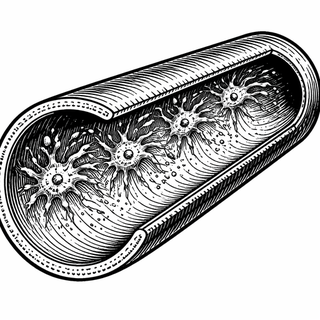
The alternative? Nerve guidance conduits (NGCs) - basically tiny hollow tubes that bridge the gap between severed nerve ends and guide regenerating axons across. Think of them as a tunnel for your nerves to grow through. The problem is that most NGCs are just... empty tunnels. They provide the physical scaffolding but none of the biological cheerleading that injured nerves desperately need. It's like building a highway but forgetting to put up any signs or rest stops.
Enter the Cryo-Shocked Stem Cell Strategy
This is where things get really clever. Researchers developed chitosan-based nerve guidance conduits functionalized with cryo-shocked neural stem cells, which they call Cryo-NSC NGCs. Let me break down what that means because every part of this name is doing work.
First, they took neural stem cells (NSCs) and seeded them onto the inner surface of chitosan conduits. They let these cells grow and settle in for a short expansion period. Then - and this is the wild part - they hit the whole thing with liquid nitrogen. Full cryo-shock. The cells don't survive, but that's actually the point.
See, when you cryo-shock these neural stem cells, they burst open and release their entire payload of neurotrophic factors, growth proteins, and signaling molecules. All the good stuff that normally helps nerves grow and repair gets embedded right into the conduit wall. You end up with what the researchers call a "tissue-specific factor pool" - essentially a slow-release biological pharmacy built directly into the nerve repair device.
The beauty of this approach is that you get all the benefits of stem cell therapy without the complications of keeping live cells alive inside a patient. No immune rejection concerns, no worrying about cell survival, no complex storage requirements. Just a shelf-ready conduit loaded with exactly the molecular cocktail that injured nerves are craving.
The Numbers That Made Me Do a Double Take
Okay, so the concept is cool. But does it work? Oh, does it ever.
In cell culture experiments, the Cryo-NSC NGCs enhanced neural cell adhesion and promoted neuronal differentiation so effectively that the average axon length reached 9.42 times that of the blank control. Let that sink in. Nearly ten-fold improvement in how far axons could grow. That's not a modest bump - that's a completely different ballpark.
Wait, it gets better. The researchers also compared their neural stem cell approach against conduits functionalized with cryo-shocked mesenchymal stem cells (MSCs), which are the more commonly used stem cell type in regenerative medicine. The Cryo-NSC conduits blew them out of the water. Proteomic analysis showed that the neural stem cells produced a much richer set of neural regeneration-related proteins compared to the MSCs. It makes intuitive sense when you think about it: if you want nerve-specific growth factors, maybe use nerve-specific stem cells. Revolutionary concept, right?
From Petri Dish to Living Nerve Repair
The real test came in a rat model with 10-mm sciatic nerve defects - a standard and pretty challenging model for peripheral nerve repair research. In these living systems, the Cryo-NSC NGCs promoted axonal regeneration, myelination (that's the insulating sheath that makes nerve signals travel fast), and even vascularization of the repair site. The conduits helped restore both motor and sensory functions, with nerve conduction recovery that approached - approached - the performance of autologous nerve grafts.
Let me emphasize that: a tube with frozen stem cell residue nearly matched the clinical gold standard that requires harvesting a nerve from somewhere else in your body. And it did all of this while showing excellent biocompatibility - no excessive inflammation, no organ damage, no nasty side effects.
Why This Matters Beyond the Lab
The implications here are significant for a few reasons. First, peripheral nerve injuries are incredibly common, arising from trauma, surgeries, and various medical conditions. Current treatment options range from "pretty good but limited" (autologous grafts) to "better than nothing" (standard NGCs). Having an off-the-shelf solution that rivals autografts without the donor site problem would be a genuine game-changer.
Second, the cryo-shock approach is elegant in its simplicity. You don't need to keep cells alive during storage or transport. You don't need immunosuppression. You could theoretically manufacture these conduits, freeze-dry them, and ship them to hospitals ready to use. That's the kind of practical advantage that separates a cool lab finding from something that could actually reach patients.
Third, the tissue-specificity angle opens up broader questions. If neural stem cells outperform mesenchymal stem cells for nerve repair, what about using cardiac stem cells for heart repair? Or chondrocyte-derived factors for cartilage? The cryo-shock platform could be adapted across multiple tissue types, each loaded with the precise biological toolkit for its target organ.
The Road Ahead
To be clear, this is still preclinical research in a rat model. The jump from a 10-mm rat nerve gap to the kinds of injuries seen in human patients is substantial. Clinical trials, regulatory approval, manufacturing scale-up - there's a long road between here and your surgeon's toolkit. But the foundation is strong, the results are compelling, and the approach is refreshingly practical.
Sometimes the best ideas in science are the ones that make you say, "Wait, why didn't anyone try this sooner?" Freezing stem cells onto a tube to create a biological nerve repair kit is one of those ideas. And the fact that it actually works this well? That's the part I can't stop talking about.
This blog post discusses research findings and should not be taken as medical advice. If you have concerns about peripheral nerve injuries, please consult a healthcare provider. Research discussed here represents ongoing scientific investigation and clinical validation is still in progress.
All images used in this post are decorative illustrations only and do not represent or reflect the accuracy, reality, or correctness of the referenced research.
Primary Source: Cryo-shocked Neural Stem Cells as Factor Pool-Functionalized Nerve Guidance Conduits for Enhanced Peripheral Nerve Regeneration. PubMed: 42031151