
Here’s what you need for spinal surgery recovery: a skilled surgical team, a careful rehab plan, patience, pain management, and, apparently, a serious conversation about cold plus compression. Recovery is not exactly a baking show where one missing ingredient ruins the whole cake, but it is a process where small changes can have outsized effects. That is what makes the clinical trial NCT07542470 interesting. It asks a simple, practical question with very non-trivial consequences: after spinal surgery, does an iceless cryopneumatic device called NICE1 improve outcomes compared with standard postoperative care?
The Trial in Plain English
According to the trial summary, this study is designed as a two-arm randomized controlled trial. That matters because randomized trials are still the cleanest way we have to compare two approaches without letting wishful thinking or selection bias sneak in through the side door.
One group receives NICE1 cryotherapy with compression, also described as cryopneumatic therapy. The other receives standard of care after surgery. In other words, patients are not just being observed. They are being assigned to one of two recovery strategies so researchers can compare what actually happens.
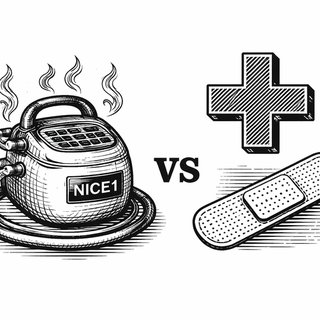
The study title tells us the patient population clearly: people recovering from spinal surgery. The purpose is also straightforward: evaluate postoperative health outcomes in patients using the NICE1 device compared with usual care. No interpretive fog machine required.
You can view the main trial record here: ClinicalTrials.gov study page
And the table view here: ClinicalTrials.gov table view
Why This Question Is More Interesting Than It Sounds
On paper, “cooling and compression after surgery” may not sound glamorous. It has the charisma of a discharge packet. But from a data perspective, this is exactly the kind of intervention worth studying because it sits in the zone where modest improvements can scale fast.
Spinal surgery recovery often involves pain, swelling, reduced mobility, and a constant tug-of-war between rest and movement. If a device can lower pain, reduce inflammation, improve comfort, or help patients regain function faster, the ripple effects are large. That could mean fewer pain medications, better participation in rehab, smoother recovery at home, and maybe fewer calls that begin with, “Hi, I’m not sure this amount of swelling is supposed to be happening.”
This is the kind of trial I like because it targets the recovery phase, where patients actually live. Surgical success is not just what happens in the operating room. It is also what happens on day 2, day 5, and week 3, when the patient is trying to sit, stand, sleep, and not negotiate with their spine like it is a hostile contractor.
What Is Cryopneumatic Therapy, Exactly?
The name sounds like a machine invented by a committee that was paid by the syllable, but the concept is simple. “Cryo” means cold. “Pneumatic” refers to compression delivered by pressurized air or a similar mechanism. Put together, cryopneumatic therapy combines cooling and compression in one device.
The logic is appealing. Cooling may help reduce pain and swelling. Compression may help manage fluid buildup and support tissue recovery. If both are delivered in a controlled, convenient way, patients may get a more consistent recovery tool than they would from ordinary ice packs or looser home routines.
The “iceless” part is also worth noticing. Traditional icing can be messy, short-lived, and highly dependent on whether someone remembered to refill the freezer situation. An iceless system aims for more reliable temperature control and easier use. That may sound like a minor convenience upgrade, but in recovery, convenience is not trivial. If a therapy is hard to use, people use it less. Human behavior remains undefeated.
What the Numbers Could Change in the Real World
This trial is interesting because it is not chasing a futuristic moonshot. It is testing whether a better recovery tool can improve measurable outcomes after a common and consequential type of surgery.
If NICE1 performs better than standard care, the real-world impact could show up in several places:
- Lower pain scores during the early postoperative period
- Reduced swelling or discomfort
- Better mobility or function during recovery
- Less reliance on pain medication
- A smoother home recovery experience for patients and caregivers
Even small improvements matter here. If an intervention moves the needle by a little on pain and a little on mobility and a little on comfort, those “littles” can add up to a noticeably better recovery. Healthcare often works like compound interest, except with less excitement and more discharge instructions.
There is also a systems-level angle. Postoperative complications, uncontrolled pain, and slower recovery are expensive in time, staffing, and patient quality of life. A device that helps standardize recovery support could be useful not just for patients, but for clinics and hospitals trying to improve outcomes without reinventing the whole pathway.
The Challenge This Research Is Trying to Solve
The hard part of postoperative care is that standard care can be standard without being optimal. “Usual care” often bundles together sensible practices, but the bundle may vary, and it may leave room for better tools.
That is the gap this trial targets. Not whether recovery support matters, but whether this specific form of recovery support works better than the status quo.
And this is where randomized design earns its keep. Recovery is noisy. Patients differ in age, pain tolerance, surgical complexity, home support, and baseline health. Everyone has a recovery story, and every recovery story thinks it is the main character. Randomization helps turn all that variability into something researchers can analyze rather than merely admire.
What to Watch For
The most useful results from this trial will likely come down to outcomes that patients actually feel, not just metrics that look tidy in a spreadsheet. Pain levels, function, recovery speed, and overall postoperative experience are the kinds of endpoints that make this study relevant.
The full ClinicalTrials.gov record is the place to confirm details such as sponsor, eligibility criteria, recruitment status, and predefined outcome measures as they are listed in the registry. Those specifics matter because they tell us who was studied, what success means, and how broadly the findings might apply.
For now, the big picture is clear. This is a pragmatic study asking whether a recovery device can improve life after spinal surgery compared with usual care. That is not flashy science. It is useful science. And useful science tends to age well.
Why I’ll Be Watching This One
I keep coming back to the same pattern: some of the most meaningful healthcare gains come from improving the middle of the process, not just the beginning or the end. Surgery gets the spotlight. Long-term outcomes get the headline. Recovery sits in the middle doing the daily work, like a stage crew member who is somehow responsible for the entire show not collapsing.
If this trial shows benefit, it could help push postoperative care toward something more controlled, more comfortable, and more evidence-based. If it shows no meaningful difference, that is useful too. Negative results save time, money, and misplaced enthusiasm. Data is not offended when reality disagrees with a good idea.
Disclaimer
This article is for educational purposes only and is not medical advice. It is based on the ClinicalTrials.gov study record and summary provided for NCT07542470. Readers should consult the full trial entry and qualified healthcare professionals for medical or treatment guidance.
Citation
ClinicalTrials.gov. Assessing Outcomes in Spinal Surgery Patients Who Receive Iceless Cryopneumatic Therapy Using the NICE1 Device as Compared to Standard of Care (NCT07542470). Available at: https://clinicaltrials.gov/study/NCT07542470