
You won't believe what researchers are doing with paperwork: they are asking whether Europe’s tougher medical device rules might accidentally sideline some well-established orthopaedic implants while trying to keep patients safer. Yes, paperwork. Not a gleaming surgical robot, not an implant that syncs with your phone, not a knee replacement with jazz hands. Regulatory paperwork. And in orthopaedics, that paperwork can decide whether a device remains available for patients or quietly disappears from the shelf.
The paper at the center of this discussion, indexed in PubMed as record 42065230, looks at the European Union Medical Device Regulation, usually shortened to MDR 2017/745. The MDR was introduced after some high-profile medical device failures shook public trust. Its goal is sensible: require stronger clinical evidence, limit over-reliance on “this device is basically like that other device,” and keep a closer eye on devices after they reach the market.
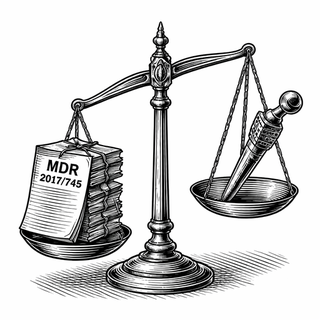
So far, so reasonable. When something is going into a hip, knee, spine, shoulder, or other load-bearing neighborhood of the body, “trust us, it seems fine” is not exactly the gold standard.
But the paper argues that the real problem is proportionality. A brand-new implant with limited experience behind it should face robust testing. A long-used implant with decades of clinical history may need a different path. Treating both as if they carry the same uncertainty could protect patients in one setting while creating headaches in another. Medicine does enjoy complexity the way cats enjoy knocking things off counters.
Why the MDR Exists
Medical devices have had their share of failures. Some implants reached widespread use before enough was known about long-term performance, wear, failure rates, or adverse tissue reactions. When devices fail, the consequences are not theoretical. Patients may need revision surgery, face pain or disability, or lose trust in the medical system.
That is the backdrop for MDR 2017/745. Compared with the older European regulatory framework, the MDR asks for more clinical evidence and stronger post-market surveillance. It also limits how much manufacturers can rely on equivalence, meaning the argument that a device is similar enough to another approved product to justify approval.
That shift makes sense. Equivalence can be useful, but it can also become a regulatory game of telephone: this device resembles that device, which resembled another device, which was tested in a context that may or may not still apply. Eventually, someone should stop and ask whether the chain of reasoning is made of steel or spaghetti.
The Catch: Not Every Implant Is a Shiny New Experiment
The paper’s central point is not “regulation bad.” That would be too easy and also wrong. The stronger argument is that regulation needs to match risk.
Orthopaedic implants are not one single category. Some are novel, complex, or used in ways where long-term performance is uncertain. Those deserve careful prospective evidence, meaning data collected forward in time from patients receiving the device. That kind of evidence can help detect problems before they become widely distributed problems.
Other implants, however, are older workhorses. They may have extensive registry data, long clinical experience, and years of observed performance. For these devices, the question is not whether evidence matters. It does. The question is what kind of evidence is reasonable, useful, and proportionate.
If a well-established implant has a strong track record, demanding the same evidence package as a new device may not always improve patient safety. It may simply make recertification slower and more expensive. And when certification becomes too burdensome, manufacturers may withdraw products, especially if those products serve smaller patient groups.
That is where the issue gets uncomfortable.
The Low-Volume Problem
The paper highlights a tricky middle zone: intermediate- and lower-volume indications. These are not necessarily rare enough to qualify cleanly for orphan-device provisions, but they may not have the large patient numbers needed to support broad, expensive evidence programs.
Think of it like trying to run a packed-city subway schedule in a small mountain town. The rules might be beautifully designed for high traffic, but if you apply them without adjustment, the town may end up with no train at all.
In orthopaedics, that could mean losing access to established implants used for less common anatomical sites, revision cases, unusual patient anatomy, or specialized reconstruction needs. These are exactly the areas where surgeons often rely on accumulated experience and carefully selected tools.
To be clear, this does not mean every old device deserves a free pass. Longevity is not magic. A device can be familiar and still flawed. But a mature clinical track record should count for something, especially when supported by registries, post-market surveillance, published outcomes, and real-world use.
What the Paper Gets Right
The most persuasive part of the argument is its refusal to treat innovation and preservation as enemies. Orthopaedics needs new ideas. Better materials, improved fixation, smarter instrumentation, and more durable implants all matter. Patients should benefit from well-tested advances.
At the same time, medicine should not discard reliable tools just because the administrative route for keeping them available becomes too steep. Innovation is not helped by creating a landscape where only large companies and high-volume products can survive the process.
The paper also gives appropriate weight to post-market surveillance. For implants, the operating room is not the end of the evidence story. Long-term follow-up matters because wear, loosening, fracture, infection-related revision, and functional outcomes may emerge years later. Registries and structured surveillance can be powerful here, especially in orthopaedics, where many countries already collect implant performance data.
That is good methodology thinking: do not just ask for “more evidence” in the abstract. Ask what evidence answers the actual clinical question.
Where We Should Pump the Brakes
Still, the argument needs careful handling. “This device has been around a long time” is not the same as “this device is proven safe and effective for every patient and every use.” Clinical familiarity can hide weak evidence. Surgeons may have strong impressions from experience, but impressions can be biased by patient selection, institutional habits, and the fact that bad outcomes sometimes scatter across different hospitals like confetti nobody asked for.
Risk-based recertification sounds attractive, but the details matter. Who decides what counts as enough history? What level of registry follow-up is acceptable? How should missing data be handled? What happens when an implant performs well in routine cases but poorly in difficult revisions? These are not minor technicalities. They are the difference between smart proportionality and a loophole wearing a nice blazer.
The paper points toward orthopaedic societies as a possible solution. Specialty groups could help develop evidence guidance tailored to particular implants, procedures, and patient populations. That could help regulators and notified bodies apply MDR requirements more consistently.
That idea has promise, but it also needs guardrails. Specialty guidance should be transparent, evidence-based, and protected from conflicts of interest. Surgeons, manufacturers, regulators, patients, and methodologists all have different incentives. A good process would make those incentives visible instead of pretending everyone has arrived at the table as a floating brain of pure objectivity.
What This Could Mean for Patients
For patients, the stakes are practical. Stronger regulation can reduce the chance that poorly supported devices reach the market. That is a real benefit. But if regulation also causes reliable implants to vanish, especially for complex or uncommon cases, patient care may suffer in a different way.
The best version of the MDR would push genuinely new devices to prove themselves while allowing mature, well-documented implants to remain available through evidence pathways that match their risk. That does not mean lowering standards. It means aiming standards accurately.
A hammer and a microscope are both tools, but you should not use the same quality-control test for both unless your goal is mainly to confuse the hammer.
The Bottom Line
This paper raises a thoughtful warning: patient safety and sustainable innovation are not automatically served by applying the same regulatory burden to every device in the same category. Orthopaedic implants vary widely in novelty, risk, evidence history, and patient population. Regulation should reflect that.
The MDR’s push for stronger evidence is welcome. The challenge is making sure it does not unintentionally remove established options that patients and surgeons still need. A risk-based approach, supported by high-quality registries, transparent post-market surveillance, and specialty-specific guidance, may be the path between reckless enthusiasm and regulatory overcorrection.
That path will not be glamorous. It will involve committees, data definitions, surveillance systems, and yes, paperwork. But sometimes the unglamorous machinery is what keeps the shiny metal bits doing their job inside actual human beings.
This blog post discusses research findings and should not be taken as medical advice. If you have concerns about orthopaedic implants or surgery, please consult a healthcare provider. Research discussed here represents ongoing scientific investigation and clinical validation is still in progress.
All images used in this post are decorative illustrations only and do not represent or reflect the accuracy, reality, or correctness of the referenced research.
Primary Source: The need of innovation and of preservation of well-established techniques in the era of MDR for improving outcomes. PubMed Record ID: 42065230. PubMed