
Imagine you’ve just broken your leg. After the initial shock wears off, the doctor tells you they’ll fix it with a metal plate and screws. Sounds reliable, right? For decades, that’s been the go-to fix. But what if I told you that the future of bone repair might not involve any metal at all? A recent study published in Medicine explores the fascinating evolution of internal fixation materials (IFM) and how they’re moving towards more advanced, biodegradable options that could change the game for patients like you and me.
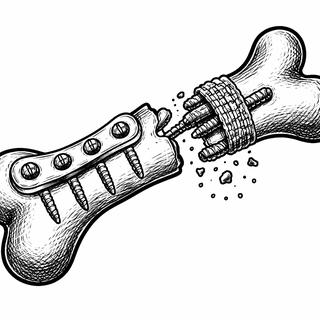
Rethinking Fixation: Why Metal Isn’t Always Best
For years, stainless steel and titanium alloys have been the unsung heroes in orthopedic surgery. They’ve been the best friends of surgeons everywhere, providing the strength and durability needed for fracture fixation. But here’s the kicker: these materials have their flaws. While they’re tough on the outside, they can be a bit of a diva when it comes to biocompatibility. In layman’s terms, your body might not always welcome them with open arms.
This study, led by a team from Qinghai University and other institutions in China, uses a bibliometric approach (think of it like a Google search for academic papers) to analyze research trends on IFM from 2004 to 2024. The results show that researchers are increasingly leaning towards biodegradable materials that can gracefully exit the stage once they’ve done their job - without the need for additional surgeries.
The Shift to Biodegradable Materials
What exactly are biodegradable materials? Well, think of them as the eco-friendly version of your favorite fixings. Instead of leaving metallic hardware behind, these materials - like magnesium alloys and various composites - decompose over time. This not only reduces the risk of complications but also eases the path to recovery. Imagine your body healing without having to deal with leftover screws and plates like unwanted souvenirs from a trip to the ER.
Through keyword co-occurrence and citation analysis, the researchers discovered that bioactive materials, mechanical properties, and biodegradability have become the hottest topics in the world of IFM. If you’ve ever been to a trendy café and noticed how everyone’s talking about oat milk lattes instead of regular coffee, you’ll understand how research trends can shift.
Key Players and Emerging Trends
As with any good story, there are heroes behind the scenes. The researchers identified influential scholars and leading institutions actively shaping the future of internal fixation materials. These folks are on a mission to enhance patient outcomes and make bone healing less of a hassle.
The analysis also points to several emerging themes. With biomedical engineering technologies advancing at lightning speed, we’re now seeing a fusion of cutting-edge materials and smart designs. This means that future implants might not just be biocompatible; they could be personalized to meet individual patient needs. It’s like having a custom-tailored suit, but for your bones!
The Real-World Impact: What This Means for You
So, why should you care about the evolution of internal fixation materials? Well, if you ever find yourself on the wrong end of a skateboard accident (or maybe just tripping over your own feet), knowing that researchers are working on less invasive, more compatible materials can be a huge relief.
Imagine a world where surgeries are less complicated, recovery times are shortened, and the need for follow-up surgeries is drastically reduced. That’s a win-win for everyone involved. The research opens the door for innovative solutions that can potentially transform the experience of healing from fractures.
As we continue to learn more about these materials, we inch closer to the day when internal fixation may not involve any metal at all. Instead, we could be looking at smart, biodegradable options that dissolve away, leaving nothing but healthy, healed bone behind.
A Bright Future Ahead
The study provides a comprehensive overview of the ongoing advancements in internal fixation materials and offers insights into what the future may hold. As we move towards a more personalized and intelligent approach to orthopedic care, it’s exciting to think about how these breakthroughs can improve the quality of life for countless individuals.
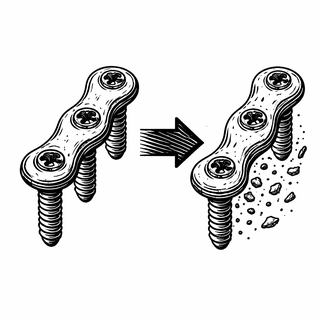
Whether you’re an athlete, a weekend warrior, or just someone who occasionally trips on the sidewalk, the evolution of internal fixation materials is something to keep an eye on. Because let’s face it, we could all use a little less metal in our lives - and a lot more healing!
Disclaimer: This blog post summarizes findings from the research paper, "Evolution trends internal fixation materials knowledge mapping" published in Medicine. For more details, please refer to the original study. Images and graphics are for illustrative purposes only and do not depict actual medical devices, procedures, mechanisms, or research findings from the referenced studies.
Citation: Lin X, Wu Q, Shi M, et al. Evolution trends internal fixation materials knowledge mapping. Medicine. 2025 Dec 19;104(51):e46049. doi: 10.1097/MD.0000000000046049.