
Roughly 80,000 tons of pectin are produced globally every year, and nearly all of it ends up in your jam, your yogurt, or your kid's fruit snacks. But a growing body of research now suggests that this humble, plant-derived goo could become one of the most versatile biomaterials in modern medicine - from delivering chemo drugs directly to tumors, to turbocharging the immune system's fight against cancer. Yes, the same stuff that makes your strawberry preserves jiggly might one day help save lives.
A new review paper published in 2025 pulls together the latest science on pectin-based biomaterials and their expanding role in precision medicine. And as a parent who reads medical research the way other people read restaurant reviews - with one burning question: will this actually help my kid someday? - I found this one genuinely exciting.
Wait, Pectin? Like, From Apples?
Exactly like from apples. And citrus peels. And basically every fruit your toddler has ever smeared across your backseat.
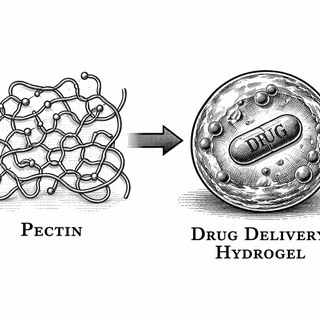
Pectin is a polysaccharide, which is a fancy way of saying it's a complex sugar molecule found in plant cell walls. For over a century, the food industry has used it as a gelling and thickening agent. But researchers have been eyeing pectin for biomedical applications for a different set of reasons: it's biocompatible (your body doesn't freak out when it encounters it), biodegradable (it breaks down naturally), and non-toxic (no nasty surprises). It also has natural anti-inflammatory and antimicrobial properties, which is basically the biomaterial equivalent of showing up to a job interview with three extra certifications you didn't even list on your resume.
The real game-changer, though, is pectin's ability to form what scientists call "ionically crosslinked hydrogels." Translation: you can shape pectin into gel-like structures that hold drugs inside them and release those drugs in a controlled way. Think of it as a tiny, edible delivery truck for medicine.
Targeted Drug Delivery: Getting the Right Medicine to the Right Spot
One of the biggest problems with conventional drug treatments - especially chemotherapy - is that they're basically carpet-bombing your entire body to hit one target. That's why chemo patients deal with brutal side effects: the drugs don't just kill cancer cells, they rough up everything else along the way.
Pectin-based delivery systems aim to fix that. Researchers are developing pectin nanoparticles and hydrogels that can carry drugs directly to specific sites in the body. Because pectin naturally degrades in the colon (thanks to bacterial enzymes that love munching on it), it's especially promising for targeting gastrointestinal cancers and conditions. But chemical modifications can also tune pectin to release its payload in response to pH changes, temperature shifts, or even specific biological signals.
For a parent, this is the kind of research that makes your ears perk up. Site-specific drug delivery means less collateral damage to healthy tissue, potentially fewer side effects, and more effective treatment. If your child ever needed cancer treatment - a thought no parent wants to entertain - the difference between "medicine that hits everything" and "medicine that hits only the bad stuff" is enormous.
Cancer Immunotherapy Gets a Plant-Based Boost
Here's where things get really interesting. The review highlights pectin's emerging role in cancer immunomodulation - essentially, helping the immune system recognize and fight tumors more effectively.
Modified pectin, particularly a form called modified citrus pectin (MCP), has shown the ability to interact with galectin-3, a protein that cancer cells use to hide from the immune system. Think of galectin-3 as a little invisibility cloak that tumors throw on so your immune cells walk right past them. Modified pectin can strip that cloak away, potentially making tumors visible to the immune system again.
Researchers are also exploring pectin-based nanocomposites - hybrid materials that combine pectin with other nanoparticles - to create systems that simultaneously deliver drugs AND stimulate immune responses. It's like sending in the cavalry with better weapons and a map to the enemy's hideout.
Gene Therapy's New Packaging Material
Gene therapy is one of the most promising frontiers in medicine, but it has a packaging problem. Getting genetic material safely into cells without triggering an immune reaction is tricky. Viral vectors (using modified viruses as delivery vehicles) work, but they come with risks and limitations.
Enter pectin. Its natural biocompatibility and tunable structure make it a candidate for non-viral gene delivery systems. Researchers are experimenting with pectin-based carriers that can protect genetic material during transport and release it once inside the target cell. We're still in early stages here, but the potential for safer, more accessible gene therapy is real.
So What's the Catch?
Because there's always a catch, and I'd be doing you a disservice if I didn't mention it.
The review is refreshingly honest about the challenges. First, pectin is a natural product, and natural products are notoriously inconsistent. Getting batch-to-batch consistency in pharmaceutical-grade pectin is like trying to get your kids to behave identically at two different birthday parties. It's theoretically possible, but reality has other plans.
Second, most of the exciting results so far come from lab studies (in vitro) and animal models. The leap from "this worked in a petri dish" to "this works in your actual human body" is a canyon that has swallowed many promising therapies. The review specifically calls out the need for more in vivo validation and standardized evaluation frameworks.
Third, scaling up production while maintaining the precise chemical modifications that make pectin therapeutically useful is a significant engineering challenge. You can't just boil more apples and call it a day.
Why This Still Matters
Despite the hurdles, pectin-based biomaterials represent exactly the kind of research direction that gives me hope as a parent. We're talking about a material that's safe, sustainable, abundantly available, and naturally suited for medical applications. The fact that researchers are finding ways to use it for targeted drug delivery, immune system modulation, gene therapy, AND wound healing suggests we've barely scratched the surface.
Will your pediatrician be prescribing pectin nanoparticles next Tuesday? No. But the trajectory here is genuinely promising, and the combination of low toxicity and high versatility makes pectin a biomaterial worth watching. Sometimes the most powerful tools in medicine aren't the most exotic ones - they're the ones that have been sitting in your kitchen pantry all along, waiting for someone clever enough to see their potential.
This blog post discusses research findings and should not be taken as medical advice. If you have concerns about cancer treatment, drug delivery systems, or related conditions, please consult a healthcare provider. Research discussed here represents ongoing scientific investigation and clinical validation is still in progress.
All images used in this post are decorative illustrations only and do not represent or reflect the accuracy, reality, or correctness of the referenced research.
Primary Source: Pectin in precision medicine for targeted delivery, gene therapy, and cancer immunomodulation: A review. PubMed. 2025. DOI: PMID 41937017