
Note to self: if you build a factory that produces something toxic, maybe add a dial. Seems obvious in retrospect. Apparently yeast cells needed someone to figure this out for them.
That, in essence, is what a new piece of metabolic engineering research has accomplished - and while it sounds like a minor operational fix, it represents something genuinely clever happening at the microscopic level of living cells.
The Problem With Static Factories
Here is a thing about biology that never stops being annoying to engineers: cells do not simply follow instructions. They push back. They get stressed. They accumulate byproducts, slow their growth, and eventually just... give up.
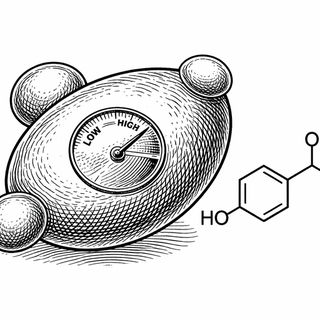
When researchers engineer microbes to produce polyphenolic compounds - the class of beneficial molecules found in olive oil, red wine, berries, and approximately every food that a nutritionist has ever loved - they run into exactly this problem. The metabolic pathway goes through a compound called tyrosol. And tyrosol, at high enough concentrations, is toxic to the very cells tasked with making it.
You have engineered your factory to produce something valuable, and in doing so, you have poisoned your factory workers.
The traditional workaround has been static regulation - essentially setting the production dial to a fixed position and hoping for the best. The cells grow. The pathway runs. Tyrosol builds up. Growth slows, then stalls. Production tanks. Everyone is unhappy, especially the yeast.
Enter Dynamic Regulation
The concept of dynamic metabolic regulation is exactly what it sounds like. Instead of locking the system at a fixed output, you give the cell's own machinery the ability to sense what is happening and adjust accordingly.
Think of it as the difference between a thermostat and a space heater you left on full blast all winter. One responds to conditions. The other ignores them until something catches fire.
For yeast producing polyphenolic compounds, the dream scenario is a system that can sense when tyrosol is accumulating to dangerous levels - and then automatically dial back production or reroute the pathway before the cells start dying. This kind of self-correcting feedback loop exists everywhere in natural biology. Getting it into an engineered yeast strain, however, requires finding the right molecular hardware.
Mining the Yeast Genome for the Right Switch
This is where the research gets genuinely elegant. Rather than building a synthetic sensor from scratch - always an option, never cheap, often finicky - the team went looking inside the yeast itself.
Using transcriptomics, they analyzed which genes naturally change their expression in response to tyrosol. This is essentially eavesdropping on the cell: expose it to tyrosol, then listen to which genes start talking louder or quieter. The regulatory sequences upstream of those responsive genes - the promoters - become candidates for a tyrosol-sensing switch.
The logic is sound. If evolution has already wired certain yeast genes to respond to tyrosol, you can borrow that wiring. Attach it to a gene you actually care about regulating, and suddenly you have a living feedback sensor assembled from parts the cell already trusts.
The team identified endogenous tyrosol-responsive promoters this way and screened them for the most reliable, sensitive, and appropriately calibrated response. Biological parts, unlike hardware components, do not come with spec sheets. Some promoters respond too slowly. Some are triggered by other things besides tyrosol. Finding the optimal one is genuinely painstaking work.
Why This Matters Beyond the Lab Bench
Polyphenolic compounds are not a niche interest. Compounds like salidroside, hydroxytyrosol, and resveratrol have attracted serious attention for their antioxidant, anti-inflammatory, and potential neuroprotective properties. Synthesizing them through microbial fermentation - rather than extracting them from plants in tiny, expensive quantities - would make them far more accessible for pharmaceutical and nutraceutical applications.
That pipeline has been stalled, in part, by exactly the kind of metabolic bottleneck this research addresses. A yeast strain that can regulate itself dynamically - backing off tyrosol accumulation when levels get dangerous, then resuming production when the coast is clear - runs longer, produces more, and does not need a human engineer hovering over the bioreactor adjusting things by hand.
It is, in a sense, a cell that has learned to manage its own stress. A skill many of us are still working on.
The Broader Lesson
There is a broader principle here worth noting. Synthetic biology has spent decades trying to override cellular behavior - inserting foreign genes, blocking native pathways, forcing cells down routes they would never naturally take. That approach works, up to a point. But it also fights biology's tendency to equilibrate, resist, and compensate.
The more elegant long-term strategy may be working with the cell's existing regulatory vocabulary rather than against it. Tyrosol already meant something to yeast - already triggered a response - long before anyone cared about making polyphenols in a fermenter. The researchers found a way to speak that language and redirect the conversation.
The yeast, for its part, probably does not appreciate the cleverness. But it will, presumably, stop dying. Which is the main thing.
This blog post discusses research findings and should not be taken as medical advice. If you have concerns about any condition discussed here, please consult a healthcare provider. Research discussed here represents ongoing scientific investigation and clinical validation is still in progress.
All images used in this post are decorative illustrations only and do not represent or reflect the accuracy, reality, or correctness of the referenced research.
Primary Source: Engineering a Tyrosol-Responsive Dynamic System in Yeast. PubMed. 2026. PMID: 41873578