
If this urine test were an everyday object, it would be a smoke detector that can also tell whether you burned toast, left a candle lit, or actually set the kitchen on fire. Same room, same alarm, much better judgment. That is the basic appeal of a new biosensor called SMART, designed to help diagnose urinary tract infections, or UTIs, by detecting several urinary biomarkers at once instead of relying on the usual one-clue-at-a-time routine.
UTIs are common enough that, in the emergency department, they show up like clockwork. Some are obvious. Some are not. Some land in older adults who are confused, uncomfortable, and running a fever. Some turn into kidney infections or worse if treatment drags. The faster we can sort the real infections from the false alarms, the better. Antibiotics are useful tools, but they are not breath mints. Handing them out casually has consequences.
This new study, titled Allosteric DNAzyme-Enabled Sensitive and Multiplex Detection of Biomarkers for Rapid Diagnosis of Urinary Tract Infections, takes aim at a problem medicine has been circling for years: how to make UTI diagnosis faster, more precise, and less dependent on slow lab workflows.
Why UTI diagnosis still gets messy
A lot of people hear "UTI" and think the story starts and ends with a urine sample. In reality, it can be a small circus. Standard urine cultures can take time. Symptoms can overlap with other problems. Dipstick tests and basic urinalysis help, but they are not exactly omniscient. A positive result may not mean a true infection is actively causing trouble, and a negative one does not always let you walk away whistling.
What clinicians want is a test that is fast, sensitive, and smart enough to pick up the biological fingerprints of infection as the body responds. Not just the bacteria, but the host response too. That is where urinary biomarkers come in.
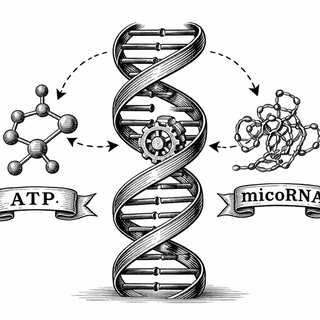
This study focused on two kinds of markers found in urine: ATP and microRNAs. ATP is the cell's energy currency, but in this context it can also reflect cellular activity and stress. MicroRNAs are tiny RNA molecules involved in gene regulation, and some can shift in ways that signal infection or inflammation. Think of them as molecular gossip. They may be small, but they know what is going on.
What SMART actually does
The biosensor in this paper is called SMART, short for sensitive and multiplex detection of ATP and miRNAs for UTI diagnosis. The acronym is a little proud of itself, but for once it earned it.
The researchers built a DNA-based sensor using something called an allosteric DNAzyme. Strip away the jargon and the idea is straightforward. This is a specially designed DNA molecule that stays quiet until the right target shows up. When the target binds, the sensor changes shape and switches on a catalytic function. That activated structure then cleaves fluorescent RNA reporters in a sequence-specific way, producing a measurable signal.
The clever part is that several sensing modules were built into one DNA strand. That matters because it helps the sensor detect multiple biomarkers in the same test tube, in one pot, without needing separate elaborate setups for each marker. In lab work, "one-pot" is often scientist for "we are trying very hard not to make this annoying."
According to the paper, SMART detected ATP at around picomolar sensitivity and microRNAs at around femtomolar sensitivity. Those are very low concentrations, which is a polite way of saying this thing can notice a whisper in a room full of noise. It also handled about four markers at once, giving it real multiplexing capability.
Why that is a big deal
A test can be elegant on the bench and useless at the bedside. This one gets interesting because it addresses several practical headaches all at once.
First, it is rapid. The reported turnaround was about 2.5 hours. That is not instantaneous, but in the world of infection diagnostics it is meaningfully quick. Faster answers can shape treatment decisions before a patient has spent half a day marinating under fluorescent lights.
Second, it is extraction-free and preamplification-free. Those are not glamorous phrases, but they matter. Extraction steps and amplification steps add complexity, time, cost, and opportunities for something to go sideways. If you can skip them and still get strong performance, that is a real advantage.
Third, it is multiplexed. Instead of betting everything on a single biomarker, the test can assess several at once. Clinically, that is attractive because biology is messy. Infection is rarely polite enough to announce itself with one perfect signal.
Finally, the reported diagnostic accuracy in a cohort of 164 patients was 95.5 percent. That is the number that makes clinicians stop scrolling and pay attention.
The part that should make you lean in, not declare victory
Now for the grown-up section.
A 95.5 percent accuracy rate sounds excellent, and it is. But one study, even a promising one, is not the final word. Before anybody starts engraving this technology onto hospital walls, we would want to know how it performs across different hospitals, patient populations, ages, comorbidities, and bacterial causes of infection. We would also want to see how it handles the usual diagnostic chaos: contaminated urine samples, borderline symptoms, recent antibiotic use, and patients whose bodies like to break the rules for sport.
Still, the design itself is the real story here. This is not just another minor tweak to an old test. It is a platform approach. If this DNAzyme system can reliably detect a panel of meaningful biomarkers quickly and without cumbersome prep work, it could potentially be adapted beyond UTIs. That is where the horizon gets interesting.
What this could mean in the real world
If follow-up development goes well, a tool like SMART could help in several ways.
It could speed up treatment decisions in clinics and emergency settings. It could reduce unnecessary antibiotics by separating true infections from look-alikes more effectively. It could improve care for patients who do not present with neat textbook symptoms, which is to say, most human beings.
It could also be useful in places where streamlined testing matters even more, such as outpatient settings or systems trying to lower lab burden. A fast, sensitive, multiplex assay has appeal anywhere clinicians are trying to make better decisions without waiting forever.
And there is a broader lesson here. Diagnostics are shifting away from single-marker thinking toward pattern recognition. Diseases leave trails, not business cards. The more intelligently we can read those trails, the less often we end up practicing medicine with crossed fingers and a hopeful shrug.
The bottom line
From where I sit, this is the kind of paper worth noticing. Not because it promises a miracle, and medicine has enough of those already, usually in PowerPoint form. It is worth noticing because it tackles a dull, stubborn clinical problem with a genuinely thoughtful molecular design.
UTIs are common, but common does not mean simple. A test that can rapidly detect multiple urinary biomarkers with high sensitivity, skip labor-heavy prep steps, and post strong diagnostic accuracy is the sort of advance that could eventually change workflow in a very practical way. Not flashy. Useful. In medicine, that is often the better bargain.
If SMART holds up in larger validation studies, it may help us diagnose UTIs faster and more accurately, and maybe spare a few patients the old ritual of delayed answers, reflex antibiotics, and diagnostic guesswork. The kidneys, I suspect, would approve.
This blog post discusses research findings and should not be taken as medical advice. If you have concerns about urinary tract infections, please consult a healthcare provider. Research discussed here represents ongoing scientific investigation and clinical validation is still in progress.
All images used in this post are decorative illustrations only and do not represent or reflect the accuracy, reality, or correctness of the referenced research.
Primary Source: PubMed Record 42003806. Allosteric DNAzyme-Enabled Sensitive and Multiplex Detection of Biomarkers for Rapid Diagnosis of Urinary Tract Infections. Available at: https://pubmed.ncbi.nlm.nih.gov/42003806/