
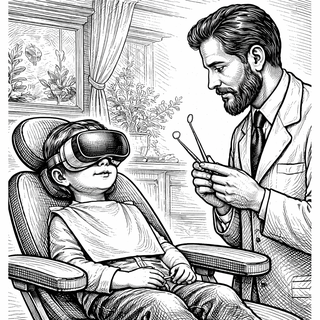
Let me paint you a picture: a small child sits in a dental chair, mouth open, eyes wide with terror, as a stranger in a mask approaches with what appears to be medieval torture devices. The fluorescent lights buzz overhead. Something whirs. Water sprays. And that distinctive dental office smell - you know the one - permeates everything.
For most kids, this scene ranges from "mildly unpleasant" to "launching into fight-or-flight mode." But for children with sensory processing differences, autism spectrum disorder, or severe dental anxiety, it can be genuinely overwhelming. And an overwhelmed kid in a dental chair is bad news for everyone involved.
Enter two competing approaches to solving this problem: strapping kids into virtual reality headsets to transport them to digital wonderlands, or redesigning the entire dental environment to be less sensory-assaulting in the first place. The clinical trial NCT07261670 is pitting these strategies against each other to see which one works better. Let the battle of the calming techniques begin.
The Scope of Pediatric Dental Anxiety
First, let's acknowledge that dental fear in kids isn't a niche problem. Studies suggest that up to 36.5% of children worldwide - that's more than one in three - experience dental anxiety. For kids with autism spectrum disorder, that number is even higher, and the intensity is often more severe.
Dental fear and anxiety (DFA) doesn't just make appointments miserable for everyone involved. It predicts negative behaviors in the clinic, leads to treatment avoidance, and ultimately results in worse oral health outcomes. Kids who are terrified of the dentist become adults who avoid the dentist, and the cycle of poor dental health continues.
The traditional solutions have been... not great. "Just tell them it'll be fine" works about as well as you'd expect. Restraining distressed children is traumatic and ethically questionable. Sedation and general anesthesia work but carry real risks and significant costs. We need better behavioral approaches.
Option A: Virtual Reality Distraction
The VR approach is delightfully straightforward in concept: if the problem is that the child is too aware of the scary dental environment, simply replace that awareness with something else entirely. Pop a VR headset on them and suddenly they're swimming with dolphins instead of getting their teeth cleaned.
Virtual reality provides what researchers call "presence" - the sense of actually being in the virtual environment rather than the real one. A good VR experience blocks out external stimuli (those buzzing lights, that scary drill sound) and replaces them with an immersive alternative reality. Your body is still in the dental chair, but your brain is on a beach in Fiji.
The research on VR for pediatric dental anxiety is genuinely promising. A meta-analysis covering studies from 2000 to 2022 found that VR distraction interventions are effective in reducing dental anxiety in pediatric patients. Multiple randomized controlled trials have shown significant reductions in both pain perception and state anxiety when children use VR during dental procedures (Alassiry et al., 2023; DOI: 10.1016/j.jdent.2023.104427).
One study specifically looking at 5 to 8 year-olds found that VR distraction produced significant decreases in pain perception and anxiety levels during dental treatment. The kids weren't just reporting feeling better - their behavior improved too, with less crying, squirming, and general dental-chair chaos.
The advantages of VR are obvious: it's non-invasive, doesn't require medication, can be reused across many patients with just headset sanitation, and kids often think it's cool. "You mean I get to play video games while getting my teeth cleaned?" That's a hard sell to say no to.
Option B: The Sensory Adapted Dental Environment
The alternative philosophy is different: instead of distracting kids from the environment, change the environment itself. This is the Sensory Adapted Dental Environment, or SADE, approach.
SADE was developed by researchers studying children with autism spectrum disorder and sensory processing differences. The core insight is that the traditional dental office is basically designed to trigger sensory overload: harsh fluorescent lighting, loud whirring equipment, unfamiliar textures and tastes, that overwhelming antiseptic smell, and the physical vulnerability of lying reclined while a stranger pokes around your mouth.
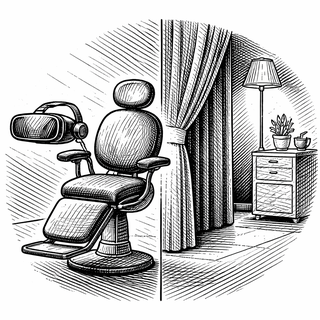
In a sensory adapted environment, these triggers are systematically reduced. Blackout curtains replace bright windows. The overhead fluorescents are turned off; instead, the dentist uses a surgical loupe with an attached lamp, and gentle slow-motion visual effects might be projected on the ceiling. Sounds are muffled. The overall sensory load is dialed way down.
And the research shows it works. A randomized crossover trial conducted between 2016 and 2022 found that autistic children showed significantly less frequent and shorter-duration behavioral distress in SADE compared to regular dental environments. The effect sizes were substantial - Cohen d values ranging from -0.84 to -1.29, which is statistician-speak for "this makes a real difference."
Here's something cool: electrodermal activity (a physiological measure of stress) was significantly lower in SADE even before treatment started. Just lying in the adapted room, before any dental work began, was already relaxing compared to a regular environment. The room itself is therapeutic.
Another study with Italian children with ASD found that only 20% of subjects could be successfully treated in a regular dental environment, compared to 68% in SADE. That's more than triple the success rate.
The Showdown: VR vs. SADE
So which approach is better? That's exactly what trial NCT07261670 aims to find out.
Both methods have theoretical appeal. VR works by overwhelming the senses with something more pleasant - it's distraction at its finest. SADE works by reducing sensory input to prevent overwhelm in the first place - it's environmental modification.
There may be different scenarios where each approach shines. VR requires the child to wear a headset, which some kids - especially those with sensory sensitivities - might refuse. SADE doesn't require the child to do anything different, but it requires the dental practice to invest in environmental modifications.
VR is portable and could theoretically be used in any dental office. SADE requires dedicated room setup but might provide more consistent calming effects.
Some researchers have even wondered about combining the two - what if you had a sensory-adapted room with VR available for kids who want extra distraction? Double the calm, double the cooperation?
The Practical Considerations
One of the most interesting findings from SADE research is that the adapted environment didn't increase appointment time or create logistical problems. The quality of dental care was identical between settings. This matters because any intervention that makes dentistry more difficult or time-consuming will struggle to get adopted, no matter how effective it is.
Similarly, VR systems have become affordable and user-friendly. Modern standalone headsets don't require complicated setup, and the sanitation protocols are straightforward. If VR works, it could be implemented in pretty much any dental practice willing to spend a few hundred dollars and train staff on usage.
The economic question is real: SADE requires room modifications and potentially dedicated space, while VR requires hardware and software. Different practices may find different solutions more feasible.
Why This Research Matters
For parents of kids with dental anxiety - especially those on the autism spectrum - getting necessary dental care can be a major source of stress. The alternative to finding effective behavioral interventions is often sedation or general anesthesia, which carry meaningful medical risks and significant costs.
Research suggests that up to 33% of children have some degree of sensory over-responsivity, which contributes to dental fear and anxiety. That's a third of all kids who might benefit from these interventions. And for children with autism, the numbers are even higher.
Trial NCT07261670 represents the kind of head-to-head comparison we need to guide clinical practice. It's not enough to know that both VR and SADE work better than nothing - we need to know which works better, for which kids, in which circumstances.
The Future Is Less Scary
Whatever the trial results show, the bigger picture is encouraging. We're moving away from the "just hold them down" approach to pediatric dentistry toward evidence-based interventions that actually address the root causes of dental distress.
Whether the future involves kids exploring virtual worlds while getting their teeth cleaned, or dental offices that look more like spa relaxation rooms than clinical environments, the direction is clear: the dental experience doesn't have to be traumatic.
And for the millions of anxious kids out there who currently dread their dental appointments, that's pretty great news.
Medical Disclaimer: This blog post is for educational and informational purposes only. It is not intended to be a substitute for professional medical advice, diagnosis, or treatment. Always consult with a qualified dental or healthcare provider regarding treatment options for dental anxiety in children. Images and graphics are for illustrative purposes only and do not depict actual medical devices, procedures, mechanisms, or research findings from the referenced studies.