
Quick - name the last time you thought about acetaminophen after swallowing it for a headache. Probably never, which is fair. Most people do not pause mid-migraine and whisper, “I hope my hepatocytes are adequately stocked with glutathione.” Acetaminophen is one of those medicines that feels as ordinary as a spoon, until the dose climbs too high and the liver, that long-suffering biochemical dishwasher, starts smoking from the control panel.
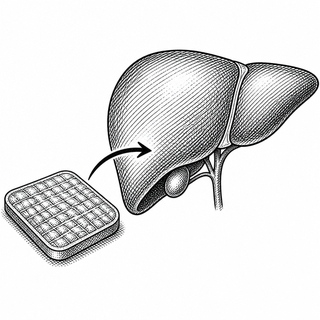
That is the problem behind a new study on N-acetylcysteine-functionalized biodegradable polysaccharide hydrogel patches for acute liver injury. The phrase is a mouthful, yes. It sounds like something a grant reviewer would read while emotionally detaching from the room. But the idea is surprisingly elegant: take N-acetylcysteine, the established antidote for acetaminophen-related liver injury, graft it into a biodegradable hydrogel patch, and place that patch directly where damaged liver tissue needs help.
In other words, instead of flooding the whole body with rescue chemistry and hoping enough reaches the scene, this approach tries something more local. Less fire hose, more medic with a well-packed bag.
Why Acetaminophen Can Turn Ugly
Acetaminophen, also known as paracetamol in many countries, is generally safe when used as directed. The trouble comes when too much is taken, whether by accident, overlapping cold medications, or deliberate overdose. At high levels, the liver produces an excess of a toxic metabolite called NAPQI. Normally, glutathione helps neutralize it. When glutathione runs low, NAPQI starts binding to liver cell proteins, setting off oxidative stress, inflammation, cell death, and potentially acute liver failure.
This is where N-acetylcysteine, or NAC, comes in. NAC helps replenish glutathione and is a mainstay treatment for acetaminophen toxicity. It is one of those rare drugs that is both old-fashioned and genuinely useful, a combination medicine rarely achieves without demanding applause.
But NAC has limitations. It has a short half-life, and treatment often requires high-dose intravenous administration. That can work well in many clinical situations, especially when started early, but researchers have good reasons to ask whether delivery can be improved.
The Patch Concept
The investigators developed hydrogel patches called ONC hydrogels, made from oxidized chondroitin sulfate and NAC-grafted carboxymethyl chitosan. If that sounds like a polymer chemistry breakfast cereal, the core concept is simpler: these are soft, water-rich, biodegradable materials built from polysaccharide components, with NAC incorporated into the structure.
Hydrogels are attractive in medicine because they can sit against tissue, hold water, carry therapeutic molecules, and gradually break down. They are already being studied for wound healing, drug delivery, tissue repair, and surgical applications. The liver patch in this study is not just a passive bandage. It is designed to combine mechanical support, local drug delivery, biocompatibility, biodegradation, and hemostatic activity.
That last part matters. The liver bleeds enthusiastically when injured or cut. It is not shy. A material that can help control bleeding while also supporting repair has obvious appeal.
What the Researchers Found
In laboratory experiments, the ONC hydrogels showed good biocompatibility and biodegradability. They also appeared to promote liver-related repair behaviors: hepatocyte proliferation and migration, plus angiogenesis in HUVECs, which are human umbilical vein endothelial cells commonly used to study blood vessel formation.
Then the researchers moved to a mouse model of acetaminophen-induced acute liver injury. After treatment with the ONC hydrogel patches, liver enzymes improved to near-normal levels. That is not a minor detail. Liver enzymes are not perfect narrators, but when they are dramatically elevated, they generally indicate that liver cells are unhappy and leaking their contents like overfilled grocery bags.
The tissue-level findings were also encouraging. Histology suggested less liver damage. Molecular testing showed reduced inflammatory signals and reduced apoptosis, the programmed cell death pathway that can become quite unhelpful when activated in injured tissue. Transcriptome sequencing pointed toward activation of antioxidant-related signaling pathways, consistent with the NAC-based rationale.
Taken together, the patch seemed to do several useful things at once: reduce oxidative stress, quiet inflammation, limit cell death, encourage repair, and support tissue regeneration.
Why This Is Interesting
The interesting part is not simply that NAC helped. We already knew NAC helps in acetaminophen toxicity. The interesting part is the delivery strategy.
Modern medicine has many drugs that work, but not always in the most graceful way. Sometimes we give high systemic doses because the body is inconveniently three-dimensional and full of compartments. Local delivery can, in theory, reduce systemic exposure while concentrating treatment where it is needed. That is the hope here.
A liver-applied hydrogel patch could be especially relevant in settings where liver injury is identified during surgery, trauma care, transplantation research, or other interventional contexts. It is not hard to imagine future versions being used as part of a broader repair strategy, although imagination is cheap and clinical translation is where the invoices arrive.
There is also a satisfying irony in using a carefully engineered biomaterial to improve the delivery of a drug that has been around for decades. Medicine often advances not by discovering a magic new molecule, but by finally figuring out how to get an old molecule to behave itself.
The Necessary Reality Check
This was a preclinical study in mice. That matters. Mice are useful models, but they are not tiny humans wearing lab coats, no matter how much biomedical research occasionally behaves as if they are. Acute liver injury in patients is clinically messy: timing varies, severity varies, underlying liver health varies, and treatment logistics can be unforgiving.
A patch also raises practical questions. How would it be applied in humans? During surgery? Through minimally invasive approaches? Would it help in the common emergency department scenario where acetaminophen toxicity is treated medically rather than surgically? How long should it remain in place? How predictable is NAC release? Could it cause adhesions, immune reactions, or unexpected local effects?
None of these questions sink the idea. They simply mark the distance between “promising mouse data” and “standard clinical tool.” That distance is not a puddle. It is a parking lot in August.
Where This Could Go
If future studies support the findings, hydrogel-based local delivery could become part of a broader toolkit for liver repair. The platform might also be adapted for other liver injuries involving oxidative stress and inflammation, not just acetaminophen toxicity. Because the hydrogel components are biodegradable and the therapeutic payload is familiar, the concept has a practical feel rather than the usual “we cured biology in Figure 3” overconfidence.
For now, the study offers a clever proof of concept: a NAC-functionalized hydrogel patch can support repair in experimental acute liver injury, improving biochemical, histologic, inflammatory, apoptotic, and antioxidant-related markers in mice.
That is enough to be intriguing. Not enough to change clinical practice tomorrow. But definitely enough to keep watching.
This blog post discusses research findings and should not be taken as medical advice. If you have concerns about acetaminophen exposure, overdose, or liver injury, please consult a healthcare provider or seek urgent medical care. Research discussed here represents ongoing scientific investigation, and clinical validation is still in progress.
All images used in this post are decorative illustrations only and do not represent or reflect the accuracy, reality, or correctness of the referenced research.
Primary Source: N-acetylcysteine-functionalized biodegradable polysaccharide hydrogel patches for the repair of acute liver injury. PubMed Record ID: 41713986. https://pubmed.ncbi.nlm.nih.gov/41713986/