
Scientists can now make you see things that aren't there - and that's actually fantastic news for medicine.
Before you back away slowly, let me explain. A new clinical trial is exploring how focused ultrasound waves can be aimed through your skull to tickle specific brain regions into action, potentially opening doors for millions of people living with chronic pain, depression, and addiction who've run out of treatment options. We're not talking about hallucinating pink elephants here. We're talking about a precisely targeted neurological tool that could revolutionize how we treat some of the most stubborn conditions in medicine.
What Exactly Is Going On Here?
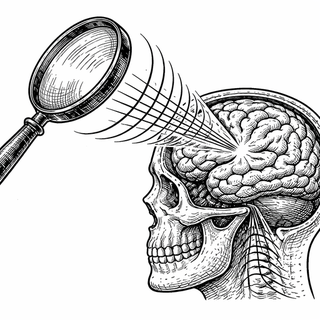
The trial, officially registered as NCT07508722 on ClinicalTrials.gov, is investigating transcranial focused ultrasound - basically using sound waves to reach into the brain without ever breaking the skin. Think of it like using a magnifying glass to focus sunlight, except instead of burning ants (which we definitely should not do), researchers are focusing acoustic energy to modulate neural activity with remarkable precision.
The investigators are targeting two specific areas: the primary visual cortex and the primary auditory cortex. Why these regions? Because when you successfully stimulate them, people actually perceive something - they might see a flash of light or hear a tone. It's like having a built-in notification system that tells researchers "yes, you've reached the brain's message center, and the message was received."
Why Your Skull Isn't the Barrier It Used to Be
For decades, the skull has been neuroscience's most annoying bouncer. Getting signals into the brain typically required either invasive surgery (not ideal for obvious reasons) or techniques like transcranial magnetic stimulation, which struggles to reach deeper brain structures. It's like trying to have a conversation with someone inside a concrete bunker using a megaphone - you might get through, but precision isn't exactly your strong suit.
Transcranial focused ultrasound changes the game entirely. This technology can deliver targeted acoustic signals through bone to modulate brain activity over incredibly small regions, including structures buried deep in neural tissue. Previous work has shown that sonicating (yes, that's a real verb, and yes, it sounds like something from Star Trek) the visual cortex can make people perceive light. But earlier systems lacked the focusing capabilities that this new trial will employ.
The Million-Dollar Question: How Much Is Too Much?
Here's where things get really interesting from a scientific standpoint. Researchers still don't fully understand the optimal parameters for this technology. It's a bit like having a powerful new kitchen gadget but not knowing whether you should set it to "gentle simmer" or "volcano mode" for different dishes.
The investigators aim to determine exactly which ultrasound settings can dial brain activity up or down. They want participants to report seeing localized bright spots rather than diffuse light, and hearing pure tones rather than static-like white noise. Achieving this level of precision would be a massive leap forward - the difference between a surgeon's scalpel and a butter knife.
Why This Matters for Health Equity
Let's zoom out for a moment and consider who stands to benefit most from this research. Chronic pain affects roughly 20% of adults globally, with disproportionate impacts on low-income communities and people of color who often face barriers to comprehensive pain management. Depression and addiction continue to devastate communities that already struggle with limited healthcare access.
Current treatments for these conditions often involve medications that come with side effects, addiction risks, or simply don't work for everyone. Non-invasive brain modulation could eventually provide an alternative that doesn't require expensive ongoing prescriptions or surgical procedures. Imagine a treatment that could be administered in a clinic visit - potentially bringing relief to rural communities, underserved urban areas, and populations who've historically been left behind by medical advances.
Of course, we're getting ahead of ourselves. This trial is about establishing fundamental parameters, not rolling out treatments tomorrow. But every breakthrough starts with understanding the basics, and that's precisely what these researchers are doing.
The Science Fiction Part That's Actually Real
I'll admit, there's something delightfully sci-fi about all this. We're talking about using invisible waves to create conscious perceptions in the human brain. Participants will literally experience sights and sounds that originate not from their eyes or ears, but from carefully calibrated acoustic pulses passing through their skulls.
Beyond the obvious clinical applications, this research touches on some profound questions about consciousness and perception. If we can induce visual and auditory experiences by directly stimulating specific brain regions, what does that tell us about the nature of sensory reality? It's the kind of question that keeps neuroscientists and philosophers arguing at conference happy hours.
What Happens Next?
The trial will systematically test different sonication parameters to identify the sweet spot for neural modulation. By the end, researchers expect to have a much clearer picture of how to elicit targeted neural responses - the kind of foundational knowledge that future clinical applications will build upon.
This isn't going to cure chronic pain next week. Medical science moves at the pace of rigorous methodology, not impatient optimism. But every clinical trial that chips away at our understanding brings us closer to treatments that could genuinely help people who've been told "there's nothing more we can do."
And honestly? In a healthcare landscape where too many people fall through the cracks, where zip codes predict health outcomes, and where conditions like chronic pain often get dismissed rather than treated - the prospect of a new, non-invasive tool in our therapeutic toolkit is worth getting excited about.
The Bottom Line
Transcranial focused ultrasound represents a genuinely novel approach to understanding and potentially treating neurological conditions. This trial won't change medicine overnight, but it's asking the right questions and using human perception as a direct readout of neural activity. That's clever science, and clever science tends to lead somewhere good.
For now, we watch and wait while researchers do the painstaking work of figuring out exactly how to tune these acoustic brain-ticklers. Somewhere down the road, this knowledge might help a veteran manage chronic pain without opioids, or give someone with treatment-resistant depression a new option when medications have failed.
That future isn't guaranteed. But trials like this one are how we get there.
Disclaimer: This blog post is for informational purposes only and does not constitute medical advice. Clinical trials are research studies with uncertain outcomes. Anyone interested in participating in clinical research should consult with their healthcare provider. The trial discussed is registered as NCT07508722 and details can be found at ClinicalTrials.gov.
Citation: ClinicalTrials.gov Identifier: NCT07508722. "Transcranial Ultrasonic Neuromodulation of Primary Visual Cortex and Primary Auditory Cortex in Humans." U.S. National Library of Medicine. Available at: https://clinicaltrials.gov/study/NCT07508722