
There's something delightfully absurd about the intensity with which scientists study contact lenses. We're talking about tiny, transparent discs that sit on your eyeballs, yet there are PhDs writing dissertations about their wettability characteristics and conducting randomized crossover trials with the seriousness typically reserved for cancer drugs. I love it. And clinical trial NCT06778057 is the latest entry in this surprisingly fierce arena of ocular competition.
Welcome to the contact lens Battle Royale, where Acuvue Oasys 1-Day, Dailies Total1, and Clariti 1-Day step into the ring to see which daily disposable silicone hydrogel lens truly reigns supreme. Grab your popcorn - but maybe take your contacts out first, because we're about to get deep into the weeds of corneal physiology.
Why Dailies? Why Silicone Hydrogel? Why Any of This?
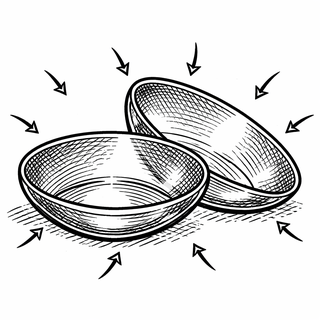
Let's back up for a second. If you wear glasses and have never dipped your toe into the contact lens pond, here's the quick version: contact lenses let you see without frames on your face, but they come with trade-offs. Your cornea - that clear front part of your eye - needs oxygen to stay healthy. Traditional soft lenses sat on your eye like a tiny plastic wrap, limiting oxygen transmission and occasionally turning your eyes into angry, red, uncomfortable messes.
Enter silicone hydrogel lenses in the early 2000s. The silicone component allows dramatically more oxygen to pass through to the cornea, like upgrading from breathing through a coffee stirrer to breathing through a garden hose. The Dk/t (oxygen transmissibility) values jumped from around 25-28 for older materials to 80-180 for silicone hydrogels. Your eyes could finally breathe.
Then came the daily disposable revolution. Instead of cleaning your lenses each night and replacing them monthly (a routine approximately 70% of contact lens wearers admit to, um, "modifying"), you pop in a fresh pair each morning and throw them away at night. No lens cases. No cleaning solutions. No protein buildup. No guilt about that time you definitely slept in your monthlies and woke up with eyes that felt like they'd been rubbed with sandpaper.
Daily disposables combine the oxygen benefits of silicone hydrogel with the hygiene benefits of a fresh lens every day. They're the gold standard for comfort and eye health. The question is: which brand does it best?
The Contenders: A Tale of Three Technologies
Acuvue Oasys 1-Day (by Johnson & Johnson Vision) uses senofilcon A material with something called HydraLuxe Technology. The marketing speaks of "tear-infused" lenses and "a tear-like network throughout the lens." What they're really saying is they've tried to make the lens interact with your natural tears in a way that maintains comfort throughout the day - particularly during activities that stress your eyes, like staring at screens for eight hours or trying to read the menu board at Starbucks without squinting.
Dailies Total1 (by Alcon) takes a different approach with what they call Water Gradient Technology. The core of the lens is 33% water - pretty standard stuff - but the surface is 80% water. It's like a contact lens wearing a contact lens made of tears. The idea is that the ultra-wet surface reduces friction and mimics the eye's natural tear film. It's clever engineering, and Alcon charges accordingly - these are typically the priciest of the three.
Clariti 1-Day (by CooperVision) rocks a somofilcon A material with a respectable Dk/t of 86. CooperVision's pitch is more straightforward: good oxygen transmission, good comfort, good value. They're the sensible Honda Accord of the daily disposable world while the other two are fighting over who gets to be the luxury sedan.
NCT06778057: The Study Design
This trial is a subject-masked, randomized, prospective, bilateral, 3x3 crossover dispensing clinical investigation. Let me translate that jargon salad:
- Subject-masked: Participants don't know which lens they're wearing (though the investigators might - this isn't fully double-blind, likely because it's hard to disguise lens packaging from researchers)
- Randomized: The order in which participants wear each lens is randomly assigned
- Prospective: They're following participants forward in time, not looking back at old data
- Bilateral: Both eyes get the same lens
- 3x3 crossover: Each participant wears all three lens types in different sequences, serving as their own control
This crossover design is particularly smart for contact lens studies because comfort is so subjective. What feels heavenly to your eyes might feel like wearing tiny shower curtains to someone else. By having each person try all three lenses, you control for individual variation.
The study has participants wear each lens for up to 10 hours. That's a solid real-world test - it's about how long most people actually wear their dailies before getting home, changing into pajamas, and switching to glasses (don't pretend you don't have a glasses-and-pajamas evening routine).
Who Gets to Play?
The eligibility criteria tell you a lot about what researchers are actually trying to measure. Participants must:
- Habitually wear silicone hydrogel soft contacts in both eyes, minimum 8 hours per day, at least 4 days per week, for the past 4 weeks. (No beginners - they want experienced lens wearers who can tell the difference between a good lens day and a bad one)
- Have corrected distance vision of at least 0.20 logMAR (roughly 20/30). (They need to confirm the lenses are actually working)
- Have a spherical prescription between -1.00 and -6.00 with no more than 1.00 diopters of astigmatism. (Sweet spot for most daily disposable designs)
- Own backup glasses. (Safety first - if something goes wrong, you can still drive home)
They're excluding people who currently wear or recently wore Acuvue Oasys 1-Day, Dailies Total1, or Clariti 1-Day. This prevents the study from being contaminated by people who already know which lens they prefer. Fresh eyes, literally.
Also excluded: anyone with corneal surgery history, significant slit lamp findings (the eye doctor's version of finding a check engine light), or fluctuating vision from dry eye or other conditions. They want clean data from healthy eyes.
What Previous Research Tells Us
Earlier studies comparing these lens types have produced interesting results. A 2015 study in Contact Lens and Anterior Eye examined clinical performance of Dailies Total1, Clariti 1Day, and 1-Day Acuvue TruEye across 104 participants - 51 asymptomatic and 53 symptomatic of end-of-day dryness.
The findings? The asymptomatic group rated comfort higher throughout the day (not surprising - people without dry eye issues tend to be more comfortable in any lens). The symptomatic group wore their lenses an average of 12.7 hours compared to 14.0 hours for the asymptomatic group. When your eyes aren't happy, you take your contacts out earlier. Shocking, I know.
What's fascinating is how close these lenses perform despite their different technologies. Lens-related assessments - surface deposits, wettability, tear breakup time, movement, and centration - showed that all three are quite good. The differences often come down to individual preference and ocular physiology. Some eyes like water gradients. Some eyes prefer HydraLuxe. Some eyes are perfectly content with the straightforward approach.
Why This Matters (Beyond Just Eye Comfort)
You might think, "It's just contacts - who cares?" But consider this: approximately 45 million Americans wear contact lenses. Globally, we're looking at hundreds of millions of lens wearers. Even small improvements in comfort translate to massive quality-of-life gains at a population level.
Poor contact lens comfort leads to what researchers call "dropout" - people abandoning lenses for glasses. Studies suggest dropout rates can be as high as 20-30% over time, with discomfort cited as the primary reason. Every advancement that keeps people comfortable in their lenses is an advancement that keeps them seeing clearly and living their preferred lifestyle.
There's also the eye health angle. Uncomfortable lenses get rubbed, which can damage the cornea. Dry lenses get over-worn because people don't want to pop in a fresh pair. Old cleaning solutions get reused because monthly lenses feel like a commitment. Dailies solve many of these compliance problems - if the lens is comfortable, people actually throw it away at night and start fresh in the morning.
The Ongoing Quest for the Perfect Lens
What strikes me about the contact lens industry is its relentless incremental improvement. The original soft contact lenses in the 1970s were about as breathable as Saran Wrap and about as comfortable as wearing tiny pieces of plastic in your eyes (because that's literally what they were). Today's dailies have Dk/t values that would have seemed like science fiction thirty years ago.
And yet companies keep pushing. Water gradients. Tear-infused networks. Surface treatments. Every few years, there's a new technology promising even better comfort for even longer. NCT06778057 is part of that ongoing effort - generating the data that helps eye care professionals understand which innovations actually matter and which are marketing fluff.
Looking Forward
The trial results will eventually add to our understanding of how these three leading daily disposable lenses compare. Will there be a clear winner? Probably not - these are all high-quality products from reputable manufacturers. More likely, we'll learn more about which lens characteristics matter most for different types of patients.
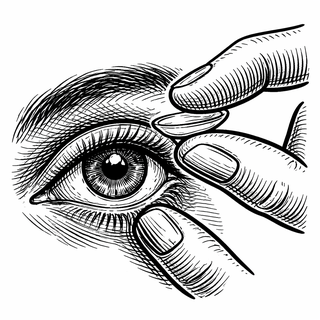
For the millions of people who slip contact lenses onto their corneas each morning, studies like this are quietly making their lives better. You might not notice the improvement - a slightly more comfortable lens day, eyes that feel fresh at 5 PM instead of getting scratchy at 3 PM - but it's there.
And that's the beauty of incremental medical device research. Not every study cures cancer or grows organs in labs. Some studies just make tiny plastic discs slightly better at sitting on eyeballs. And for those of us who depend on those tiny plastic discs to see the world clearly, that matters more than you might think.
This article discusses clinical trial NCT06778057. For more information, visit clinicaltrials.gov. References to prior research include studies published in Contact Lens and Anterior Eye (doi: 10.1016/j.clae.2013.02.009; doi: 10.1016/j.clae.2014.09.013).
Disclaimer: This blog post is for informational purposes only and does not constitute medical advice. Clinical trials are ongoing research studies, and outcomes may vary. Always consult with qualified eye care professionals regarding contact lens selection and wear. Images and graphics are for illustrative purposes only and do not depict actual medical devices, procedures, mechanisms, or research findings from the referenced studies.