
A wearable device on your wrist can now measure your blood pressure using nothing but light - and if a new clinical trial proves successful, that inflatable torture device your doctor wraps around your arm might finally go the way of the fax machine. Let me explain why I'm genuinely excited about this.
The OBPM_PANDA2026 trial (yes, they really named it after a panda, and I'm here for it) is testing whether Aktiia's optical blood pressure monitoring system can accurately track your blood pressure for up to seven days straight using only the sensors already sitting on your wrist. No cuff. No pumping. No temporary loss of circulation in your arm while you wince and wonder if this is what it feels like to be a stress ball.
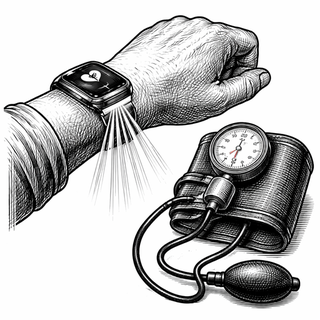
What Exactly Is Optical Blood Pressure Monitoring?
Here's the gist: traditional blood pressure measurement works by literally squeezing your arm until blood flow stops, then slowly releasing to detect when it starts again. It's effective, sure, but it's also about as pleasant as getting hugged by an overly enthusiastic python.
Optical blood pressure monitoring (OBPM) takes a completely different approach. It uses light - specifically, the same photoplethysmography (PPG) technology that your fitness tracker uses to measure heart rate. By analyzing how light interacts with the blood vessels in your wrist, algorithms can estimate blood pressure without any mechanical compression whatsoever.
Think of it like this: instead of squeezing a garden hose to figure out how much water is flowing through it, you're just watching the hose from the outside and doing some really clever math.
The Trial: What's Actually Being Tested
The OBPM_PANDA2026 study is a multicenter prospective clinical trial comparing the Aktiia device against double auscultation - which is the gold-standard method where a trained professional uses a stethoscope and sphygmomanometer (that's the arm-squeezer's official name) to manually measure your blood pressure. They do it twice to make sure they got it right.
The trial involves at least 85 participants across two visits over seven days. Subjects will be asked to assume various body positions while measurements are taken at different timepoints. This matters because blood pressure isn't static - it changes when you stand up, lie down, exercise, or realize you've been doom-scrolling for three hours instead of working.
For regulatory approval in the US market, the device needs to prove it can maintain accuracy across this full week of use and across a population that represents the diversity of actual Americans - not just a narrow slice of test subjects.
Why This Is a Big Deal Commercially
Let me put on my startup founder hat here: the blood pressure monitoring market is absolutely massive. Hypertension affects nearly half of American adults - that's over 100 million people who should be monitoring their blood pressure regularly. Most of them don't, because let's be honest, nobody wants to strap on an arm cuff multiple times a day.
But a wrist-based device that passively monitors blood pressure? That's a completely different value proposition. You're not adding friction to someone's day - you're removing it entirely. The data just... appears. Like magic, except it's actually science.
The potential applications make my entrepreneurial heart flutter. Remote patient monitoring programs could track hypertension patients continuously without requiring them to remember to take measurements. Clinical trials for blood pressure medications could collect vastly more data points. Athletes and biohackers could obsess over their cardiovascular metrics in even greater detail than they already do.
The Challenges This Research Addresses
Optical blood pressure monitoring isn't new - researchers have been working on it for years. But accuracy has always been the sticking point. Light-based measurements are influenced by skin tone, wrist size, movement artifacts, ambient temperature, and about seventeen other variables that make engineers tear their hair out.
Previous attempts at cuffless blood pressure monitoring have often required frequent recalibration against traditional cuff measurements, which kind of defeats the purpose. The Aktiia device being tested here is designed to maintain accuracy for a full week after a single initialization, which would be a meaningful step forward for practical everyday use.
There's also the challenge of regulatory approval. The FDA doesn't just rubber-stamp medical devices - they want rigorous evidence that the thing actually works as claimed. This trial is specifically designed to generate the kind of data needed for that regulatory pathway.
What Happens If It Works?
If the OBPM_PANDA2026 trial demonstrates that Aktiia's device can match double auscultation accuracy across diverse populations and body positions, we're looking at a potential paradigm shift in how hypertension is managed.
Imagine your smartwatch gently nudging you with a notification: "Hey, your blood pressure has been elevated for the past three days. Maybe check in with your doctor?" Instead of catching hypertension at your annual physical - or worse, when you end up in the ER - continuous monitoring could enable genuinely proactive intervention.
For the healthcare system, this could mean earlier detection, better medication adherence monitoring, and reduced complications from uncontrolled hypertension. For patients, it means less hassle and more insight into their own health.
And for investors? Well, the company that cracks cuffless blood pressure monitoring with FDA clearance is sitting on a gold mine. The total addressable market here is essentially "everyone who cares about their cardiovascular health," which is a pretty large number.
The Bottom Line
The OBPM_PANDA2026 trial represents exactly the kind of research that bridges the gap between cool technology and actual clinical utility. Optical blood pressure monitoring sounds like science fiction, but the physics is sound - the question is whether we can make it reliable enough for real-world medical use.
I'll be watching this trial's results with considerable interest. Not just because I personally hate blood pressure cuffs (though I do), but because this technology represents a genuinely better way of doing things. And in healthcare, "genuinely better" doesn't come along as often as we'd like.
Disclaimer: This blog post is for educational and informational purposes only and does not constitute medical advice. Clinical trials are experimental by nature, and outcomes are not guaranteed. Always consult with qualified healthcare providers regarding medical conditions and treatments.
Source: ClinicalTrials.gov - NCT07507903 | Table View