
Here's what you need to build a human skin model from scratch: a 3D bioprinter, a vat of concentrated type I collagen, a population of dermal fibroblasts, a colony of keratinocytes, and apparently the patience of someone who assembles ships inside bottles. No actual humans required. Researchers have now developed a full-thickness bioprinted skin construct that responds to chemical irritants and sensitizers, and it might just change how we test the safety of everything from moisturizers to medications.
The Problem with Flat Skin
For decades, toxicology testing has leaned on two-dimensional cell cultures - basically, cells growing in a single layer on the bottom of a plastic dish. It's the scientific equivalent of trying to understand a skyscraper by looking at a single floor tile. Skin isn't flat. It's a layered, dynamic organ with a dermis (the structural underbelly full of fibroblasts and collagen) and an epidermis (the outer barrier packed with keratinocytes). Squishing all of that complexity into a monolayer and then poking it with chemicals gives you some data, sure, but it's a bit like taste-testing a cake by licking the flour.
Animal testing, the traditional alternative, carries well-documented ethical concerns and, frankly, doesn't always translate well to human biology anyway. The European Union banned cosmetic animal testing back in 2013, and regulations worldwide have been tightening ever since. So the hunt has been on for something better - a model that actually looks and behaves like human skin without involving either a flat dish or a rabbit.
Enter the Bioprinter
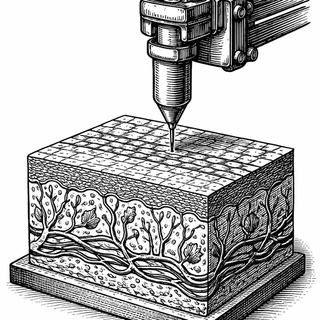
This is where 3D bioprinting gets genuinely exciting. The research team designed a protocol that uses a bioink made from high-concentration type I collagen mixed with living dermal fibroblasts and keratinocytes. If you're unfamiliar with bioinks, think of them as the "cartridge" for a biological printer - except instead of cyan and magenta, you're loading up structural proteins and living cells.
The high collagen concentration is a key detail here. Previous bioprinted skin models have sometimes struggled with mechanical integrity - they're too squishy, too fragile, or they don't hold their shape long enough to be useful. By cranking up the collagen density, the researchers created a construct with improved mechanical properties that more faithfully mimics the extracellular matrix (ECM) of real skin. The ECM is essentially the scaffolding that holds your skin cells in place and tells them how to behave, so getting it right matters enormously.
The bioprinter deposits these materials with controlled spatial organization, meaning the fibroblasts end up in the dermal layer and the keratinocytes end up where the epidermis should be. It's not just a blob of cells hoping for the best - it's an architecturally organized tissue that replicates the layered structure of actual human skin.
So Does It Actually Work Like Skin?
The resulting construct - which the researchers call a "skin-like tissue" or SLT - was put through its paces using established chemical irritants and sensitizers. These are well-characterized test substances that we already know cause specific reactions in real skin. The SLT responded appropriately to these chemically induced stimuli, demonstrating that it can detect and react to potentially harmful compounds.
Now, the team is careful to note that they aren't making direct quantitative performance comparisons with existing validated models (refreshingly honest, that). What they are saying is that this bioprinted skin shows biologically relevant responses - it reacts to bad stuff the way skin should react to bad stuff. That's the foundational requirement for any predictive toxicology platform.
Why Should You Care About Printed Skin?
The applications here fan out in several directions, and they're all pretty compelling:
Cosmetic safety testing. Every new moisturizer, sunscreen, or anti-aging serum needs safety data. A reproducible, standardized bioprinted skin model could streamline this process dramatically while keeping it animal-free.
Drug screening. Topical medications - think steroid creams, antifungal treatments, pain patches - need to be tested on something that approximates human skin. The SLT offers an early-stage screening platform that could help researchers weed out problematic formulations before they ever reach clinical trials.
Personalized medicine (eventually). While this particular study uses standard cell lines, the bioprinting approach could theoretically be adapted to use patient-derived cells. Imagine testing whether a topical chemotherapy cream would irritate your specific skin before your doctor prescribes it.
Reducing animal testing. This is the big one. Regulatory agencies worldwide are increasingly receptive to validated in vitro alternatives. A standardized, reproducible bioprinted model checks a lot of boxes that regulators care about.
The Reproducibility Factor
One of the sneaky advantages of 3D bioprinting over other tissue engineering approaches is standardization. Hand-built tissue constructs can vary wildly between labs, between technicians, even between Tuesday and Thursday. A bioprinter follows a digital blueprint, depositing precise quantities of materials in precise locations every single time. That kind of reproducibility is music to the ears of regulatory scientists who need to trust that test results from one lab will match results from another.
What's Next?
This is still an early-stage platform, and there's a long road between "promising lab model" and "regulatory-accepted testing standard." The model would need extensive validation against existing approved methods, likely including ring trials across multiple laboratories. There's also the question of adding complexity - real skin contains immune cells, melanocytes, nerve endings, and hair follicles, none of which are present in this version. Future iterations might incorporate some of these elements for more specialized testing applications.
But the foundation is solid. A reproducible, biologically relevant, full-thickness skin model built by a machine from collagen and living cells? That's not science fiction anymore. It's sitting in a lab, reacting to irritants, and quietly making the case that the future of toxicology testing doesn't need to involve animals or oversimplified petri dishes.
It just needs a really good printer.
This blog post discusses research findings and should not be taken as medical advice. If you have concerns about skin health or reactions to topical products, please consult a healthcare provider. Research discussed here represents ongoing scientific investigation and clinical validation is still in progress.
All images used in this post are decorative illustrations only and do not represent or reflect the accuracy, reality, or correctness of the referenced research.
Primary Source: Development of a 3D bioprinted human skin model for predictive toxicology. PubMed. 2026. PMID: 41922109