
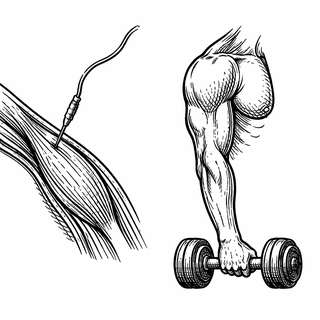
There's a certain dark humor in the world of tendinopathy treatment. You show up with a shoulder that's been angry for six months, and the solution might involve someone sticking a needle into your irritated tendon and running electricity through it. On purpose. And somehow, this is supposed to help. Welcome to the world of percutaneous electrolysis - or as I like to call it, "the zappy needle treatment that actually works."
The Tendon Problem: Why These Stupid Things Won't Just Heal Already
Let me explain what's happening inside a chronic tendon injury, because it's not what you'd expect. When you first hurt a tendon, your body launches an inflammatory response - blood rushes in, immune cells arrive, the repair process begins. That's normal and healthy.
But sometimes, especially with repetitive strain injuries, the healing process goes sideways. Instead of building new, organized collagen fibers, your body lays down a disorganized mess of scar tissue. Blood vessels grow where they shouldn't. Nerve endings proliferate, making everything more painful. The tendon ends up weaker and more sensitive than before.
This is tendinopathy - and it's stubborn. The usual advice (rest! ice! anti-inflammatories!) doesn't work particularly well because there's actually very little inflammation happening in chronic cases. The tendon isn't actively swelling; it's just... broken in a way that won't fix itself.
That's where things get interesting.
The Counterintuitive Solution: Make It Worse to Make It Better
Here's the thing about healing: sometimes you need to restart the process. If a wound heals wrong, surgeons will sometimes reopen and debride it, removing the bad tissue so fresh healing can begin. The same logic applies to tendons.
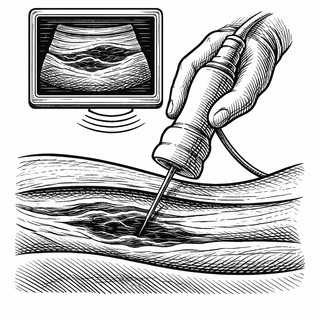
Percutaneous electrolysis - also called Intratissue Percutaneous Electrolysis (EPI) or EPTE - takes this approach with precision. A needle is inserted under ultrasound guidance directly into the degenerated portion of the tendon. Then a galvanic (direct) current is applied, causing an electrochemical reaction that essentially destroys the pathological tissue.
Wait, they're destroying tissue? Isn't that bad?
Not in this case. The galvanic current causes localized, controlled destruction of the fibrotic scar tissue and degenerated collagen. This triggers a new inflammatory response - but this time, a proper one. Fresh blood flow, fresh immune cells, fresh growth factors. The healing process restarts from scratch, and this time, it's more likely to work correctly.
It's like demolishing a badly built building so you can construct it properly. Sometimes you have to tear down before you can build up.
What Actually Happens During Treatment
The procedure is less dramatic than it sounds (sorry if you were hoping for lightning bolts). Here's the typical protocol:
-
Ultrasound imaging identifies the exact location of tendon degeneration - the dark, disorganized areas that indicate pathology.
-
A needle (usually quite thin) is inserted through the skin and guided by ultrasound into the affected tissue.
-
Galvanic current (typically 1.5-3 milliamps) is applied for a brief period. The current creates a local electrochemical reaction, producing sodium hydroxide (a base) at the needle tip, which breaks down damaged tissue.
-
Multiple passes may be made to treat the entire affected area.
-
Post-treatment, patients experience localized discomfort and inflammation - which is the point. This is the healing response being triggered.
Sessions typically occur once weekly for 3-5 weeks, rarely exceeding ten sessions. Each session takes just a few minutes of actual current application.
Why Combine It With Exercise?
Here's where the clinical trial NCT07277127 gets interesting. It's not just testing percutaneous electrolysis - it's testing electrolysis combined with exercise versus exercise alone. And there's good reason for that combination.
Eccentric exercise has been a cornerstone of tendinopathy treatment for years. "Eccentric" means the muscle is lengthening while contracting - think of the lowering phase of a calf raise or the downward motion of a bicep curl. This type of loading seems to stimulate tendon repair in ways that concentric (shortening) exercises don't.
The proposed mechanism? Eccentric loading stimulates fibroblasts (the cells that make collagen) and increases collagen synthesis. It also helps remodel the tendon's structure, aligning fibers in a more organized, functional pattern.
Combining percutaneous electrolysis with eccentric exercise creates a one-two punch:
- Electrolysis breaks down the disorganized, degenerated tissue and triggers fresh inflammation
- Eccentric exercise guides the new healing process, encouraging organized collagen synthesis and proper tendon remodeling
Studies have shown this combination produces superior results compared to exercise alone. One study found that 78.8% of patients treated with EPI plus eccentric exercise returned to their pre-injury activity level by the end of treatment, with 100% returning by two years.
The Evidence: Does Zapping Actually Work?
Let's look at what the research says, because I know you're skeptical (as you should be about any treatment that sounds like something from a sci-fi movie).
Supraspinatus tendinopathy (shoulder):
A randomized controlled trial found that patients receiving percutaneous electrolysis combined with eccentric exercise showed significantly greater improvements in pain, range of motion, and function compared to those receiving traditional physical therapy (TENS and ultrasound) with exercise. The improvements were maintained at follow-up.
Patellar tendinopathy (jumper's knee):
A study combining EPI with isoinertial eccentric exercise showed that the mean treatment duration was just 4.5 weeks, with most patients returning to full activity. At two-year follow-up, outcomes remained excellent.
Soleus injuries:
A pilot study in female soccer players found that percutaneous needle electrolysis combined with therapeutic exercise may add benefit in managing soleus (calf) injuries, with faster return to sport.
Meta-analyses:
A systematic review and meta-analysis found that percutaneous electrolysis for tendinopathy was more effective than traditional treatments, both short and long-term. However, the authors noted that study quality was variable and more research was needed.
The Caveats (Because There Are Always Caveats)
I wouldn't be doing my job if I didn't mention the limitations of current evidence:
Heterogeneity: Studies use different electrolysis protocols (current intensity, duration, number of sessions), making comparison difficult.
Sample sizes: Many studies are small, limiting statistical power.
Comparison groups: When electrolysis is compared to sham treatment (fake needling), the results are less clear-cut than when compared to traditional PT.
Blinding issues: It's hard to blind patients to whether electricity is being applied through a needle in their tendon. They can usually tell.
One systematic review concluded that EPI shows promise as an adjunct treatment when combined with exercise, but insufficient quality evidence exists to definitively determine effectiveness. The authors recommended larger, better-designed trials.
Which brings us back to NCT07277127 - exactly the kind of study we need to answer these questions more definitively.
What Makes a Good Candidate?
Percutaneous electrolysis isn't for everyone. The best candidates typically:
- Have chronic tendinopathy (usually 3+ months duration)
- Haven't responded adequately to conservative treatment
- Have imaging evidence of tendon degeneration
- Are motivated to comply with post-treatment exercise protocols
- Don't have contraindications to needling (blood clotting issues, infection, etc.)
The treatment is more invasive than massage or stretching but far less so than surgery. It fits into that middle ground for patients who've failed first-line treatments but aren't ready for (or don't need) surgical intervention.
The Bottom Line
Percutaneous electrolysis represents an interesting evolution in tendinopathy treatment - a way to actively restart healing rather than passively waiting for it. By combining controlled tissue destruction with guided exercise-based remodeling, it offers a logical approach to a frustrating problem.
The evidence suggests it works, particularly when combined with eccentric exercise. The mechanism makes biological sense. The safety profile is reasonable. But we need more and better studies to fully understand who benefits most and what protocols work best.
Trial NCT07277127 is contributing to that evidence base by directly comparing electrolysis plus exercise to exercise alone. Studies like this will help clinicians make better decisions about when to recommend getting zapped.
In the meantime, if you've got a stubborn tendon that refuses to cooperate with conventional treatment, know that there's a guy with a needle and a battery pack who might be able to help. Medicine is weird and wonderful like that.
References:
-
ClinicalTrials.gov Identifier: NCT07277127 - Percutaneous Electrolysis Combined With Exercise vs Exercise Alone
-
Abat F, et al. Effectiveness of the Intratissue Percutaneous Electrolysis technique and isoinertial eccentric exercise in the treatment of patellar tendinopathy at two years follow-up. Muscles Ligaments Tendons J. 2014;4(2):188-193.
-
Valera-Garrido F, et al. Ultrasound-Guided Percutaneous Electrolysis and Eccentric Exercises for Subacromial Pain Syndrome: A Randomized Clinical Trial. Evid Based Complement Alternat Med. 2015;315219. DOI: 10.1155/2015/315219
-
Garcia Bermejo P, et al. Percutaneous Electrolysis, Percutaneous Peripheral Nerve Stimulation, and Eccentric Exercise for Shoulder Pain and Functionality in Supraspinatus Tendinopathy: A Single-Blind Randomized Clinical Trial. J Clin Med. 2025;14(12):4217. DOI: 10.3390/jcm14124217
-
Rodríguez-Huguet M, et al. Efficacy of percutaneous electrolysis for the treatment of tendinopathies: A systematic review and meta-analysis. Clin Rehabil. 2023;37(4):457-469. DOI: 10.1177/02692155221143050
Disclaimer: This blog post is for informational purposes only and does not constitute medical advice. Always consult with a qualified healthcare provider regarding any medical conditions or treatments. Clinical trial results may not reflect individual outcomes. Images and graphics are for illustrative purposes only and do not depict actual medical devices, procedures, mechanisms, or research findings from the referenced studies.