
Fun fact: your small intestine is excellent at absorbing pizza calories and remarkably rude to large therapeutic proteins. From a biomedical engineering perspective, it behaves a bit like the bouncer outside an exclusive nightclub in a superhero movie - small molecules glide in, but bigger, more fragile guests get stopped at the rope. That is why protein drugs such as insulin are usually delivered by injection instead of by mouth.
A new PubMed-listed study, Enhanced Intestinal Absorption of Proteins via a Natural Metabolite-Based Deep Eutectic System, explores a clever workaround. The researchers built a natural metabolite-based deep eutectic system, or DES, from betaine and lactic acid, then used insulin as a model protein to test whether this formulation could improve absorption through the intestine. Their core finding is simple and intriguing: this betaine-lactic acid system appeared to help insulin move through intestinal mucus and across the intestinal barrier, while showing favorable biocompatibility in the tests they performed.
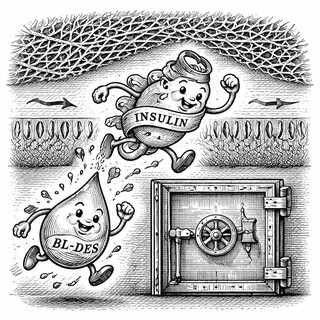
Why protein delivery through the gut is such a headache
Protein drugs are biologically powerful, but the gastrointestinal tract is not exactly a spa day for them. Proteins can be degraded, trapped, or blocked before they ever reach the bloodstream. Even if a protein survives digestion, it still has to cross two major barriers.
First, there is the mucus layer. This slippery coating protects the intestinal lining, which is great for human survival and less great for drug delivery scientists. It can behave like a dense mesh that slows larger molecules.
Second, there is the epithelial barrier, where cells are tightly connected by structures called tight junctions. Those junctions regulate what can pass between cells. Think less “open hallway” and more “Marvel vault door.”
So when researchers claim they have improved intestinal protein absorption, the obvious question is: which barrier did they actually help the drug overcome, and how safely?
The chemistry move: a deep eutectic system made from natural metabolites
The star of this paper is a deep eutectic system built from betaine and lactic acid, abbreviated BL-DES. Deep eutectic systems are mixtures of compounds that, when combined in the right ratio, create a liquid-like environment with properties different from either ingredient alone.
That may sound like chemistry fan fiction, but it is a real and increasingly interesting formulation strategy. In this case, the ingredients matter because betaine and lactic acid are natural metabolite-related, food-grade components. That makes the approach feel less like a synthetic battering ram and more like a carefully tuned molecular toolkit.
The researchers chose insulin as the model protein, which makes sense. Insulin is medically relevant, easy to track in absorption studies, and gives a functional readout because successful uptake can lower blood glucose. If the intestine absorbs more insulin, you expect to see a stronger hypoglycemic effect. Biology rarely gives you such a clean scoreboard.
What the study found
The paper reports that BL-DES reduced the viscosity of simulated intestinal mucus and increased insulin permeability through that mucus layer. That is a notable first step. If mucus is acting like a sluggish traffic jam, lowering its viscosity may help protein molecules move through with fewer delays.
The study also found that jejunal administration of insulin formulated with BL-DES produced a significant hypoglycemic effect. That suggests the insulin was not merely surviving in the neighborhood, but actually making it across the intestinal barrier in an amount large enough to change physiology.
Mechanistically, the researchers traced part of the effect to paracellular transport. In plain English, BL-DES appeared to help proteins move between neighboring intestinal cells by reversibly opening tight junctions. “Reversibly” is the key word here. You want those gates to open enough to let the therapeutic through, then close again afterward. No one wants the gut barrier doing a long-form improvisation.
The team also evaluated hematological, cellular, and histological indicators and reported favorable biocompatibility. That matters because improving absorption is only useful if the tissue tolerates the method reasonably well.
Why this is more interesting than it first appears
At first glance, “mucus viscosity decreased” does not sound like blockbuster science. It sounds like the sort of phrase that clears a party. But from a delivery-engineering standpoint, this is exactly where some of the most interesting progress happens.
A lot of hard biomedical problems are not about inventing a new drug from scratch. They are about helping good molecules get to the right place without being destroyed, trapped, or rejected along the way. Proteins have enormous therapeutic potential, but delivery remains one of the genre’s recurring villains. If a relatively simple, food-grade formulation can improve passage through mucus and temporarily loosen tight junctions in a controlled way, that opens the door to a broader platform idea.
Insulin was the model here, but the bigger concept is oral or intestinal delivery of protein therapeutics more generally. That is the part that makes engineers perk up and start drawing arrows on whiteboards.
The real-world promise, with the necessary reality check
It is easy to see the appeal. If follow-up work succeeds, strategies like this could help reduce dependence on injections for some protein-based therapies. That would be meaningful for patients, especially for drugs that require repeated dosing. Anyone who has spent time around chronic disease management knows that delivery burden is not a side issue. It shapes comfort, adherence, and daily life.
Still, this is not “insulin pill solved” territory. The study summary specifically describes jejunal administration, which is not the same as swallowing a standard tablet and calling it a day. There are still major translational questions about dose consistency, long-term safety, manufacturing, stability, and how this system behaves in the full chaos of a living gastrointestinal tract over time.
Tight junction modulation is especially interesting because it is a powerful lever, but also one that demands restraint. Opening barrier pathways can be beneficial for drug delivery, yet the intestine is a carefully guarded interface between the body and the outside world. Any strategy that nudges it open must prove that the effect is controlled, reversible, and not inviting unwanted passengers through the gate.
Why I’ll be watching this space
What I like about this paper is that it does not try to win with futuristic glitter. It uses a practical formulation concept, biologically relevant testing, and a mechanism that makes sense. That combination is refreshing. Sometimes the best biomedical innovation is not Iron Man armor. Sometimes it is a smarter key for a lock everyone has been wrestling with for years.
For researchers working on oral biologics, mucosal transport, or barrier modulation, BL-DES looks like a promising tool worth further study. For everyone else, the takeaway is that medicine delivery is often as much about route engineering as drug discovery. The molecule may be brilliant, but if it cannot cross the body’s obstacle course, it is stuck in the trailer and never makes it into the movie.
This blog post discusses research findings and should not be taken as medical advice. If you have concerns about diabetes, insulin treatment, or gastrointestinal health, please consult a healthcare provider. Research discussed here represents ongoing scientific investigation and clinical validation is still in progress.
All images used in this post are decorative illustrations only and do not represent or reflect the accuracy, reality, or correctness of the referenced research.
Primary Source: Enhanced Intestinal Absorption of Proteins via a Natural Metabolite-Based Deep Eutectic System. PubMed record 42012221. PubMed: https://pubmed.ncbi.nlm.nih.gov/42012221/