
*By Now imagine there's a technology that could shoulder a big chunk of that burden automatically. And then imagine your doctor says, "Yeah, we'll get to that... eventually. Maybe in a few months. Let's start with the hard way first."
Welcome to the baffling world of pediatric type 1 diabetes care in the United States, where the best available tools often sit on the shelf while newly diagnosed kids and their shell-shocked families white-knuckle it through manual insulin management like it's 2005.
The Pancreas Quit, and Now There's a Robot for That
For the uninitiated, type 1 diabetes (T1D) is an autoimmune condition where the body's immune system - in a spectacular act of friendly fire - destroys the insulin-producing beta cells in the pancreas. Unlike type 2 diabetes, it has nothing to do with diet or lifestyle. It's the biological equivalent of your IT department accidentally deleting the operating system. About 1.6 million Americans live with T1D, and roughly 64 new cases per 100,000 youth are diagnosed each year, with incidence rates climbing steadily (Gregory et al., 2022).
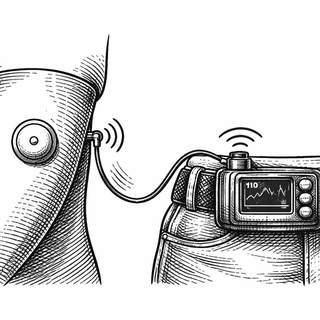
Managing T1D means replacing what the pancreas used to do automatically: sensing blood glucose and delivering precisely the right amount of insulin, around the clock. For decades, this meant finger sticks, syringes, and a lot of guesswork. Then came insulin pumps. Then continuous glucose monitors (CGMs). And then, like peanut butter finally meeting chocolate, someone had the bright idea to connect them together and let an algorithm do the heavy lifting.
Enter automated insulin delivery systems - or AID systems, sometimes called "closed-loop" or "artificial pancreas" technology. These devices read glucose data from a CGM, run it through a control algorithm, and automatically adjust insulin delivery via a pump. They don't fully replace the pancreas (you still need to announce meals and occasionally troubleshoot), but they get remarkably close. Think of it as autopilot for blood sugar: you're still the pilot, but the plane mostly flies itself.
The Evidence Is Not Exactly Subtle
The data supporting AID systems is about as ambiguous as a fire alarm. Multiple randomized controlled trials have demonstrated that AID systems significantly increase time-in-range (the percentage of the day blood glucose stays in the target zone of 70-180 mg/dL) while reducing hypoglycemia and improving HbA1c - the gold-standard measure of long-term glucose control.
A landmark multicenter trial published in the New England Journal of Medicine showed that the Control-IQ system improved time-in-range by a full 11 percentage points compared to sensor-augmented pump therapy (Brown et al., 2019). The iDCL trial further confirmed these benefits across diverse populations (Breton et al., 2020). Meta-analyses have consistently reinforced these findings, showing AID superiority over conventional pump therapy across age groups (Bekiari et al., 2018).
And here's the kicker - the benefits aren't just glycemic. Families report better sleep, less diabetes-related distress, and improved quality of life. For a parent who has been setting alarms every two hours to check their six-year-old's blood sugar, that's not a marginal improvement. That's getting your sanity back.
So Why Is Everyone Dragging Their Feet?
This is the part where I, an otherwise composed academic physician, start gesturing emphatically at my screen. Despite overwhelming evidence and FDA clearance for multiple AID systems in pediatric populations, adoption at the time of diagnosis remains stubbornly low. The traditional approach is a slow, staged rollout: start with injections, graduate to a pump after a few months, add a CGM, and maybe - if insurance cooperates and the stars align - eventually get to AID.
The reasoning is partly inertia ("this is how we've always done it"), partly logistical (training takes time and clinic resources are stretched), and partly a paternalistic assumption that families can't handle the technology right away. Meanwhile, studies suggest that early technology adoption, when families are most motivated and engaged, may actually produce better long-term outcomes and adherence (Commissariat et al., 2023).
It's a bit like telling someone who just got their driver's license that they have to spend six months on a bicycle first "to build character." Sure, there's a learning curve, but maybe let's not make perfection the enemy of the very, very good.
Enter the Early AID Pilot
This is exactly the gap that a new clinical trial - Early AID Pilot for Newly Diagnosed T1D (NCT07501338) - is trying to address. The study aims to evaluate what happens when you flip the script and get newly diagnosed kids onto AID systems early, rather than making them wait through the traditional staged approach.
The trial isn't just asking "does early AID work?" (we have a pretty good hunch about that). It's investigating the conditions that make early adoption successful - or that get in the way. What are the facilitators? What are the barriers? Is it insurance red tape? Clinic bandwidth? Family readiness? Provider confidence? By identifying these contextual factors, the researchers hope to build a playbook for implementation that other centers can actually replicate.
This kind of implementation science work is unsexy but profoundly important. We already know AID works. What we need to figure out is how to get it to the kids who need it, when they need it, without requiring a PhD in health system navigation.
Why You Should Care (Even If You Don't Have a Pancreas Problem)
Beyond the direct implications for the estimated 18,000+ youth diagnosed with T1D each year in the US alone, this trial speaks to a much larger question in medicine: how long should patients have to wait for technology that's already been proven to work? The gap between evidence and implementation is one of the most persistent - and frankly embarrassing - problems in healthcare. On average, it takes 17 years for research evidence to translate into routine clinical practice. Seventeen years. That's an entire childhood.
If the Early AID Pilot demonstrates that newly diagnosed families can safely and effectively adopt AID from the start, it could catalyze a genuine shift in how pediatric diabetes programs operate nationwide. Fewer kids spending months in suboptimal glycemic control. Fewer families burning out on manual management. Fewer late-night ER visits for severe lows.
And maybe, just maybe, fewer physicians like me wondering why we keep handing families a horse and buggy when there's a perfectly good car parked right there.
Disclaimer: This blog post is for educational and informational purposes only and does not constitute medical advice. Clinical trial participation decisions should be made in consultation with a qualified healthcare provider. The views expressed are those of the author and do not necessarily represent the positions of any affiliated institutions.
References:
- Gregory, G.A., et al. (2022). Global incidence, prevalence, and mortality of type 1 diabetes in 2021. Diabetes Care, 45(12), 3040-3047. https://doi.org/10.2337/dc22-0331
- Brown, S.A., et al. (2019). Six-month randomized, multicenter trial of closed-loop control in type 1 diabetes. New England Journal of Medicine, 381(18), 1707-1717. https://doi.org/10.1056/NEJMoa1907863
- Breton, M.D., et al. (2020). A randomized trial of closed-loop control in children with type 1 diabetes. New England Journal of Medicine, 383(9), 836-845. https://doi.org/10.1056/NEJMoa2004736
- Bekiari, E., et al. (2018). Artificial pancreas treatment for outpatients with type 1 diabetes: systematic review and meta-analysis. BMJ, 361, k1310. https://doi.org/10.1136/bmj.k1310
- Commissariat, P.V., et al. (2023). Psychosocial factors and diabetes technology use in youth. Current Diabetes Reports, 23, 41-50. https://doi.org/10.1007/s11892-023-01507-1
Clinical Trial Reference: NCT07501338 - Early AID Pilot for Newly Diagnosed T1D