
Walk more. Think harder. Push through it. Use a cane. Use a walker. Take the meds and hope for the best. Those are the usual mental buckets people toss Parkinson's walking problems into. Then along comes a study like this one and says, maybe the issue is not just strength or willpower or even medication timing. Maybe the brain needs better cues, delivered in the right way, at the right moment, by a device smart enough to adapt instead of just nagging like a smoke alarm with bad timing.
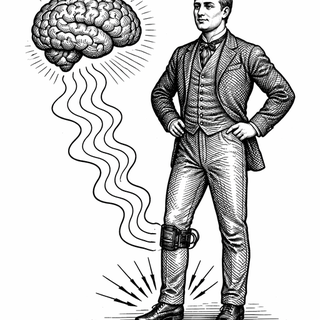
That is what makes the clinical trial A Novel Instrument to Address Freezing of Gait in Parkinson's Patients interesting. The study is testing the ParkinSense system, described as a customizable, multimodal, and adaptable cueing system for people with Parkinson's disease who experience freezing of gait, often shortened to FOG. If that term is new to you, freezing of gait is one of those symptoms that sounds mild until you picture it in a kitchen doorway, at the curb, or halfway through a turn. A person wants to move, but their feet suddenly seem glued to the floor. The intent is there. The body just does not cooperate.
Why freezing of gait matters so much
From a parent-style practical standpoint, this is not a tidy little symptom. It is a fall risk, a confidence thief, and a daily routine wrecker. It can turn a short walk across the living room into a strategic operation. It can make people avoid errands, crowds, or even getting up when they need to. That is a big deal because once mobility shrinks, life tends to shrink with it.
Parkinson's disease affects movement in several ways, but freezing of gait is especially frustrating because it is unpredictable. Some people freeze when starting to walk. Others freeze during turns, in narrow spaces, or when distracted. It is like the brain's internal traffic signal starts blinking nonsense at exactly the wrong moment. Families often end up building little workarounds around it, because that is what families do, but workarounds are not the same as solutions.
What this trial is actually testing
According to the ClinicalTrials.gov listing, the main question is simple and useful: does the ParkinSense system reduce the percent of time a patient spends frozen compared with not using the system?
That is the sort of outcome I like to see. Not vibes. Not hand-wavy "user experience." Actual time spent frozen.
Participants in this trial are asked to do two things:
- Take part in a single-visit laboratory study while wearing the system in a controlled environment.
- Use the system at home for two weeks.
That combination matters. Lab studies can tell us whether a device works under supervision. Home use tells us whether it still works when real life barges in with laundry baskets, door thresholds, barking dogs, and the thousand tiny distractions that never appear in a polished demo video.
The intervention itself is a cueing system. In plain English, that means the device tries to help the brain and body reconnect movement by providing prompts or signals. "Multimodal" suggests it may use more than one kind of cue, such as sensory inputs delivered in different ways. "Customizable" and "adaptable" are the most promising words in the description, because Parkinson's symptoms do not show up the same way in every person or every moment. A cue that helps one person may annoy another. A cue that works in the clinic might flop in the hallway at home. Flexibility is not a luxury here. It is the assignment.
For the current study status, sponsor, and eligibility details, the main listing and table view are the places to check because those fields can change over time:
- Main record: https://clinicaltrials.gov/study/NCT07542743
- Table view: https://clinicaltrials.gov/study/NCT07542743?tab=table
Why this stands out from the usual gadget optimism
Medical devices can sometimes arrive with the energy of a blender infomercial. So shiny. So confident. So suspiciously eager to improve your life in under three easy payments. What gives this study more substance is that it is trying to measure a concrete functional problem in a real-world setting.
That matters because freezing of gait is not just about "walking better" in a broad, fuzzy sense. It is about interrupting a dangerous stall in movement before it leads to a fall, a panic moment, or a retreat from everyday activities. If a cueing system can reduce freezing time even modestly, that could mean safer transfers, fewer near-falls, and a little more independence. Sometimes the meaningful win in medicine is not a movie-scene miracle. Sometimes it is being able to get from the couch to the bathroom without feeling like the floor is negotiating terms.
The challenge this research is trying to solve
The hard part is that freezing of gait can be stubborn. It may not respond neatly to medication, and it can flare during stress, multitasking, or transitions like turning and stepping through narrow spaces. That is why cueing has drawn interest for years. The basic idea is that external signals may help bypass or support movement pathways that are not firing smoothly on their own.
But simple cueing is not always enough. If a cue comes too early, too late, or in the wrong form, it may be useless. If it is too repetitive, people tune it out. If it is clunky, they stop using it. If it only works under ideal conditions, families will discover that flaw by Tuesday afternoon.
So the real challenge is not merely inventing a cue. It is building a system that can adapt to the person, the context, and the moment. That is the part of this trial that feels genuinely modern. Not "we made a gadget." More "we are trying to make a gadget that behaves like it understands the problem."
What success could mean in the real world
If ParkinSense works, the upside is pretty easy to imagine. A device that reduces time spent frozen could help people move through their homes with less hesitation and less fear. That could ripple outward into better confidence, more willingness to stay active, and possibly fewer falls or near-falls. Caregivers might get a little less of that constant low-grade dread that shows up whenever a loved one stands up and starts to turn.
It could also nudge treatment in a more personalized direction. Parkinson's care often involves trial, error, timing, and patience. Frankly, enough patience to qualify for sainthood. A system that can be customized and adjusted to the user may fit more naturally into that reality than one-size-fits-all tools.
Of course, this is still a clinical trial, not a victory lap. A single-visit lab study plus two weeks at home can tell us something important, but it will not answer everything. We would still want to know how durable the benefits are, who benefits most, how easy the device is to use consistently, and whether any gains hold up over longer stretches of real life.
The bottom line
This study catches my attention because it is aimed squarely at a problem that families can see, fear, and measure. Freezing of gait is not abstract. It is a daily hazard. A cueing system that is customizable, multimodal, and adaptable sounds like exactly the kind of idea that should be tested carefully.
Will it help? That is what the study is there to answer. But it is asking the right question, and it is asking it in a way that connects to actual life. For patients and families dealing with Parkinson's, that alone makes it worth watching.
Disclaimer: This article is for general education only and is not medical advice. It is based on the publicly available ClinicalTrials.gov record for this study and should not replace guidance from a qualified clinician.
Citation: ClinicalTrials.gov. A Novel Instrument to Address Freezing of Gait in Parkinson's Patients (NCT07542743). Available at: https://clinicaltrials.gov/study/NCT07542743 and https://clinicaltrials.gov/study/NCT07542743?tab=table