
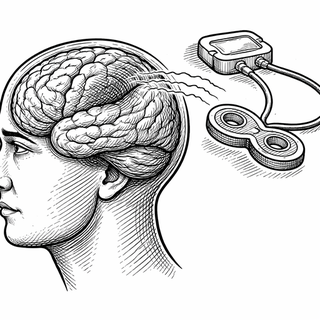
Old-school Parkinson's care has mostly been a medication game: add a pill, adjust a dose, wait, repeat, and hope the side effects do not join the party before the benefits arrive. This new trial takes a very different swing. Instead of asking the brain to behave through chemistry alone, it uses magnetic stimulation aimed at the motor cortex, like trying to reboot a glitchy circuit board rather than just turning up the radio to drown out the static.
Why This Trial Catches My Eye
The study, listed as NCT07554833, is testing an accelerated course of repetitive transcranial magnetic stimulation, or rTMS, in people with mild to moderate Parkinson's disease. The full title is a mouthful, but the question is simple enough: can targeted magnetic stimulation help not just movement, but thinking too?
That matters because Parkinson's is not just tremor. People hear "shaking" and think they understand the disease. They do not. Parkinson's can slow movement, stiffen muscles, wreck gait, and chip away at attention, memory, and executive function. It is the kind of illness that starts by stealing smooth movement and keeps going like a thief with a master key.
Medications can absolutely help. Levodopa and related treatments have changed lives. But over time, they can become less reliable, wear off, or bring along complications like involuntary movements and other side effects. So when I see a study trying to address both motor and cognitive symptoms without another pill bottle, I pay attention.
What the Researchers Are Actually Doing
This is a prospective pilot study at the San Francisco Neurology and Sleep Center. The planned enrollment is 40 participants, ages 50 to 90. The intervention uses the EXOMIND device to deliver high-frequency rTMS to the motor cortex on both sides of the brain.
Participants receive six treatment sessions total, given twice a week over about three weeks. That is the "accelerated" part. It is not one session every blue moon. It is a tighter schedule designed to see whether a concentrated course produces meaningful benefit.
The main outcome is a change in motor symptoms one month after treatment, measured by the MDS-UPDRS Part III. That is a standard clinician-rated scale for Parkinson's motor function. Secondary outcomes go broader. Researchers are also looking at gait and walking measures, cognitive performance through the Creyos battery, Montreal Cognitive Assessment scores, depression symptoms on the PHQ-9, and quality of life on the PDQ-39.
That is a sensible lineup. If you claim to help Parkinson's, you should not just ask whether a hand tremor looks a bit better under fluorescent lighting. You should ask whether people walk better, think more clearly, feel less depressed, and function more like themselves.
Why the Motor Cortex?
The motor cortex is one of the brain regions that helps plan and control voluntary movement. In Parkinson's, the bigger story involves dopamine loss and dysfunction in the basal ganglia circuits, but those circuits do not operate in a vacuum. The motor cortex is part of the downstream machinery. If that network is underperforming, stimulating it may help nudge movement back toward normal.
rTMS is non-invasive. No incision, no implanted hardware, no hospital gown that leaves your dignity hanging out the back. A magnetic coil placed on the scalp delivers repeated pulses that influence brain activity in targeted regions. That does not make it magical. It just makes it a clever way to modulate the system from the outside.
The intriguing twist here is the cognitive angle. Parkinson's can affect processing speed, attention, working memory, and executive function. If motor cortex stimulation improves network function more broadly, there is at least a reasonable scientific case for looking beyond movement alone.
Why This Matters in the Real World
If this pilot study shows a meaningful benefit, the implications are bigger than one clinic and one device.
First, it could add a non-drug option for patients whose medications are losing their edge or causing too much collateral damage. That would be welcome. In medicine, having only one hammer usually leads to a lot of bent nails.
Second, if a short series of treatments produces benefits that last for weeks or months, that could make rTMS practical for more people. A therapy does not just need to work in theory. It needs to fit into actual human life, where transportation, fatigue, caregiver schedules, and cost all have a vote.
Third, the trial is looking at cognition and mood alongside movement. That is good medicine. Patients do not experience Parkinson's in neat little silos. They live the whole package.
The Catch, Because There Is Always a Catch
This is a pilot study, not a final verdict handed down from Mount Sinai. It is single-center, relatively small, and designed to test feasibility and signal, not to settle the matter forever.
That means even if results look promising, they will need confirmation in larger, controlled studies. We will want to know how durable the effects are, which patients benefit most, whether placebo effects play a role, and how rTMS stacks up against other treatment strategies.
We also do not have posted outcomes here. This registry entry describes the plan. It is the blueprint, not the finished building. Anyone trying to sell this as a breakthrough today is getting ahead of the evidence, and in my line of work that is how people end up emotionally intubated.
What I Would Watch Closely
If this trial succeeds, I would want to know three things right away.
First, how big is the motor benefit? Statistical significance is nice. A patient noticing they can get out of a chair, turn in bed, or walk through a grocery store without looking like their feet are negotiating a hostage situation is better.
Second, what happens to cognition? If there is a measurable gain in attention, memory, or reasoning, that would make this far more interesting than a narrow motor intervention.
Third, how long does the effect last? A treatment that helps for a weekend is a nice lab trick. A treatment that helps for months starts to change conversations in clinic.
The Bottom Line
NCT07554833 is worth watching because it goes after a hard problem with a different tool. Parkinson's is stubborn, layered, and often frustrating for both patients and doctors. A non-invasive treatment aimed at brain circuits rather than just neurotransmitter replacement is not science fiction anymore. It is a serious clinical question.
Will rTMS to the motor cortex become part of routine Parkinson's care? Too early to say. But this study is asking the right kind of question: can we help people move better, think better, and live better without simply throwing more medication at an already complicated disease?
That is the kind of experiment medicine needs more of.
Disclaimer: This article is for general educational purposes only and is not medical advice. It is based on the clinical trial registry information currently available and does not represent published treatment results.
Citation: ClinicalTrials.gov. "Clinical Effects of Accelerated rTMS Targeting Motor Cortex on Motor and Cognitive Function in Parkinson's Disease: A Prospective Pilot Study." NCT07554833. https://clinicaltrials.gov/study/NCT07554833