
Choose your future. In one version, brain-machine interfaces keep behaving like a hardware store solution to a biology problem: stiff metal electrodes meet soft brain tissue, the tissue gets irritated, signals fade, and long-term performance turns into a slow-motion breakup. In the other version, the interface starts acting less like a nail and more like a contact lens - soft, adaptive, and far less likely to annoy the very tissue it needs to work with. That second future is what this review on hydrogel-powered brain-machine interfaces is betting on.
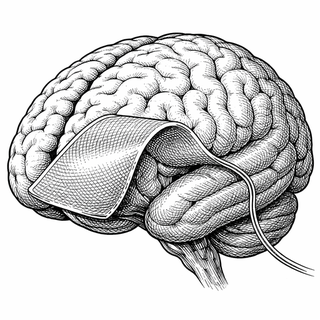
And honestly, the numbers-shaped logic behind it is hard to ignore. The brain is soft. Traditional electrodes are not. That mismatch is not a minor engineering footnote. It is the kind of mismatch that shows up later as inflammation, scar tissue, unstable recordings, and devices that perform beautifully on day 1 and less beautifully once biology has had time to register a complaint. The review, titled From Bio-Interface Materials to Neural Integration: The Next-Generation Brain-Machine Interfaces Powered by Hydrogels, makes the case that hydrogels could help close that gap by bringing electrode materials a lot closer to the brain's own mechanical personality.
Why Brain Interfaces Need Better Materials
Brain-machine interfaces, or BMIs, are systems that record neural activity, stimulate the nervous system, or both. They sit behind some of the most ambitious ideas in modern medicine: restoring movement after paralysis, improving rehabilitation after stroke, and helping treat disorders such as Parkinson's disease, epilepsy, depression, and chronic pain.
The promise is huge. The bottleneck, as usual, is the interface.
A BMI is only as good as its ability to reliably exchange signals with nervous tissue. Metals are excellent conductors, which is why they have dominated electrode design. But metals are also rigid compared with neural tissue. Put a relatively stiff device into a soft, moving, living environment and the result is predictable: stress, irritation, immune response, and performance drift. The brain does not enjoy being poked by something that feels like a tiny paperclip, even a very sophisticated one.
This is where hydrogels become interesting. Hydrogels are water-rich polymer materials that can be soft, flexible, and ionically conductive. In plain English, they can be designed to feel more tissue-like while still helping move electrical signals where they need to go. That combination is what makes researchers look at them and think: now we're talking.
What Hydrogels Bring to the Table
The review focuses on four recurring properties that matter for BMI design: toughness, adhesion, conductivity, and biocompatibility. If you like seeing engineering translated into biological common sense, this is a satisfying list.
Toughness matters because soft is good, but soft and fragile is not. An implanted or wearable device has to survive handling, movement, and time. Adhesion matters because the interface has to stay in close contact with tissue or skin without slipping into the biomedical equivalent of a bad Wi-Fi connection. Conductivity matters because the whole point is to record or deliver signals with high fidelity. Biocompatibility matters because a device that performs well while starting a chronic inflammatory feud is not exactly a clinical win.
Hydrogels have appeal because they can be tuned across all four dimensions. Researchers can modify composition, structure, and surface properties to balance softness with durability and signal performance. This is one of those rare areas where "material science" is not code for "a niche detail only specialists care about." The material is the story.
Not One BMI, but Two Big Families
One useful point in the review is that hydrogel-based BMIs are not a single gadget category. They span both non-invasive and invasive systems.
Non-invasive systems sit on the body's surface, often on the scalp or skin, and collect signals without surgery. Here, hydrogels can improve contact quality, reduce impedance, and make long recording sessions more comfortable. Better skin contact may sound unglamorous, but signal quality often lives or dies on the unglamorous details. Biology is full of billion-dollar problems hiding inside millimeter-scale interfaces.
Invasive systems go deeper, involving implanted electrodes that directly interact with neural tissue. This is where the mechanical mismatch problem becomes even more serious, and where hydrogel integration may offer the biggest payoff. A softer, more tissue-matched interface could reduce chronic tissue reaction and help preserve signal quality over time. That matters because many of the most powerful BMI applications depend on stable, long-term performance, not a flashy short-term demo.
Why This Review Feels Bigger Than One Material Trend
What makes this paper more than a "hydrogels are neat" victory lap is its scope. It does not stop at material properties. It also looks at implantation strategies, multimodal data fusion, artificial intelligence integration, system-level design, and clinical translation.
That matters because a BMI is not just an electrode. It is an ecosystem. The material touches the tissue, but the full device also has to collect data, process it, sometimes combine it with other signals, and eventually fit into surgical workflows and regulatory reality. There is no prize for building the world's most elegant hydrogel if the rest of the system behaves like an overcomplicated science fair project.
The AI angle is especially notable. Better interfaces could mean cleaner, richer neural data. Better data, in turn, gives machine learning systems more to work with. That does not mean AI magically fixes hardware problems. It means signal quality and algorithm quality are linked. Garbage in, but make it neuroscience, is still garbage in.
The Clinical Stakes Are Real
The review highlights possible BMI applications across a wide neurological spread: Alzheimer's disease, Parkinson's disease, epilepsy, stroke, neuropathic pain, and depression. That list tells you something immediately. This is not a single-disease technology. It is a platform concept.
From a data perspective, that is a big deal. Platform technologies can compound their impact because improvements in the interface layer can benefit multiple clinical areas at once. If a hydrogel-based design improves recording stability or stimulation precision, that advantage does not stay locked to one diagnosis. It potentially propagates across several use cases.
Of course, "potentially" is doing some heavy lifting here, as it often does in translational medicine. A review paper can map the road, but it cannot fast-forward through clinical validation, manufacturing challenges, surgical constraints, and long-term safety testing. The future of BMIs is exciting, but it still has to survive contact with paperwork, biology, and reality. Few things are more humbling than a brilliant prototype meeting an actual human body.
The Hard Problems Have Not Disappeared
The paper is clear that hydrogel-based BMIs still face persistent challenges. Stability over time remains a major one. A material that looks excellent in the lab has to maintain its function in a wet, dynamic, chemically active environment for long periods. Integration with electronics is another challenge. Soft, hydrated materials and conventional device hardware do not automatically become best friends.
There is also the issue of implantation and system integration. Even if a hydrogel performs beautifully at the interface, clinicians still need practical ways to place it, connect it, and maintain reliable function. And then comes the final boss of medical technology: translation to the clinic. That means reproducible manufacturing, safety evidence, regulatory approval, and proof that the device helps real patients outside carefully controlled research settings.
Still, the logic here is strong. If the problem begins with a mismatch between hard machines and soft tissue, then materials that behave more like tissue are not just aesthetically pleasing. They are a rational engineering response.
What the Numbers Actually Say, Even Without a Spreadsheet
This review does not present one headline-grabbing percentage that wraps everything in a bow. Instead, it outlines a pattern, and the pattern is persuasive: long-term BMI success depends not only on electrical performance but also on mechanical and biological compatibility. Hydrogels matter because they may improve all three at once.
That is the deeper shift. The field is moving away from thinking of electrodes as isolated conductors and toward thinking of them as living interfaces inside living systems. Less brute force, more fit. Less "attach device, hope for the best," more "design the material so the tissue has fewer reasons to fight back."
For a field aiming to connect brains and machines, that may be the most human lesson of all.
This blog post discusses research findings and should not be taken as medical advice. If you have concerns about neurological conditions or brain-machine interface treatments, please consult a healthcare provider. Research discussed here represents ongoing scientific investigation and clinical validation is still in progress.
All images used in this post are decorative illustrations only and do not represent or reflect the accuracy, reality, or correctness of the referenced research.
Primary Source: From Bio-Interface Materials to Neural Integration: The Next-Generation Brain-Machine Interfaces Powered by Hydrogels. PubMed record 42021568. https://pubmed.ncbi.nlm.nih.gov/42021568/